In A Solid State
UNM grad helps spark electric vehicle revolution…
Read More
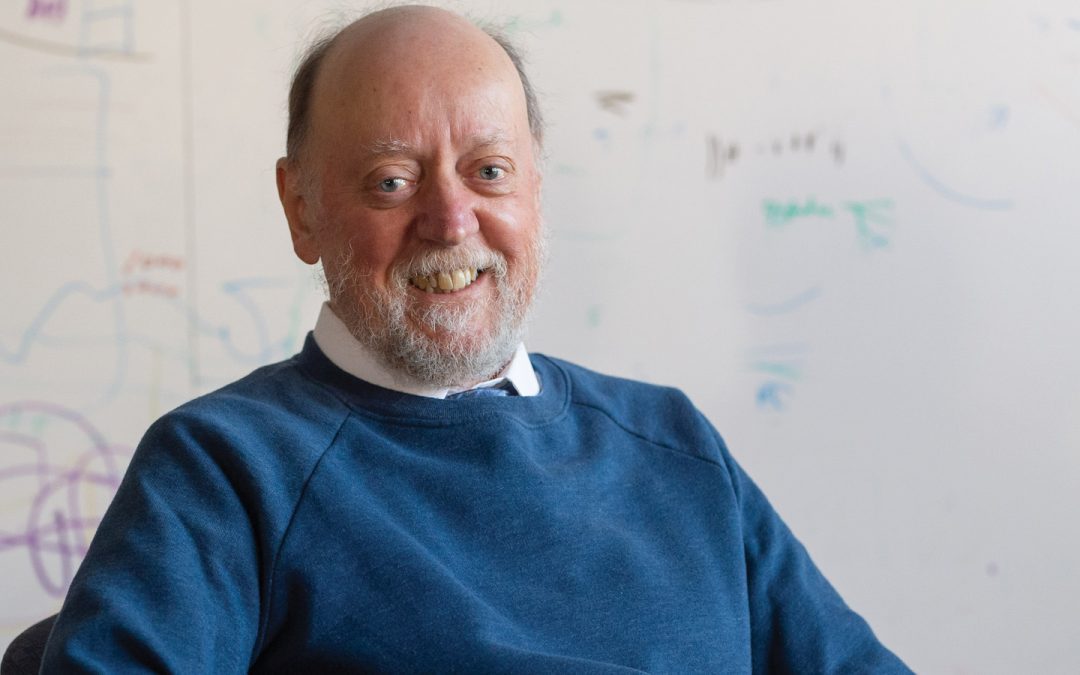
Photos: Courtesy of Jack Dongarra
Alumnus caps high-performance computing career with prestigious prize
By Ellen Marks
When Jack Dongarra received a Zoom invite from MIT professor emeritus Rodney Brooks, a founder of the robot vacuum cleaner, he thought it probably would be about membership in a professional association.
Or, he thought, it might be related to Brooks’ role as adviser to one of Dongarra’s colleagues.
But when Dongarra joined the meeting in early March, he said he found about nine people in Zoom’s “Hollywood Square” configuration, including some of the brightest minds in the computer sciences world.
The faces Dongarra saw turned out to be members of the Turing Award committee, and they told him he had just been named 2021 recipient of the $1 million prize. Considered the Nobel of computer science, the award is the highest distinction in the field to which Dongarra has dedicated his life’s work.
“I was stunned,” Dongarra says. “This is the capstone to my career.”
The 72-year-old professor emeritus at the University of Tennessee is now officially recognized for his groundbreaking work in the world of high-performance supercomputing.
Dongarra earned his PhD in applied mathematics at the University of New Mexico in 1980 and spent part of his time in the state at Los Alamos National Laboratory, taking classes at the UNM branch campus there before moving to the main campus in Albuquerque.
“He has been forever a well-known name in the field of high-performance computing, building software for very large, one-of-a-kind computers,” says Darko Stefanovic, chair of UNM’s computer science department. “It’s not a very large field, but it’s a very important one. And it’s very important to New Mexico and to UNM.”
The Association for Computing Machinery, which grants the Turing award, called Dongarra “a leading ambassador of high-performance computing” and cited his cutting-edge work in developing software that can keep pace with rapidly developing “hardware” — computers that range from the laptop to the world’s fastest supercomputers.
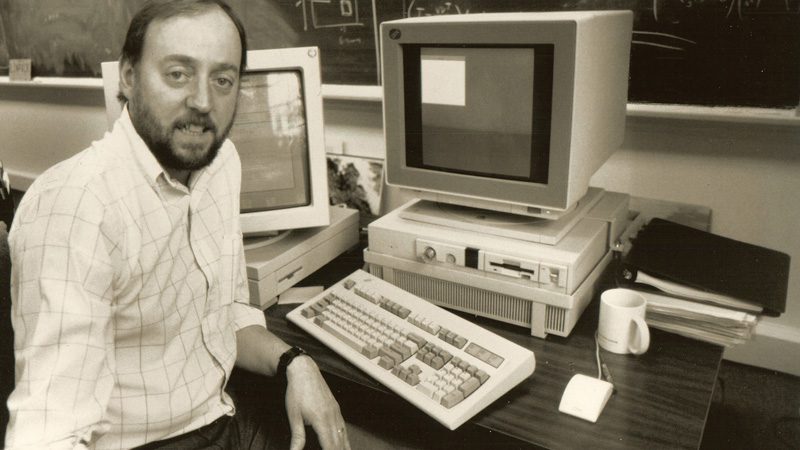
Here’s Dongarra on his job description: “The way to think of it is that my hardware friends build something, and they throw it over the fence and they put it at our feet and say, ‘Try to use it.’”
“So now we’ve got this new machine, and we struggle to effectively use it. It takes us about 10 years to really develop the methods and approaches that will let us use that machine correctly, and then it’s time for a new machine to be thrown over the fence and we start over. So that’s sort of the scenario we’re in.”
Dongarra’s advances rely on linear algebra operations and “parallel processing.” Linear algebra is ubiquitous in computational science solutions, and parallel processing uses a number of computer processors jointly working on a problem to solve it in the most rapid and accurate way.
Dongarra also was cited for open source software libraries that invited anyone to use his inventions for the advancement of the field.
“These contributions laid a framework from which scientists and engineers made important discoveries and game-changing innovations in areas including big data analytics, health care, renewable energy, weather prediction, genomics, and economics, to name a few,” the association said in awarding him the prize.
Dongarra is director of the University of Tennessee’s Innovative Computing Laboratory, a Turing Fellow at Manchester University, adjunct professor at Rice University and a Distinguished Research Staff member at Oak Ridge National Laboratory.
He participated in some of the work leading to development of the Frontier supercomputer at Oak Ridge, declared in May to be the world’s fastest. Even Dongarra is astounded by Frontier’s “exascale” speed.
“Exascale… is a billion billion operations per second,” he says. “Let me just put that number in perspective. You take all the people in the world and have them do one computation per second. To equal what that supercomputer would do in one second, all the people in the world would have to be working four years to do that. So it’s a stunning amount of work, and the computer does it in a second. That’s sort of where we are today.”
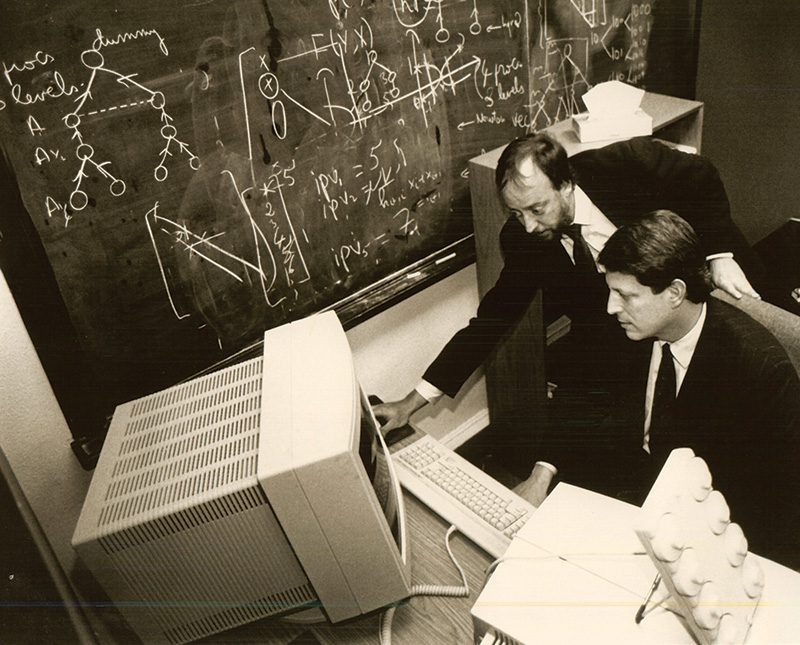
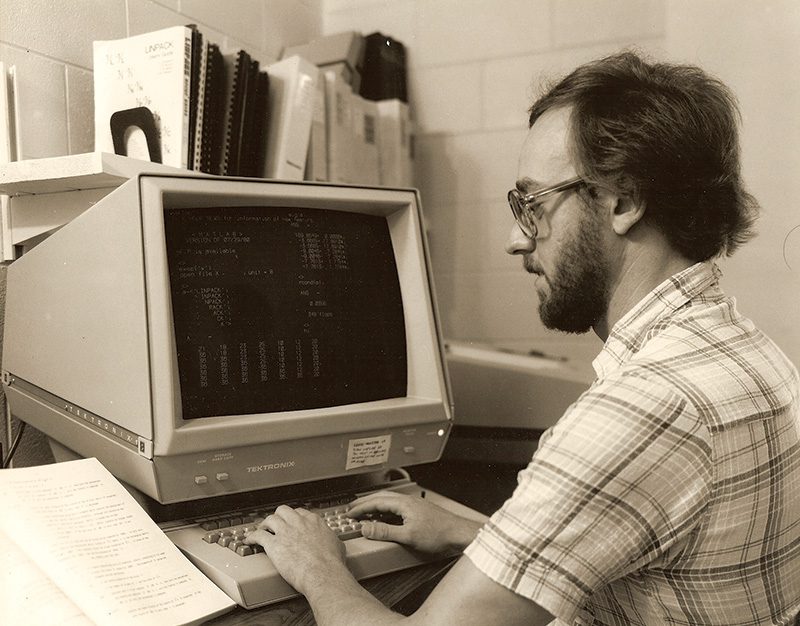
Dongarra grew up in Chicago to parents who never finished high school. His grandparents were from Sicily, and Dongarra kept up the family’s heritage by making pizza for a living – from high school into graduate school.
“It taught a lot of real-life things,” he says, adding, “I still make pizza.”
A young Dongarra went through school with dyslexia, although it was undiagnosed at the time. But it explained why he was always stuck with the same classroom seating arrangement.
“I remember being put in the back of the class because they ordered the class from smart to not-smart people,” he says. “I was never good at reading, and I’m still not very good at reading or writing, to be honest.”
“But I’m pretty good at math and physics,” he adds, in what has to be a nominee for understatement of the year.
Dongarra got his bachelor’s degree in mathematics from Chicago State University in 1972, and his master’s in computer science from the Illinois Institute of Technology the following year.
He was working at Argonne National Laboratory outside of Chicago when he met Cleve Moler, a then-UNM math and computer science professor who spent summers at Argonne. Moler taught at UNM for 13 years, and served as chair of UNM’s Computer Science Department
in the 1980s.
Moler is a renowned mathematician and computer programmer who was a geek from the start. As a kid growing up in Salt Lake City, he entertained himself by seeking prime factors in license plate numbers and street addresses.
Moler, who founded the MathWorks mathematical computing software company, recalls what motivated his protege to seek a doctorate while the two were working at Argonne.
“He (Dongarra) said one day, ‘Cleve, whenever a really important decision is made here, all the PhDs go into (an) office and make the decision, and I’m not part of that group,’” Moler recalls. “‘If I’m going to be a full-fledged member of this group, I’m going to need a PhD.’”
Dongarra and Moler were close during the casual summer atmosphere at Argonne, and even though their offices were at opposite ends of a corridor, “I remember hearing Jack and Cleve holler to each other from down the hall,” recalls Doris Pool, a then-administrative assistant.
Moler convinced Dongarra to come back to New Mexico with him, even though UNM did not offer a PhD in computer science at the time. Instead, Dongarra pursued a mathematics PhD, although it was what he called “sort of an applied mathematics PhD.”
When Moler went on sabbatical at Stanford University, Dongarra followed and continued to work with Moler while the two kicked around possible thesis topics.
Initially, it didn’t go that well.
“There was a hamburger and beer joint there (at Stanford) called Oasis,” Moler says. “We sat in the outdoor beer garden, and he came up with a thesis, and it turned out to be a bad idea. We refer to it this day as the ‘Oasis algorithm.’”
But Dongarra finally found his PhD topic, centering on “eigenvalues,” which can be used to measure the frequency of vibrations on such structures as bridges and buildings.
And although he left New Mexico soon after his studies were completed, he remembers the Frontier restaurant near UNM and his walk across the bridge in Los Alamos to get to the lab.
“Growing up in Chicago, I really hadn’t experienced the desert or mountains,” he says. “It was just a tremendous experience.”
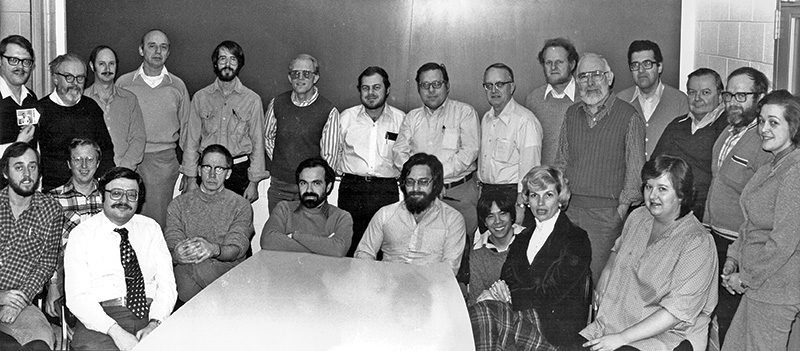
Patrick Bridges, a computer science professor and director of UNM’s Center for Advanced Research Computing, says Dongarra “has been a real leader in the general field of computer science for 40-plus years.”
Bridges’ description of Dongarra echoes those of others who know him: “He’s a really nice, low-key, down-to-earth kind of guy. If you have questions or need advice, Jack’s great.”
Bridges cites Dongarra’s introduction of benchmarks, such as the Linpack benchmark, to evaluate a computer system’s performance by, for example, approximating how fast it can perform when solving actual problems.
“The thing to understand is that science today is really driven by simulation, and simulation is carried out on computers,” Dongarra says. “So if we’re trying to understand something, we do a mathematical model of it. We take a mathematical model and represent it somehow as a program which runs on a computer.”
“You can think about that being applied to a car,” Dongarra says. “We want to test it and see if it’s crash-worthy. In the old days, you would build a car and smash it into a wall and then see what happens. You know, that’s an expensive thing, you can’t do that many times.
“But we can design a car on a computer, and we can then crash that model into the wall thousands of times, hundreds of thousands of times, and then we can optimize the design to make it more crash-worthy.”
Dongarra says because so much of his work was funded by the government, he has always believed that it should be free and available to anyone. He calls his developments his “calling card” and compares them to his many written academic papers.
“I write papers, and I want people to read them,” he says. “I make those papers freely available to anybody who wants to read them and download them and cite them and learn from them. The software is out there. (People) should use it.”
However, someone who wants to replicate the steps Dongarra took to develop a career that has reached the highest levels would have a difficult time.
“I’ve been in an unusual situation. I happened to be at the right place at the right time for many things,” he says. “So if somebody said, ‘I want to do what you did, how did you do it?,’ I can’t tell you. It’s been very serendipitous.”
Regarding the $1 million, Dongarra said, “I’m not sure exactly what I’ll do with it, but I am taking suggestions.”

UNM grad helps spark electric vehicle revolution…
Read More
Opera singer pivots to performance coaching…
Read More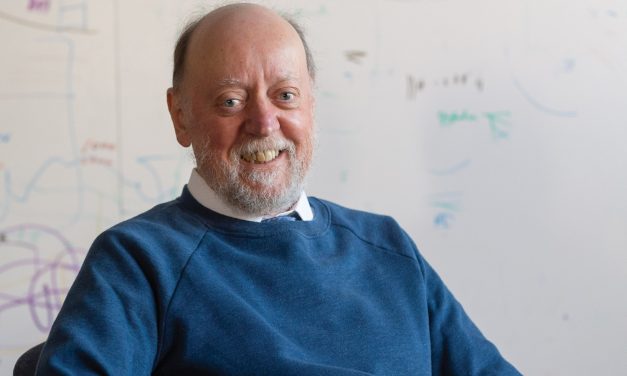
Alumnus caps computing career with prestigious prize…
Read More
Alumna heads up museum devoted to the American Indian experience…
Read More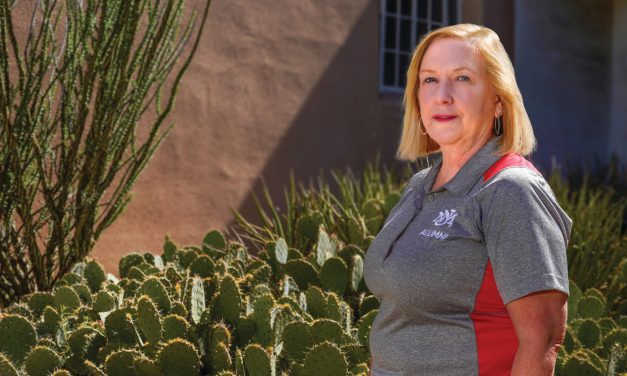
Alumni board president keeps UNM ties tight…
Read More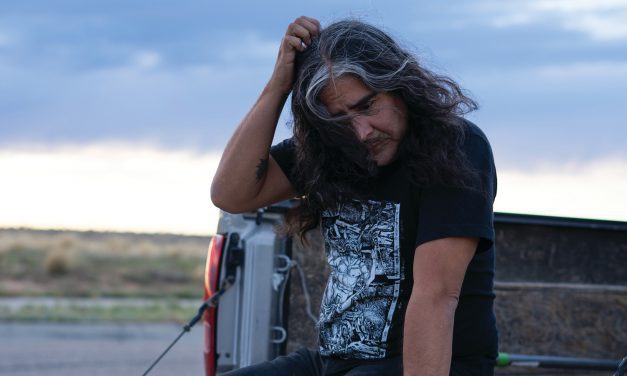
Alumni take home a Grammy and a Pulitzer for music…
Read More

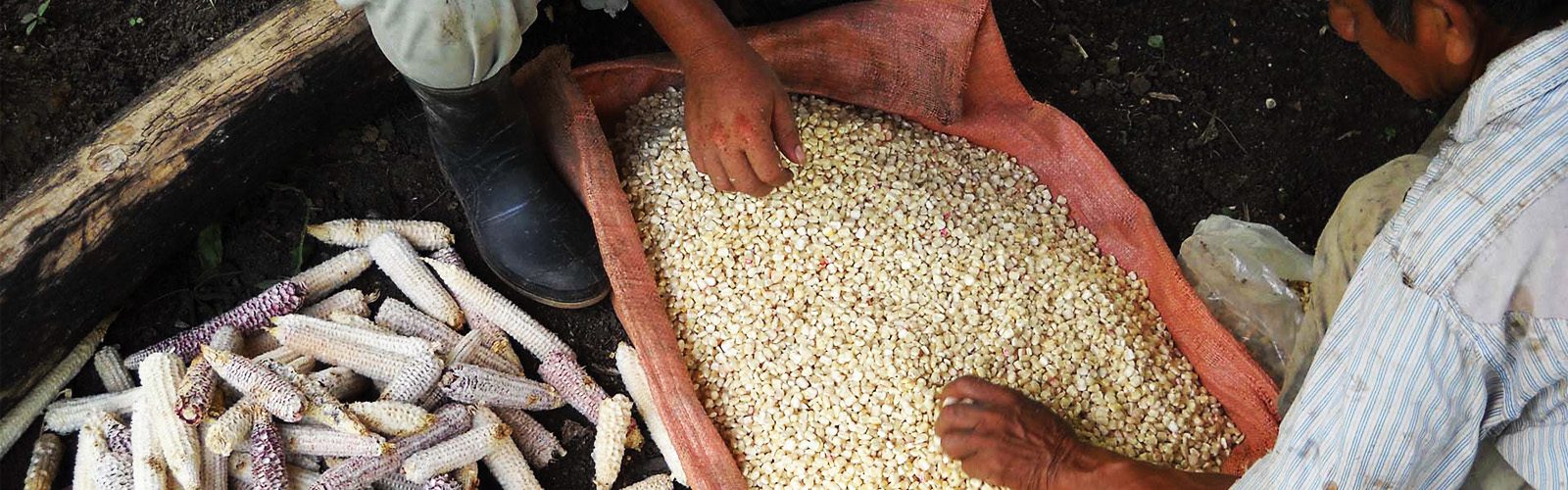
UNM archaeologist and Prof. Keith Prufer co-led a team excavating a site in Belize that uncovered evidence of how maize, a critical staple food in Central America, went hand in hand with human migration.
The paper’s title says it all. “South -to-north migration preceded the advent of intensive farming in the Maya region” was published in the journal Nature Communications in March.
Working in the remote Maya Mountains of Belize, Prufer’s team excavated 25 burial sites and, using stable isotope-labeled DNA, discovered evidence that farmers moved from the south 6,500 years ago, bringing with them seeds that changed the makeup of the region.
“We see the migration of these people as fundamentally important for development of farming and, eventually, large Maya-speaking communities,” said Prufer, who directs UNM’s Environmental Archaeology Lab. Maize — or corn — could be grown and stored, giving communities a reliable source of protein and sugar and allowing them to stay in one place.

UNM archaeologist and Prof. Keith Prufer co-led a team excavating a site in Belize...



The University of New Mexico Alumni Association
MSC 01-1160, 1 University of New Mexico
Albuquerque, NM, 87131-0001
Deadlines:
Spring deadline: January 1
Fall deadline: June 1
Robert “Bob” Cardenas (’55 BS) died in San Diego at the age of 102. Cardenas, a retired Air Force brigadier general, was an experimental test pilot and was awarded the Air Medal with two oak leaf clusters for experimental flight tests at Edwards AFB. His most notable achievement was piloting the B-29 launch aircraft that released the X-1 experimental rocket plane in which then Capt. Charles “Chuck” Yeager became the first human to fly faster than the speed of sound in 1947.
Jack Bresenham (’59 BSEE) Washington, D.C., was honored in the Institute of Electrical and Electronics Engineers Computer Society’s inaugural 2021 Class of Distinguished Contributors, which recognizes members for their technical contributions to the Computer Society and their profession at large.
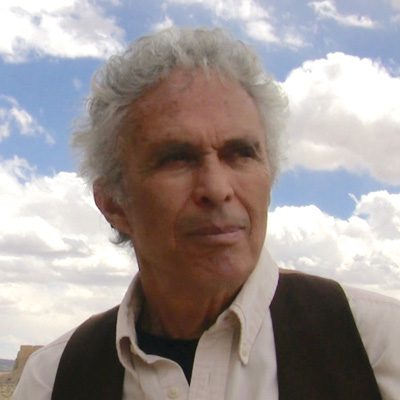
Nasario Garcia
Ronald Kaehr (’70 BSME), Albuquerque, a father and grandfather, has completed his new book “Rogue Justice: Retribution.”
Bob White (’70 BA) Albuquerque, was named associate chief administrative officer for the City of Albuquerque. White has more than 40 years of experience as an attorney and public servant, formerly serving as assistant city attorney and city attorney.
Douglas J. Crandall (’71 BUS) was elected to a second term as president of the board of the New Mexico Retiree Health Care Authority, which administers insurance plans for more than 90,000 municipal, county, state and educational retirees and their families.
Raul R. Mena (’71 BS, ’75 MD), the medical director of the Roy and Patricia Disney Family Cancer Center, retired after four decades of caring for cancer patients at Providence Saint Joseph Medical Center in Burbank, Calif.
Grace B. Duran (’77 JD), Las Cruces, N.M., a judge in the Third Judicial District in Las Cruces, was appointed to the New Mexico Children’s Trust Fund Board of Trustees.
Anna L. Pool (’79 BA) has returned to Albuquerque after retiring from the University of Washington. She is currently editing another
memoir and researching her family history.
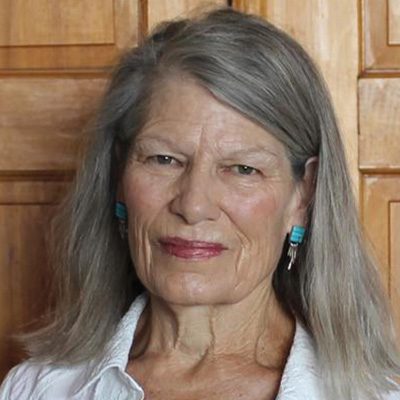
Shelly Armitage
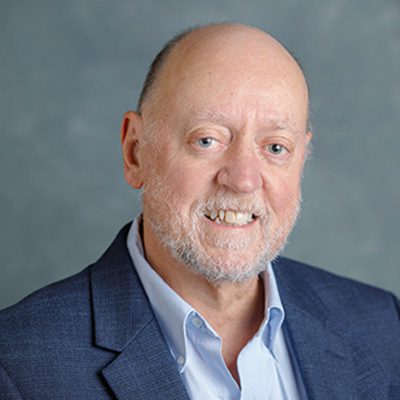
Jack J. Dongarra

Bob Matteucci, Jr.
Shelley Armitage (’83 PhD), Las Cruces, N.M., was inducted into the Texas Institute of Letters. Armitage is a professor emerita at the University of Texas at El Paso.
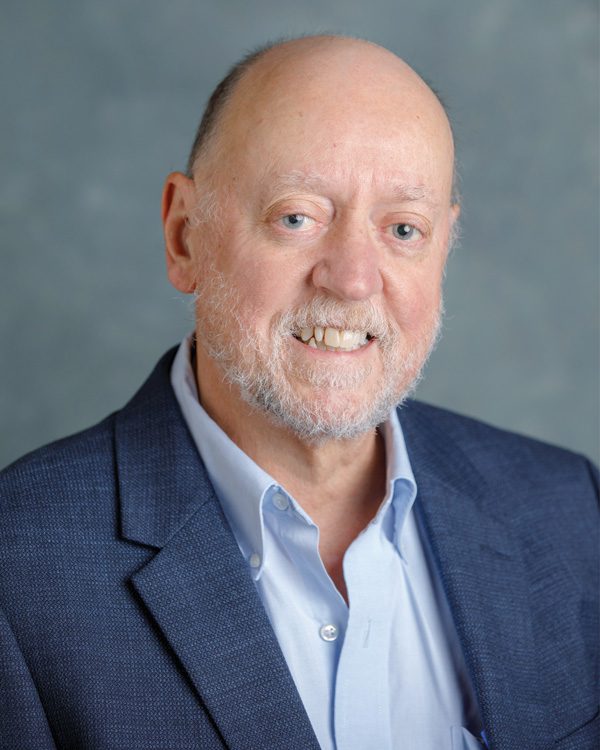
Jack J. Dongarra (’81 PhD) Knoxville, Tenn., received the 2021 ACM A.M. Turing Award from the Association for Computing Machinery for his pioneering contributions to numerical algorithms and libraries.
Bob Matteucci, Jr. (’82 BAS, ’08 JD) has been elected to serve on the New Mexico Bar Association Family Law Section Board of Directors.
Walter R. Archuleta (’81 MA, ’02 PhD), Santa Fe, N.M., was the recipient of the Matías L. Chacón Lifetime Achievement Award for contributions to bilingual education. The award was presented by the New Mexico Association for Bilingual Education at their annual conference.
James H. Hinton (’81 BA), Dallas, retired from his position as CEO of Baylor Scott & White Health, and has been named operating partner of the equity firm Welsh, Carson, Anderson & Stowe.
Mike Hamman (’83 BSCE), was named New Mexico state engineer. Hamman was formerly the CEO and chief engineer for the Middle Rio Grande Conservancy District, the Bureau of Reclamation area manager and the City of Santa Fe’s water resources director.
Dianne R. Layden (’83 PhD), Albuquerque, was selected to portray the late Supreme Court Justice Ruth Bader Ginsburg in the New Mexico Humanities Council’s Chautauqua program.
Martin Red Bear (’83 MA) is celebrating Native American culture and honoring military service members with a new piece of art that will be displayed in The Journey Museum & Learning Center in Rapid City, S.D. Red Bear was commissioned to adorn the outside of a tipi, choosing to paint 41 horses and warriors.
Edward Argueta (’85 BSCE) was honored by the Department of Defense with the Bronze de Fleury Medal for his exceptional service to U.S. Army Corps of Engineers, the U.S. Army, the Department of Defense and the nation during a career that spanned more than 35 years.
Gregor von Huene (’85 BSME) is chief engineer at Soleeva Energy Inc. in San José, Calif., where he is developing a hybrid solar photovoltaic panel that provides both hot water and electricity. The panel will increase the overall energy gain from the same roof space and will be manufactured in the U.S. for use in residential and commercial applications.
Russell “Rusty” Greaves (’87 MA, ’97 PhD) has been appointed director of the Office of Contract Archeology, a division of UNM’s Maxwell Museum of Anthropology.
Sheila Hernandez (’87 BBA, ’89 MBA) has been named senior vice president at Summit Electric Supply in Albuquerque with the title “customer experience officer.”
Harvey Krauss (’87 MAPA) was named the director of economic development and senior planner for the town of Florence, Ariz.
Mike D. Petraglia (’87 PhD), Brisbane, Australia, has been named director of the Australian Research Centre for Human Evolution at Griffith University.
JoLou Trujillo-Ottino (’87 BA) has joined Delta Dental of Arizona’s leadership team as its senior vice president of sales and business development.
UNM alumni Craig Webb (’87 BFA), Rudolfo Carrillo (’87 BFA), Judson Frondorf (’80 BFA, ’87 MA) and Angie Garberina (’88 BFA) were featured in “Saw. Conquered. Came.” at Six O Six gallery in Albuquerque.
Jim R. Keene (’88 BM), Atlanta, Ga., conducted The United States Army Field Band on the recording Soundtrack of the American Soldier, which won the Grammy Award for Best Immersive Audio Album.
Dave A. Sanchez (’88 BA), Washington, D.C., has been appointed director of the Office of Municipal Securities at the Securities and Exchange Commission. He was an attorney fellow at the SEC from 2010 to 2013 and was most recently senior counsel at Norton Rose Fulbright.

Cindy Lovato-Farmer
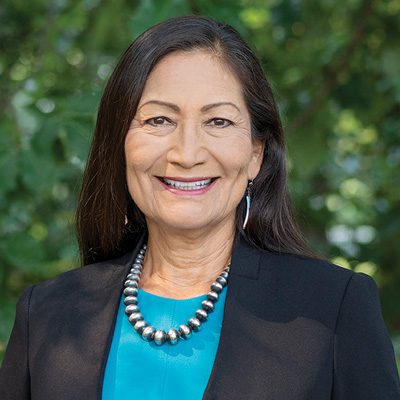
Deb Haaland
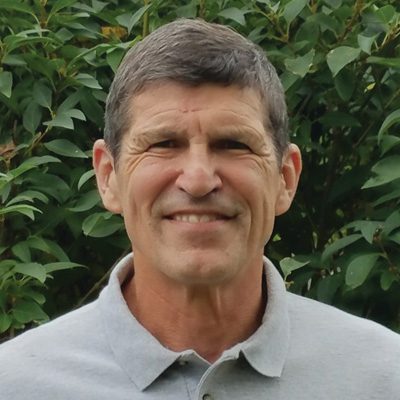
Tom Ducatte
Cindy Lovato-Farmer (’93 JD), a specialist in employment law with two decades of experience in legal and leadership positions at national laboratories, has been named general counsel at Pacific Northwest National Laboratory.
Deb Haaland (’94 BA, ’06 JD), the U.S. Secretary of the Interior, spoke at the 2021 United Nations Climate Change Conference in Glasgow, Scotland.
Tom Ducatte (’98 EDSPC) is a sportswriter for North Country Living Magazine, a quarterly publication located in the Adirondacks region of upstate New York.
Bryan Biedscheid (’90 BA, ’96 JD) is chief judge of the First Judicial District, which encompasses Santa Fe, Los Alamos and Rio Arriba counties.
Carol C. Sánchez (’90 BFA), Orlando Leyba (’82 BFA), and Leigh Anne Langwell (’88 BFA, ’98 MFA) are included in a new exhibition at South Broadway Cultural Center showcasing the work of six artists reflecting on their experiences of the pandemic.
William V. McPherson (’90 BA), Henderson, Texas, who retired from the Houston Police Department in 2020, is Kilgore College’s police chief and director of public safety.
Julie Coonrod (’91 MS), dean of Graduate Studies at UNM and professor of Civil, Environmental, and Construction Engineering, has been named by The American Council on Education as a Fellow for the 2022-2023 academic year.
Garrett Young (’92 BUS) was promoted in December 2022 to partner and general manager at Microsoft corporate headquarters in Redmond, Wash.
LeManuel Lee Bitsoi (’93 AALA, ’95 BS), Cambridge, Mass., is vice president for Diversity, Equity, and Inclusion at Brandeis University.
Matthew T. Casados (’94 BSED), Santa Cruz,N.M., is the Rio Arriba County deputy manager.
Rhonda BeLue (’94 BS) joined The University of Texas at San Antonio as a Lutcher Brown Endowed Distinguished Professor in the Department of Public Health.
Savannah C. Partridge (’94 BSEE), Seattle, Wash., was chosen as the 2022 Honorary Fellow by the Society of Breast Imaging in recognition of her scientific contributions for advancing breast imaging techniques.
Elizabeth A. Garcia (’95 BA) has assumed the duties of chief clerk of the New Mexico Supreme Court.
Tieraona Low Dog (’96 MD), Austin, Texas, has been elected to the American Botanical Council’s Board of Trustees.
Maria E. Sanchez-Tucker (’96 BA), Santa Fe, N.M., has been named community services director for the City of Santa Fe’s Community Health and Safety Department.
Benjamin A. Baker (’97 BA) has been appointed interim director of the New Mexico Law Enforcement Academy, and serves as the deputy cabinet secretary for statewide law enforcement support at the Department of Public Safety.
Olivia Benally (’97 BSEE) Window Rock, Ariz., is the new chief executive officer of the Navajo Times Publishing Company Inc. and publisher of the Navajo Times newspaper.
She is the first Diné woman to serve as leader of the Navajo Times.
Rachel Hess (’97 MD), physician and scientist, was named associate vice president for research at University of Utah Health.
Maria De Varenne (’98 BA), Nashville, Tenn., has been named senior partner at FINN Partners, a leading global public relations agency. Varenne, a veteran news executive and former Tennessean editor, will be responsible for overseeing earned media strategy and content across print and digital channels for the company’s diverse clients throughout the Southeast.

Raven Chacon
Raven Chacon (’01 BA), Albuquerque, N.M., won the 2022 Pulitzer Prize in Music for his piece Voiceless Mass for the pipe organ. Chacon is the first Indigenous composer and first from New Mexico to win the prize.
Cynthia Chavez Lamar (’01 PhD), Alexandria, Va., has been named director of the Smithsonian Institution’s National Museum of the American Indian.
Lauren Keefe (’01 JD) is the new city attorney for the City of Albuquerque.
Donna Mowrer (’01 JD), is the new chief judge of the Ninth Judicial District, which includes Curry and Roosevelt Counties.
Camille Pedrick (’01 BA, ’05 JD), Albuquerque, is the new executive director of The New Mexico Board of Bar Examiners.
Benjamin Petre (’01 BA) Denver, Colo., joined the international law firm Dorsey & Whitney LLP as a partner in its Denver office.
Dylan Miner (’03 MA, ’07 PhD), a founding professor in the Residential College in the Arts and Humanities at Michigan State University, has been appointed dean of the College.
John W. Blair (’04 JD), Santa Fe, N.M., is the new manager of the City of Santa Fe.
Ganesh Balakrishnan (’06 PhD), Albuquerque, was appointed director of The New Mexico Established Program to Stimulate Competitive Research, which works toward building the state’s capacity to conduct scientific research.
Kathy Dong (’06 PHARMD, ’06 MBA) joined the early-stage biotechnology firm Neuron23’s board of directors.
Eric J. García (’06 BFA) Roswell, N.M., presented his exhibit “Space Invader” at the Roswell Museum. The Roswell artist-in-residence’s work shines a light on the dark past of the Americas, and the reality of an authentic “alien” invasion of frightening proportions when Indigenous people clashed with “aliens” from the European continent.
Luis Brown (’07 BBA, ’09 MBA) has been hired as the information technology director by the Village of Los Lunas.
Leah Chelist (’07 BUS) is the new Executive Vice President for People at Denver-based NexCore Group, a national health care real estate developer.
Marcos Gonzales (’07 MBA) was recently promoted to director of the Bernalillo County Economic Development Department.
Shammara Henderson (’07 JD), Albuquerque, a New Mexico Court of Appeals judge, was honored with the Albuquerque Section of the National Council of Negro Women’s Dr. Mary McLeod Bethune Legacy Award. The award acknowledges work with the National Council of Negro Women and the Black community in New Mexico.
Jason R. Patton (’07 BSNE), Gales Ferry, Conn., a U.S. Navy commander, is executive officer of the NAVSEA Warfare Center’s Naval Undersea Warfare Center Division Newport in Rhode Island.
Rebecca Chavez (’08 BA), an MD, completed the surgical critical care fellowship program at Westchester Medical Center in Valhalla, N.Y., a hospital affiliated with New York Medical College School of Medicine.
Shanna M. Combs (’08 MD), Fort Worth, Texas, a practicing physician with the Cook Children’s Physician Network, has been named president of the Tarrant County Medical Society.
Emma Nolan (’08 MWR) is the new principal managing broker for Coldwell Banker Bain’s Edmonds/Lynnwood office located in Seattle, Wash.
Myrriah Tomar (’08 BS) received the 2022 Women in Technology Award from the New Mexico Technology Council. Tomar is the executive director of New Mexico Tech’s Office of Innovation Commercialization and serves as a member of President Stephen G. Wells’ senior staff and cabinet.
Melanie Barnes (’09 PhD) was named state director for the Bureau of Land Management, and will oversee 800 employees, 13.5 million acres of public lands and 42 million acres of federal minerals.
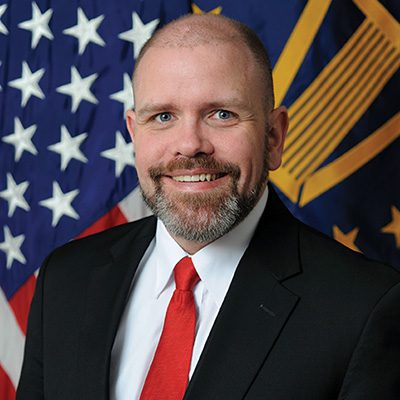
Tim Hoyt

Ashleigh E. Olguin
Tim Hoyt (’10 PHD) serves as the deputy director for Force Resiliency in the Office of the Under Secretary of Defense for Personnel & Readiness. He oversees military-wide policy and programs related to suicide prevention, sexual assault prevention and reducing illicit drug use.
Ashleigh E. Olguin (’15 BA), Albuquerque, was promoted director of contract administration at Friday Health Plans.
Ruben Olguin (’10 BA, ’15 MFA) focuses on acoustics and incorporates sound frequencies in his series “Anthropogenic frequency,” part of the Arrivals 2022 exhibition at form & concept gallery in Santa Fe. Olguin’s series consists of vessels 3D-printed in plant-based plastic filaments infused with wood, which hold specific frequencies isolated to the optimal sound to stimulate the growth of specific plants, such as basil, corn, tomato and mung bean.
Yagazie Emezi (’11 BA), Lagos, Nigeria, an artist and independent photojournalist, has had work published by Al-Jazeera, The New York Times, Vogue, Newsweek, The Guardian and The Washington Post. Emezi was awarded the 2018 inaugural Creative Bursary Award from Getty Images, 2018 U.S Consulate Grant from The United States Consulate General Lagos, Nigeria, and 2017 Distinguished Alumnus Award from The University of New Mexico African Studies Department. Three years ago, she made history by becoming the first black African woman to photograph for National Geographic Magazine.
Ernest I. Herrera (’12 JD), San Antonio, Texas, was named by the Mexican American Legal Defense and Educational Fund as its Western Regional Counsel.
Eric J. Stephen (’12 MA), Tulsa, Okla., is an education and development specialist at Manhattan Construction Company, a national construction services firm.
Alex M. Greenberg (’14 BA, ’17 MBA), Albuquerque, is director of the New Mexico Economic Development Department’s Office of Science and Technology.
Jessica Leigh Streeter (’14 JD), Las Cruces, N.M., has been appointed to the Third Judicial District Court.
Fabianna Tabeling (’14 MACCT, ’19 MBA) has been named interim director of Popejoy Hall at UNM.
Matthew L. Bernabe (’15 BBA), Albuquerque, owner of Urban Hot Dog Company, was featured on the Cooking Channel’s show “Food Paradise.”
Eric G. Griego (’17 MA, ’21 PhD), Albuquerque, will serve as the City of Albuquerque’s director of outreach and advocacy, which seeks to engage the community in the policy-making process.
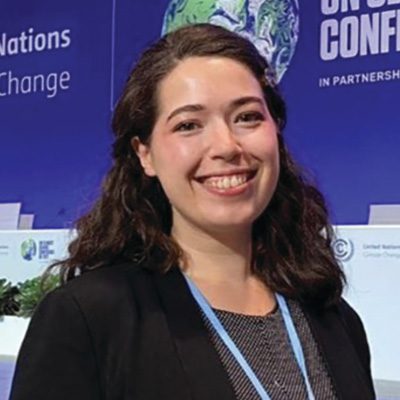
Alexandra Iturralde
Alexandra Iturralde (’20 BA) is a first-year graduate student at Duke University’s Nicklas School of the Environment.
Layla S. Archuletta (’20 MPA), Santa Fe, N.M., former staffer for U.S. Sen. Martin Heinrich, is the City of Santa Fe’s deputy city manager.


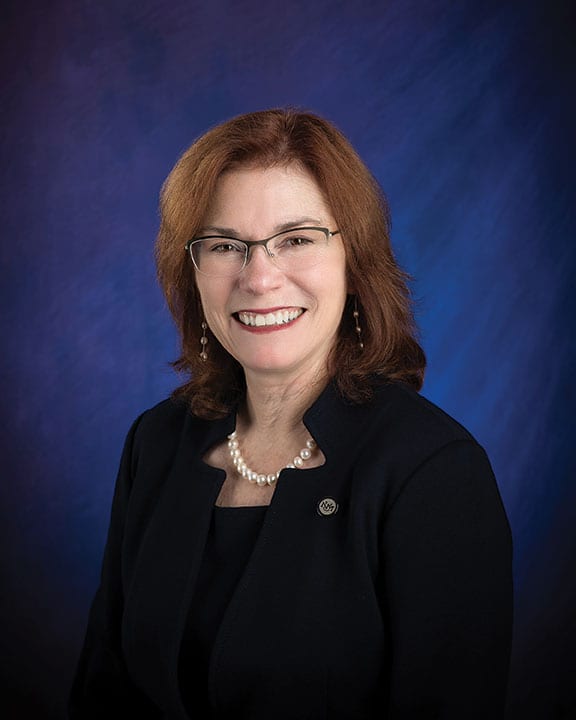
Dear Lobos,
Fall in New Mexico is a treat for the senses. With the arrival of autumn comes the smell of roasting chile, the sight of hot air balloons on the horizon and the vibrant, bustling sounds of student life on our UNM campuses. It’s easy to be excited about the season — and about the future.
For more than a year — and even during a globe-altering pandemic — The University of New Mexico has been working tirelessly with an engaged university community to craft a road map for the future of our university. That long-term plan, UNM 2040: Opportunity Defined, has given us a chance to think differently about how UNM can be more relevant, more visible, and more competitive as we make our way toward the middle of the 21st century.
We officially unveiled our plan at a celebration in the SUB this past May, with the help of some key Lobo leaders and the lively support of an engaged audience. As part of our plan, we’ve laid out five long-term goals to guide us along our path to excellence. I hope you’ll take some time to read the full strategic framework, but our five goals, briefly, are:
As our flag-bearers and ambassadors in communities around the world, our Lobo alumni are some of our most crucial allies in advancing our mission and helping us achieve these lofty goals. Your engagement and enthusiasm will always be essential to our success as a university — and with you at our side as we begin the work to turn our aspirations into reality, I have never been more optimistic about our future as Lobos.
Have a wonderful Fall, and let’s go, Lobos!
Garnett S. Stokes
President, The University of New Mexico
FROM THE EXECUTIVE DIRECTOR, UNM ALUMNI ASSOCIATIONJul 13, 2026 | Alumni Executive Director...

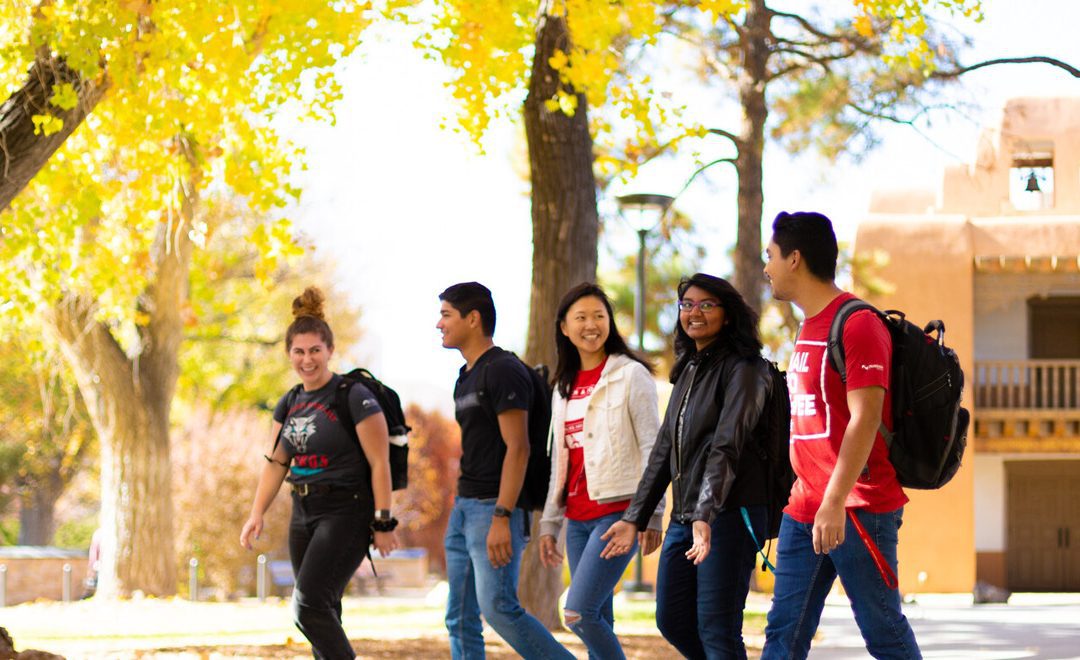
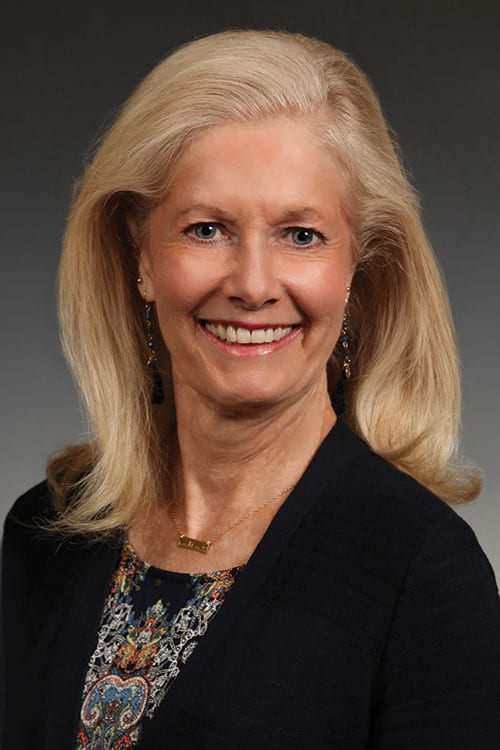
When we describe the Alumni Association, we think of words like network, connection, sharing, support, enrichment and discovery. These words capture what we’re trying to accomplish with you and for you at the UNM Alumni Association. When you graduated as a Lobo, you became a Lobo for Life — an automatic member of our alumni association. And now we want to ensure you have the opportunities you want, whether it’s simply to be informed or to be actively engaged.
For those wanting to keep updated on the programs and work of the Association, there are two best places. One is The Howler, which is emailed to you on the first Thursday of each month. The second is our website, with up-to-date information on events, activities and opportunities to engage.
And of course, we know every Lobo looks forward to the Mirage magazine filled with interesting stories about our alums around the country. Our alums are doing amazing things in their jobs and communities. The interesting developments since their graduation are fascinating to discover and bring to you.
And now our biggest focus for this year is to get you involved in what we’re doing. We want you to participate, whether it’s attending an event — in person or virtually — or it’s joining a regional or affiliate chapter, a committee, or considering nominating yourself for a board member position. You could take advantage of our Lobo Career Network, which provides support to alums at every stage of their career. We’re also putting together the Alumni Business Directory to acknowledge and promote our alum-owned businesses. These opportunities and more are outlined on our website or you can reach out to us to find out more.
An here’s a reminder of an easy way to help the Alumni Association: When it comes time to renew your vehicle registration, order a UNM prestige plate. It’s a great way to support your alumni association activities.
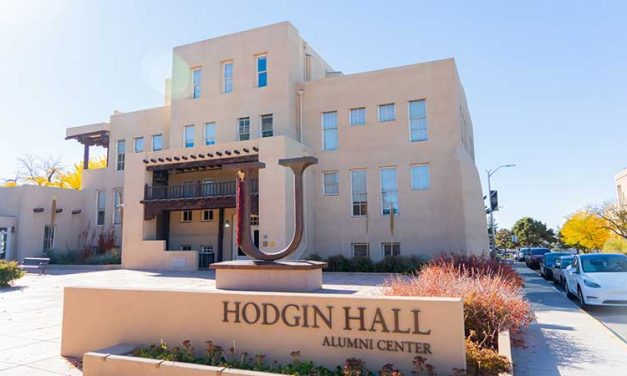
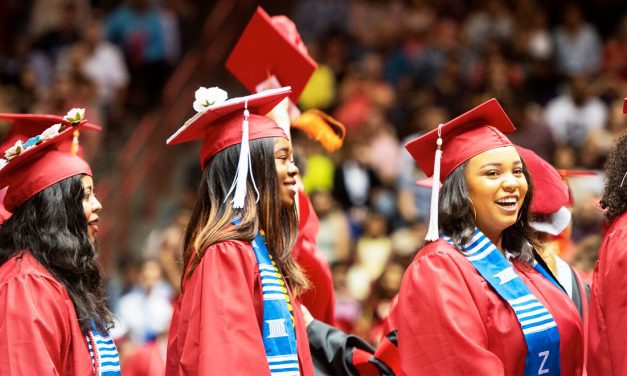
I’d like to conclude with a special congratulations to our Alumni Emeriti. We enjoyed hosting the classes of ’70, ’71 and ’72 this past May at Hodgin Hall for a reception, breakfast with President Stokes, a tour of campus and concluding with the Commencement ceremony and special recognition of our alums. See our photo section for more.
To all of you Lobo for Lifers, we appreciate your support and engagement with UNM and the UNM Alumni Association. Go Lobos!
Connie Beimer
Vice President for Alumni Relations, UNM
Executive Director, UNM Alumni Association


Recent Comments