All About Community

All About Community

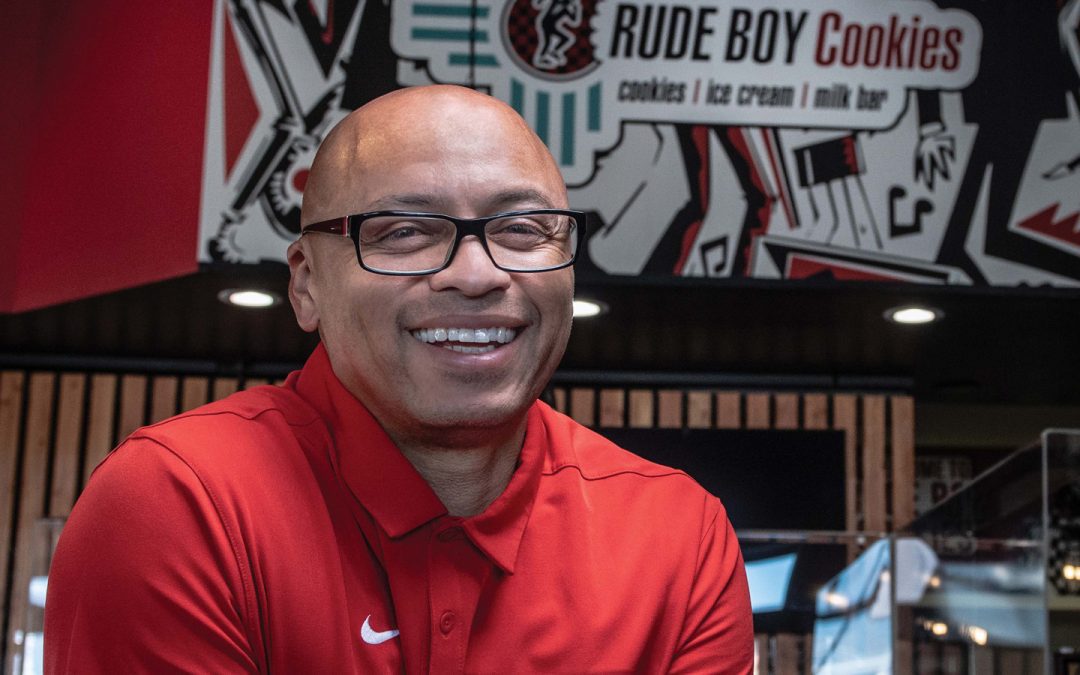
Mike Silva owner of Rude Boy Cookies

All About Community: From ska beats to cookie batter, Alumni Association President Mike Silva keeps it real

By Leslie Linthicum

A snapshot of Michael Silva’s life before age 8: Violence on the streets of South Central Los Angeles. Chaos at home. A fearless little man fighting to survive a tumultuous and violent childhood.

Michael after age 8 when his mother snatched up her three kids (with a fourth on the way) and moved to Albuquerque to start fresh: With space and calm, the angry kid begins to relax. He finds the saxophone in band class and a passion is sparked. People come into his life who are helpful and kind. From his house in the Kirtland, he can see The Pit and University Stadium. He begins to dream of going to college, specifically UNM.

The Central Avenue location of Rude Boy Cookies, Silva’s business for the past seven years, is not yet open as Silva (’95 BA) sits in a comfortable booth and reflects on the course his life has taken, the “then” and “now” that seem entire worlds apart.

But as Silva reaches new heights – two successful businesses, a stable, loving family, a circle of friends and accolades and awards from his community – he is reminded that everything he is today has roots in that scrappy, damaged kid from L.A.

“My childhood was pretty hardcore. There was a lot of loss, there was quite a bit of trauma,” he says. “As an adult now I’m finding that I’m still processing some of that stuff and dealing with it. But it’s work that I’m fully engaged in, I’m active in and I’m committed to because now I’m a father.”

The incoming president of the UNM Alumni Association chokes up when he thinks about that kid who is still inside him.

“It’s heavy and it doesn’t go away. It doesn’t matter how successful you are. It doesn’t matter how much community equity you have,” Silva says. “If you don’t deal with that stuff, it never goes away, it always comes back. So, because of all of the loss and the abandonment that void in me is filled by tremendous amounts and love and grace and kindness.”

ska checkerboard pattern in black and white

Silva first picked up the accordion as a kid in L.A., but it was the saxophone that hooked him on music.

By the time he landed at Del Norte High School as a freshman, he was an accomplished musician. “That was my life,” Silva says. “I was laser focused. That’s all I cared about. It became my direction. It became my path.”

When he neared graduation, he targeted UNM and a degree in music. “I grew up in the shadow of the University. My love of the University began to grow at a very young age and I knew I wanted to go to UNM.”

His first semesters were tough. He wasn’t clicking with his classes. His study habits weren’t cutting it. He struggled to afford tuition and living expenses. And scheduling an 8 a.m. math class didn’t help.

He was teetering on the edge of dropping out when he decided to try a different major as a sophomore and see if his interest in history and politics might help him find a focus.

He switched majors to political science and began to excel.

“I had some unbelievable professors who helped me, pushed me, guided me. I had Fred Harris for several classes. He was very impactful.”

Still, performing on a stage with a band held a powerful sway. Silva put law school on hold (becoming the next junior senator from New Mexico could wait) and pursued music. He played sax and drums in Cool Runnings, a 10-piece reggae band, and in Giant Steps, a seven-piece ska band that had regional success, cut a few albums and toured with some national acts.

When it came time to get to down to more traditional work, Silva went into hospitality and sales. Getting fired from a sales job persuaded him to become his own boss and he and fellow Lobo Jesse Herron (‘03 BBA, ’05 MBA) hatched the plan for ABQ Trolley Co. in 2007 over chips, salsa and five hours of conversation at a Taco Cabana.

Once their custom-made trolley was delivered in 2009, they launched the tour company, switching off driving and microphone duties, and grew the company into what it is today – Albuquerque Tourism and Sightseeing Factory, an umbrella for the four divisions of the company: trolley tours (which include the wildly popular Breaking Bad tour), a walking ghost tour, a party bike business and ABQ in a Box, a gift company.

For his next entrepreneurial venture, Silva looked to two of his passions – ska and reggae music and cookies.

Ska music, which originated in Jamaica and shares an offbeat with reggae, has an inclusive ethos (its early “two-tone” bands were racially integrated) and an upbeat energy and message.

Two-tone fashion is a black-and-white checkerboard and when Silva played in ska bands he wore the sharp black-and-white ska uniform favored by Rude Boys, the fervent ska fanatics – a neat black suit, white shirts and black skinny tie and sharp shoes.

“My life is ruled by checkerboard. It’s everywhere and in every aspect of everything I do,” Silva says. In 2014, Silva wanted to start another business. There was no cookie bakery in Albuquerque at the time, so he decided to launch one with a former co-worker, Kristin Dowling, a dedicated baker who had a culinary degree from CNM.

They opened Rude Boy Cookies in 2015 with the intent of satisfying sweet tooths and also engaging with and supporting Albuquerque.

“To me, there’s much more to life than the bottom line,” Silva says. “I want to be successful. But there’s more important things than just making a buck.”

Silva, whose 23 and Me results show is 60 percent Black and 30 percent Spanish, was traumatized and then galvanized by George Floyd’s murder under the knee of Minneapolis police officer Derek Chauvin in 2020. With members of his circle of brothers, a group of Black professionals in Albuquerque, he helped to organize a silent protest at Civic Plaza, and another along Central Avenue. They formed BURQUE Against Racism and Silva is committed to helping the less fortunate and, in his words, “lifting up all Black lives in Albuquerque.”

“I am going to stand up for what’s right and I’m outspoken about it,” he says. “I’ve maybe lost business because of it but I can look at myself in the mirror every single day and know that I’m doing the right thing.”

Silva is honored to serve as president of the UNM Alumni Association and he wants to use his year as the head of the board to help build pride and connection to an institution that lifted his family and changed his life.

After arriving in Albuquerque, his mother, Martha Washington (’84 BA, ’87 JD, ’94 MA) began attending UNM and was an academic advisor for athletics and then a student in the School of Law while Silva was an undergraduate.

“The University became a huge part of me,” Silva says. And it helped lift us up. I bleed Cherry and Silver with a little tinge of checkerboard.”

The goal for this year is engage active students to build excitement and a loyalty to UNM so that they become alumni with a strong connection to the Alumni Association.

Silva hopes to make a whistle-stop tour across campus to engage with undergrads in all majors and to build something like a Big Brother/Big Sister mentor network between alumni and at-risk students.

The Alumni Association, Silva says, is the school’s front porch. “Every alum is an ambassador to the University and it’s our job to engage people. To me it’s about asking people to be great ambassadors by speaking, by sharing the love of the place.”

Quick takes

His favorite cookie: Chocolate chip, forever.

Top three tracks on his all-time playlist: “Three Little Birds” by Bob Marley; “Ghost Town” by the Specials; “September” by Earth, Wind & Fire.

Family: Wife Penimah Silva (’11 BA) , office administrator at the Keleher & McLeod law firm; daughter Ariella, 8.

How he spends a day off: It’s all about his family and his back yard, which got some major love during the pandemic.

Life-changing moment: When he was 18, Silva was hired as a baseball and basketball coach at Camp Greylock, a storied sleepaway camp in Becket, Mass., and found a mentor there, camp director Bert Margolis, who would change his life. Silva returned for the next 13 summers and became head counselor.

“Bert Margolis became the first true father figure I ever had in my life. He stuck around, seemed to care, taught me the life lessons I still live by.”

About that Rude Boy name: “Fans of ska music are called Rude Boys. A Rude Boy is somebody who shows up at a ska show, dressed in a really nice suit, with a skinny black tie, really slick shoes and a pork pie hat.”
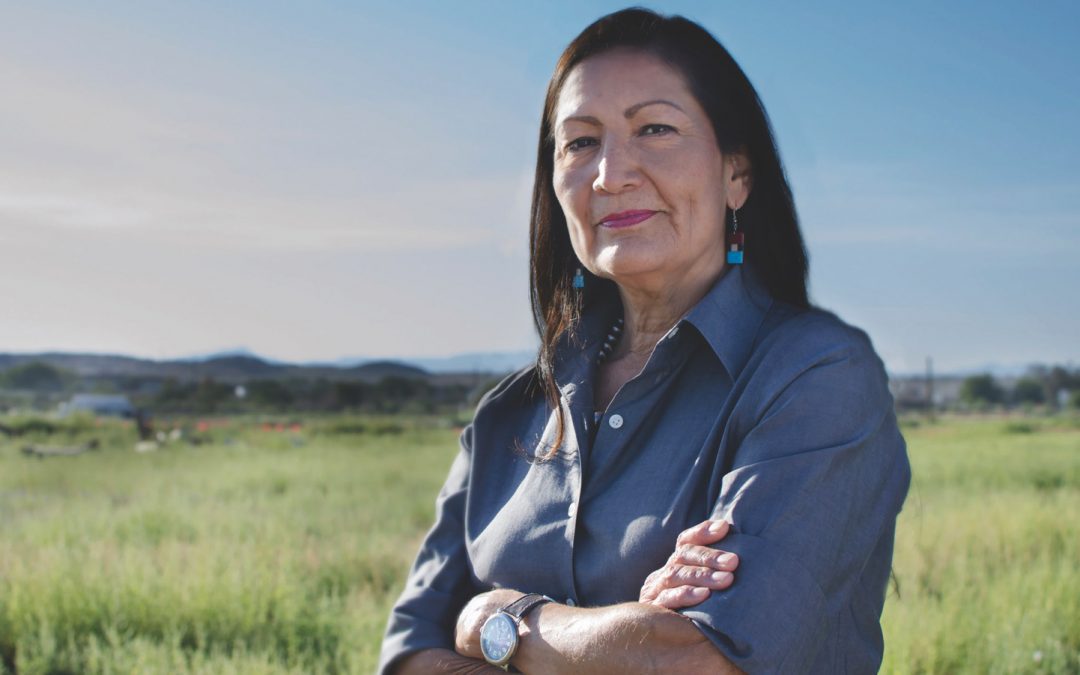
Deb Haaland: One for the History Books

Deb Haaland: One for the History Books

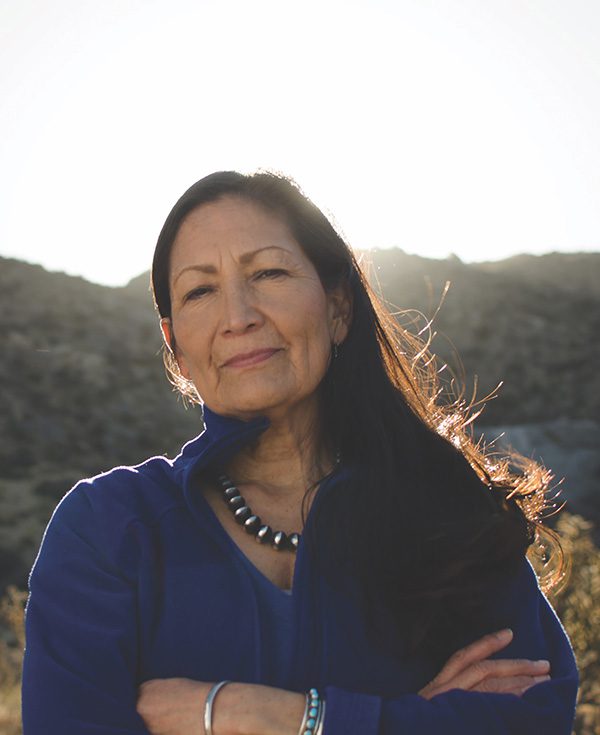
Deb Haaland standing cross armed outside in northern New Mexico

Deb Haaland: One for the History Books

The first Native American to head the Department of Interior stays grounded in Pueblo culture

Deb Haaland (’94 BA, ’06 JD) calls herself a 35th-generation New Mexican, tracing her family tree on her mother’s side to the establishment of Laguna Pueblo in the 1200s. Born in Winslow, Ariz., to a Laguna mother and an Anglo father from Minnesota, Haaland grew up as a military brat; her mother served in the Navy and her father in the Marine Corps and the family moved frequently with each of her father’s postings.

A single mother who has been open about her 30-plus years of sobriety, her housing insecurity and her reliance on public assistance, Haaland walked a rough road that led – in 2018 when she was 58 – to election to the United States Congress, representing New Mexico’s 1st Congressional District.

She was one of two Native American women elected to Congress that year – a first for the country. And this March, Haaland notched another historic first becoming the first Native American to serve as a Cabinet secretary when she was sworn in as Secretary of the Interior.

Haaland now heads a massive federal department with 70,000 employees and missions that range from managing the National Parks and Bureaus of Land Management and Reclamation to overseeing Indian education and the trust relationship between the federal government and 574 federally recognized American Indian and Alaska Native tribes and villages.

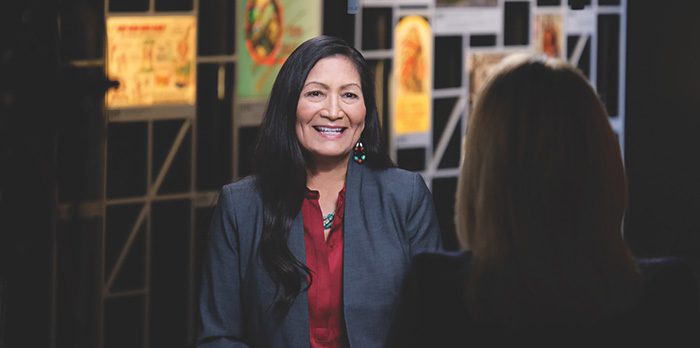
Deb Haaland being interviewed on television by Norah O'Donnell

Haaland is interviewed by Norah O’Donnell for CBS Evening News in April. Photo: Department of Interior

The double alum made time in her busy schedule of travel and meetings to talk to Mirage about her life, her new mission, training for a marathon and her continuing connections to UNM.

Mirage: I’m always interested in families and the relationship between our family and who we are. Your family background is a combination of Pueblo culture, Anglo culture and also military culture. How do you think your parents and grandparents shaped who you are today?

Haaland: The military part of it, my dad got his orders every couple of years and there was never any fight or question. We just packed up and moved to wherever the commander in chief instructed him to move. I feel like that part of my life has given me a real opportunity to sort of adapt to things very easily. You have to make new friends wherever you go; it’s a new house, new neighborhood, all of those things. So, I feel grateful for that. I actually feel like I was able to adapt really well to so many different types of situations and so I feel like that’s something that the military life does for a person.

With that being said, whenever my dad had a temporary duty station, meaning he was there for six months or a year, my mom would make sure that we went to stay with my (Laguna) grandparents during that time. She was adamant for us having an opportunity to grow up with my grandparents and have them in our lives. They were part of the assimilation policies. Not only did they go to boarding schools but they worked on the railroad in Winslow, Ariz. My grandfather was a diesel train mechanic for 45 years and my grandmother cleaned diesel train engines. Sometimes when we would go visit them it was Winslow. Other times it was to Laguna.

I learned how to cook from my grandmother just by watching her through the kitchen window. She didn’t like kids in her kitchen. She moved entirely too fast and you’d get run over if you even tried! And then I’d spend time at Laguna with my grandfather in his fields. He grew corn and there were fruit trees that he would irrigate. We’d pull weeds, pick worms off the corn. So, I feel like it was because of my mom, who really insisted that we learn everything that we could from our grandparents, that I have that incredible perspective. When we got older of course it was hiking on the mesas and climbing rocks and all of that so I got a good taste of the outdoors as well.

My grandmother was from Mesita Village. We’re matrilineal and we follow our mother’s side.

Mirage: She really kept you grounded with Pueblo culture even though you had a very urban childhood and were moving all over the place.

Haaland: I went to 13 public schools before graduating from Highland High School in Albuquerque.

Deb Haaland wearing a blue sweater while the sun rises behind her
Mirage: You graduated from Highland, and then I think you were 28 when you enrolled at UNM. What was happening in that decade between high school and college and what was it that propelled you to seek a college education?

Haaland: I was working at Zinn’s Bakery. I started that job when I was in high school. I walked to work every day after school. And when I graduated from high school, they offered me a full-time job. So, I took that and I just worked. It was important that I make a living by myself. My dad wasn’t the type to let anyone sit around the house, so not working was out of the question.

You know, I just woke up one morning and asked myself, “Am I going to be doing this for the rest of my life?” And the answer clearly was no. And at that point I called my sister, I called my mom and I asked them, “Should I go to college?” And of course, they said absolutely. Neither one of my parents graduated from college. I didn’t have a lot of people telling me I should go to college. So now I do that as a role model for kids. I just plant the seed sometimes. If I’m the only one asking them, you know, “Think about going to college,” then it’s absolutely important that I raise that.

Mirage: The path to college for a first-generation college student is a tough one. It took you awhile to graduate. I’m assuming you worked your way through?

Haaland: I was working. There were family obligations. I just wanted to do well and I thought if I don’t overload myself that I should be able to do well. And it was fine. Things happen the way they’re supposed to, I guess.

Mirage: And you were 34 and quite pregnant when you graduated. (Her only child Somah was born four days after graduation.) That sounds like a lot. And then you had a degree, you had a toddler and you started your own business, Pueblo Salsa.

Haaland: Yes, I kept that alive until I was in law school.

Mirage: Was that about the flexibility of being a single mom and being able to make your own hours?

Haaland: That was part of it definitely. I didn’t want to put my child in day care. I just felt very strongly that children in those young ages, it just lasts for such a short time, I felt very confident that if I kept her with me as much as possible, I would have a strong influence over her life. And as it is, they’re doing pretty well.

Mirage: Yeah, I looked at their social media. Cool kid! You’ve raised a really interesting adult who’s very impressive. I read a piece by Julian Brave Noise Cat in which he described in a really sensitive way this period of time when you really didn’t have enough food, were really down to nothing in the cabinet, and applied for food stamps. Can you talk about your financial struggles and how you coped?

Haaland: Right. Oh, my goodness. It’s tough. And so I understand that. It’s tough for so many people in this country. If I had all the money that I spent in overdraft fees, right? You just hold your breath every day because you’re worried about being able to keep things going, keep a roof over your head. I relied on friends and I relied on family. But I recognize that’s not a foolproof way to gain financial footing, either. That’s why I’ve been very adamant about helping to level the playing field. Equity is an issue in this country that we absolutely need to work on and deal with. People need to be able to support themselves. I remember filling out my application for food stamps and then telling me you don’t qualify for emergency food stamps and I just started crying in the counselor’s office. I know what it’s like to have to put food back when you’re at the checkout line because you don’t have enough money to pay for it.

Mirage: When you did decide to go to law school, were you thinking of a career as a practicing attorney or were you thinking of about getting into politics and just these kinds of social justice issues we’re talking about?

Haaland: You know, when I was in undergraduate, I had to take English 100 when I started because I didn’t score high enough on my standardized test, and my writing instructor would give us extra credit for going to lectures around the university and writing an essay about the lecture. And one of the first ones I went to outside of class was to listen to John Echohawk from the Native American Rights Fund. I was so impressed with him and his journey and work he was doing. He inspired me. And later on in my undergraduate career I took a class from Fred Harris, former senator from Oklahoma. He taught political science and he inspired me further. So I thought between those two I needed to go to law school.

Mirage: And after you graduated from law school, it was a law professor who put on the path of politics? Encouraged you to volunteer?

Haaland: My constitutional law professor invited me to apply to Emerge New Mexico and so I did that. I applied to Emerge New Mexico and the rest is history, I guess. I recognized that I could make an impact on things. Thereafter I just really dug in and started helping folks get out to vote. I was joined, of course, by many folks who feel passionate about our right to vote and so I was in really good company and have been for a long time.

Mirage: The rest is history! I look at your career as starting rather late in life, but then just taking off. From 2012 working for the Obama campaign to 2018 being in Congress yourself, that is a very short period of time. Did it seem like a real life-changing whirlwind?

Haaland: It’s a good chunk of years, so it doesn’t necessarily feel like a whirlwind. But sometimes I stop to think how much has happened. I look through photographs I’ve taken that sort of document what I’ve done throughout the years and I think, yes, an awful lot has happened. It’s been wonderful. I’ve made some strong and beautiful friendships across the state. So it’s been great. And I’m still in touch with my college professors from UNM.

Mirage: When you were nominated for this job you spoke about the impacts of climate change and environmental injustice and the Interior Department addressing those issues. I wondered what you see as the core, the theme, of the work that you want to do.

Haaland: Climate change is real and if anyone thinks we’re not facing a climate crisis right now, I don’t understand that. It was a month ago or something the highest carbon levels ever recorded in the history of our world were recorded. So it’s an urgent issue. When you read the front page every day, they’re either talking about drought or wildfires. Our world is definitely changing. And I feel that every single American can participate in this new era that needs to happen and I really hope that every single person gets on board.

Mirage: You are famously the first Native American in charge of this agency and it’s an agency that has such a terrible history with Native Americans. So this isn’t just academic or policy for you – this is personal, right? Do you see that as an opportunity? Does it weigh on you?

Haaland: You know every position I’ve had weighs on me. If you’re a leader in anything you’re in that position because you care deeply about the issues, and I do. I care deeply. However, I feel very blessed that I’ve gotten so much support. For most things that I’ve done, even when I was a member of Congress, I had support across the country for the things that are important that we want to accomplish. So, I feel like I’m standing on the shoulders of so many people who came before me who worked hard to conserve our environment, who worked hard to bring issues to the forefront so that people will care about them and I feel like I am sort of honoring those people’s legacy and that’s a part of how I feel about the job that I have now. Many folks have come before me and I really need to stay on that trajectory.

Mirage: I’m curious how you stay grounded and connected – healthy physically and mentally in this period in your life.

Haaland: I’m a runner. I’ve been running for the last 20 years. And that absolutely keeps me grounded. Yesterday morning I got outside and ran eight miles. It was a beautiful New Mexico sunrise. I’m here in New Mexico and I’m going back to D.C. later today. I pack my suitcase with red chile and green chile and corn tortillas. I eat New Mexican food whenever I’m home. My mother taught us that those traditional foods. Yes, they keep your body healthy, but they also feed your soul, because we have a very strong tradition of agriculture here in New Mexico. When you partake of that it feeds your spirit as well.

Mirage: Are you training for any races right now?

Haaland: I am. I’m signed up for the Marine Corps Marathon Oct. 29.

Mirage: Is eight miles for a short run or a long run?

Haaland: When you train for a marathon, you increase your mileage incrementally. So I’m at eight miles. The next time I’ll run 10 and go up from there, my longest run being 20 miles before the marathon.

Mirage: Anything else you’d like to touch on about UNM?

Haaland: I would just say to the students at UNM, you’re so fortunate to be at an amazing university. It’s a close-knit community, everyone cares about each other. I loved my time there and I keep that tradition going.

My child, Somah, also graduated from UNM in the Theater Department in 2017. And so both of us, we recognize the value of being at hometown university like UNM. So just keep up the good work.

Mirage: So, a proud Lobo mom?

Haaland: Absolutely!

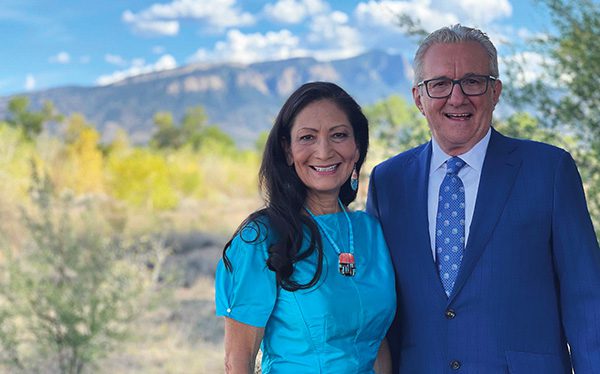
Deb Haaland in a turquoise dress with her husband, Skip Sayer, wearing a blue suit, outdoors with Sandia Peak in the background

photo: Department of Interior

Haaland married longtime partner Skip Sayre in August at the the Hyatt Regency Tamaya at Santa Ana Pueblo.

Haaland isn’t the only alumnus joining the Biden-Harris administration in high-profile policy positions.


Libby Washburn (’98 JD), formerly the chief compliance officer and chief of staff in the President’s Office at UNM, now serves as in the White House as Special Assistant to the President for Native Affairs.

A member of the Biden-Harris administration’s Domestic Policy Council, Washburn is involved in all aspects of the government-to-government relationships between the United States and American Indian and Alaska Native tribes.

Washburn is no stranger to the federal government.

She served as state director and legislative counsel for U.S. Sen. Jeff Bingaman and as the chief of staff to the Deputy Secretary of the U.S. Department of the Interior in the Obama-Biden administration and at the Bureau of Reclamation.

Washburn earned a bachelor’s degree in journalism from the University of Oklahoma in 1994, a master’s in government from Texas Woman’s University in 1995 and her law degree from UNM in 1998.

Washburn, a citizen of the Chickasaw Nation of Oklahoma, served as UNM’s chief compliance officer from 2016 to September 2018, and was appointed chief of staff by interim President Chaouki Abdallah and continued in the role under President Garnett S. Stokes. Washburn left UNM in 2018 to move to Iowa with her husband, UNM School of Law Dean Kevin Washburn, when he became dean of the University of Iowa School of Law.

Xochitl Torres Small (’15 JD), who served one term in the U.S. Congress representing New Mexico’s Second District, has been nominated to serve as Under Secretary of Rural Development in the U.S. Department of Agriculture.

In announcing the nomination, the White House said, “Throughout her career, Torres Small has employed her experience organizing in vulnerable, rural communities to achieve lasting investments that combat persistent poverty.”

Torres Small, the granddaughter of migrant farmworkers who grew up in Las Cruces, left home at age 16 to attend United World College’s college in Eswatini, then known as Swaziland.

She then attended Georgetown University in Washington, D.C., graduating with a bachelor’s degree in 2007, and returned home to work as a field organizer in colonias in southern New Mexico.

In 2008, she came home from college to work.  She went to work as a field representative for Senator Tom Udall (’77 JD) in 2012, working worked on issues ranging from water conservation and infrastructure development to education and healthcare accessibility and helping communities in New Mexico access American Recovery and Reinvestment Act funds. Inspired by Udall’s work on water in the West, Torres Small enrolled in UNM’s School of Law to focus on water law.

She was an attorney at the firm Kemp Smith and in 2018 became the first woman to represent the second congressional district.

Vax Sisters

Vax Sisters

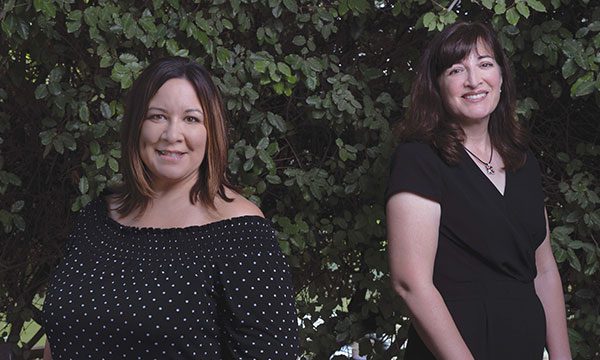
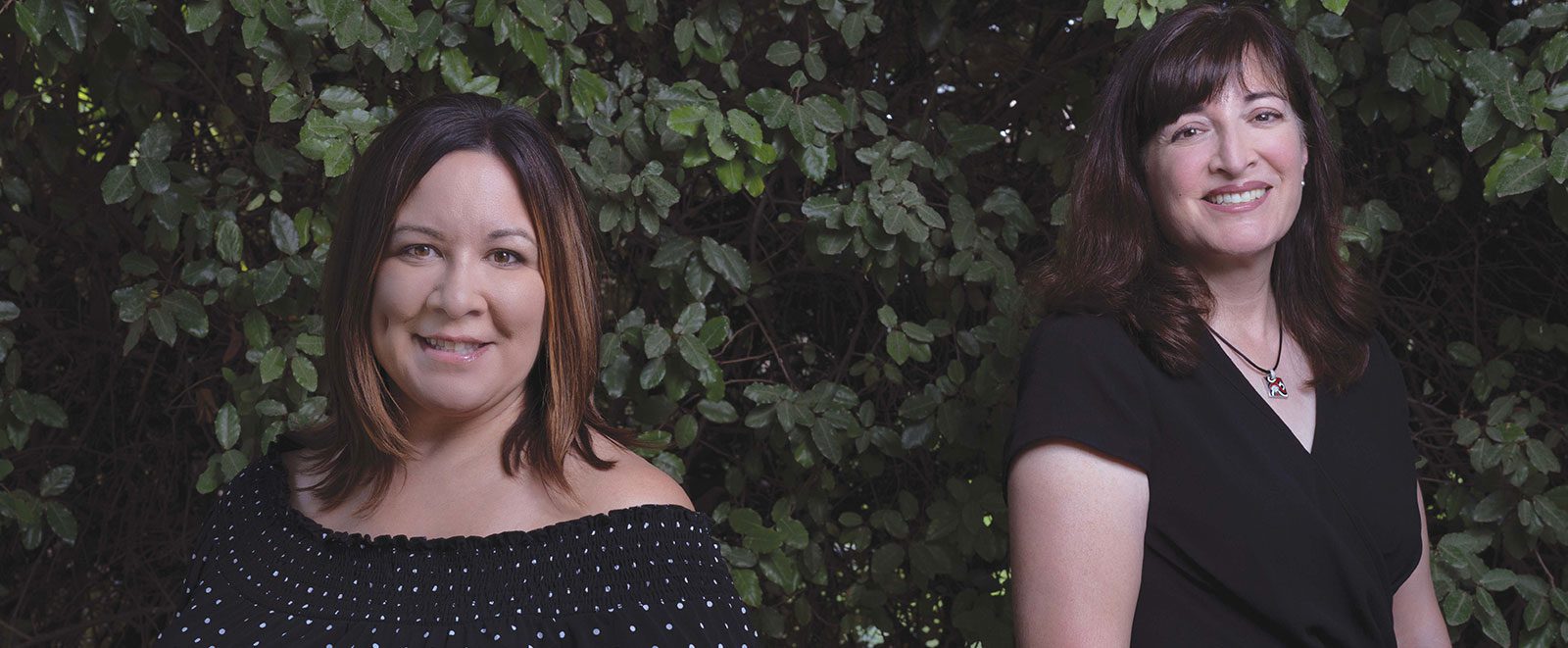
Photo of sisters Christina O’Connell (’96 BSN, ’21 DNP) and Gabriella Blakey (’06 MA, ’13 EDD) standing in front of vines

Gabriella Blakey (left) Christina O’Connell (right)
Photo: Roberto E. Rosales (’96 BFA, ’14 MA)

They nursed their mother through a serious bout of COVID and then they both contracted the illness themselves. So when the Duran sisters — one a nurse and the other a school administrator — were asked to stand up two of New Mexico’s largest COVID-19 vaccination efforts, they jumped in to meet the challenge.

Vax Sisters

By Leslie Linthicum

On the Saturday morning in May when they met for coffee on a sunny patio in Albuquerque, sisters Christina O’Connell (’96 BSN, ’21 DNP) and Gabriella Blakey (’06 MA, ’13 EDD) had seen the welcome news from the state’s health department: 55 percent of New Mexicans were now fully vaccinated against COVID-19. Cases had dropped to just over 100 and hospitalizations were plummeting.

New Mexico was heading for herd immunity and it looked like coronavirus might be on the run.

For O’Connell and Blakey, vaccination progress was personal. The native New Mexicans — who grew up with the surname Duran in a family of Lobos — had both contracted COVID-19 and had nursed their mother through a serious bout of the novel coronavirus. But more than that, they had each played a pivotal role in getting their fellow New Mexicans vaccinated.

Before the pandemic struck, O’Connell, who managed the UNM Hospitals Southeast Heights Clinic, was preparing for flu season. When the pandemic hit, her focus shifted to instituting COVID-safe practices at the clinic.

Blakey, then an associate superintendent for the Albuquerque Public Schools, was overseeing the schools in the Southeast Heights. When COVID arrived in New Mexico, she moved deep into the logistics of moving the state’s largest school system from in-person to virtual education while keeping students, staff and school properties safe.

She was promoted to interim chief operating officer for the district in July, and began working with the City of Albuquerque’s Emergency Management Department and the New Mexico Department of Health in anticipation of COVID vaccines becoming available. APS became a partner in community-wide vaccination, offering empty schools as vaccination sites.


“I’ve always thought of education in terms of community”

“I’ve always thought of education in terms of community,” Blakey says, “so partnering to help the community made perfect sense to me.”

In December 2020, O’Connell was also asked if she would take on additional duties. Could she manage the rollout of UNM’s vaccination effort once vaccines were approved and available?

O’Connell jumped at the chance.

“I think I felt very helpless at the time with the pandemic and was wondering how I could help,” she says.

Blakey’s first vaccination site opened on New Year’s Eve at Albuquerque High School with school nurses administering vaccines to medical personnel and first responders.

“It was pretty emotional,” Blakey says. “Schools being closed, it being New Year’s Eve and to see the actual vaccination for the first time, it was this overwhelming feeling of hope.”

As it turned out, there were four vaccine doses left over at the end of the night, and Blakey was chosen to receive her shot.

O’Connell opened what would become one of the busiest vaccination centers in the state in a few weeks later in January, moving thousands of people through the iconic Pit concourse every week and eventually administering 100,000 vaccines.

O’Connell was nervous the day the site opened, but those nerves dissolved as hundreds of people showed up and the lines moved quickly.

“It snowed the first day, so that was a little chaotic, but it was the most positive vibe. This excitement, energy, hope, people in tears. It turned out to be much more of a project than I expected,” O’Connell says, “but also probably the most rewarding work I’ve ever done. People were so grateful. And that was something I personally needed at the time, just to be in a positive place.”

O’Connell, 47, and Blakey, 45, who grew up in the Southeast Heights in the Hispanic/Italian Duran family, dived into their roles with a zeal borne of personal experience.

“For us,” O’Connell says, “there was a real personal drive to help with vaccines.”

Their mother contracted COVID while recovering from an automobile accident in a rehabilitation facility. Blakey and O’Connell cared for her when she was discharged and they also both contracted the virus, although with less severe cases than their mother.

When the Pit clinic opened, O’Connell and Blakey found themselves in meetings together and talking to each other on the phone every day.

Finding themselves in this strange convergence, was odd and completely unexpected for the sisters.


“I remember pretty early on saying, ‘Who would have thought that our careers would have converged around vaccinations?’”

“I remember pretty early on saying, ‘Who would have thought that our careers would have converged around vaccinations?’” O’Connell says.

A lot of people found themselves stretched to the max during the pandemic ­— juggling working from home with managing children’s at-home school, maybe taking care of a sick relative and dealing with the challenges of isolation. O’Connell and Blakey can relate. In addition to both being ill themselves and caring for their mother, who was hospitalized twice for COVID, the women ran their households, hosted virtual holiday celebrations and held down their regular jobs. Neither got a break from their already full-time professional responsibilities while they took on the vaccine; in fact, both were promoted to even more challenging roles — O’Connell as executive director of Ambulatory Primary Care Services for UNMH and Blakey as COO for APS.  But pitching in to help community is a family value taught by their parents to Christina, Gabriella and their brother John (’00 BA), an attorney.

Their mother, Maria Duran, is a nurse who ran school-based health programs through the UNM School of Medicine before she retired. Their dad, Don Duran (’03 EdD), was a longtime APS principal who also served on the school board.

“Growing up, we were raised with this sense of being helpful and a real sense of social justice,” O’Connell says. “This experience completely spoke to that and it was just so special that we were able to share it. Our parents are so proud of us.”

One morning, O’Connell was driving to work at the Pit when she found herself crying. “It just hit me that this inspiring thing was part of my job and that people were getting this hope.” Blakey agrees.

“It was a very rewarding experience during a time when everything was dark,” she says.

Shelf Life – Books by UNM Alumni

Shelf Life – Books by UNM Alumni

featured books by unm alumni

Shelf Life – Books by UNM Alumni

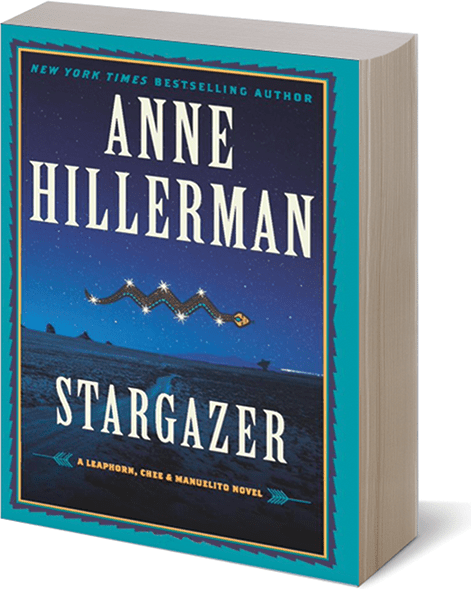
"Stargazer" book cover by Anne Hillerman

Stargazer (HarperCollins, 2020), the most recent installment in the Tony Hillerman mystery series, takes us afield from the core of the Navajo reservation, where these engaging stories have been set for 50 years. The action takes place mostly on the Alamo Navajo Reservation, a satellite community west of Socorro. Author Anne Hillerman (’72 BA), who picked up the storied Leaphorn/Chee series after the death of her father, focuses once again on Chee’s wife, Navajo Nation police officer Bernadette Manuelito. Manuelito is drawn into a Socorro police investigation of a man shot to death in his Jaguar near the reservation boundary because the main suspect is an old college roommate of hers. Readers of the series expect accurate and engaging description of reservation and New Mexico landmarks and tutorials on Navajo history and culture. Hillerman does not disappoint. Stargazer takes us inside the Very Large Array and the field of radioastronomy as well as ancient Navajo astronomy. Side plots touch on the very current topic of missing and endangered indigenous women and the challenges women face juggling marriage, career and caring for elderly parents.

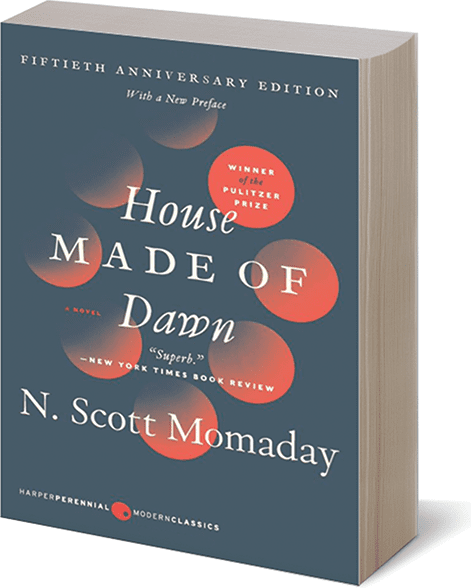
"House Made of Dawn" cover by N. Scott Momaday

N. Scott Momaday (‘58 BA), one of UNM’s most celebrated and important alumni authors, has won a Pulitzer Prize for his novel A House Made of Dawn as well as numerous literary awards. A member of the Kiowa tribe, he is best known for his poetry and his poetic novels set in Indian Country. Earth Keeper (HarperCollins 2020) is a slim volume of single-page personal essays, none more than a couple of hundred words long, that tell the story of Momaday’s connection to the land. In an introduction he calls the volume “a kind of spiritual autobiography” and it can be read — slowly, if you can — like a book of psalms to the Earth. Have a few dozen words ever so perfectly captured the prelude to autumn? “Dusk descends on the late afternoon. A flaming sunset has given way to a darkening old silver sky, and the edges of the landscape soften and barely glow. It is the end of summer, and there is a shiver on the leaves and grasses in the waning light. In the dim distance a coyote moves like the slow shadow of a soaring hawk in the long plain. The earth is at rest.”

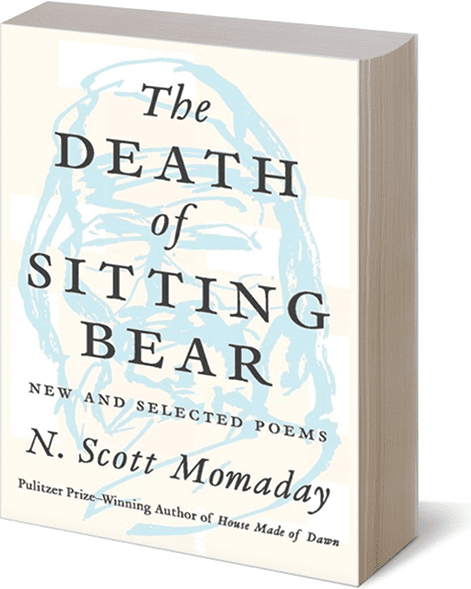
"The Death of Sitting Bear" cover by N. Scotty Momaday

Momaday has also released a volume of new and selected previously published poems, The Death of Sitting Bear (HarperCollins 2020). Joy Harjo (’76 BA), the nation’s poet laureate, describes Momaday as a master poet. His mastery is evident from the title poem, told in the voice of Kiowa warrior Sitting Bear, to Poem, After Lunch, a meditation on a simple meal shared outside: Cheeses, fruit, exotic tea/A simple repast, garden side,/Under a yellow umbrella./ Bright sampler of the afternoon./ Not only that. I tasted of/ That entity that was the two/ Of us, that composition/ Of conjoined being/ In the clarity of autumn.”

"American Orphan" cover by Jimmy Santiago Baca

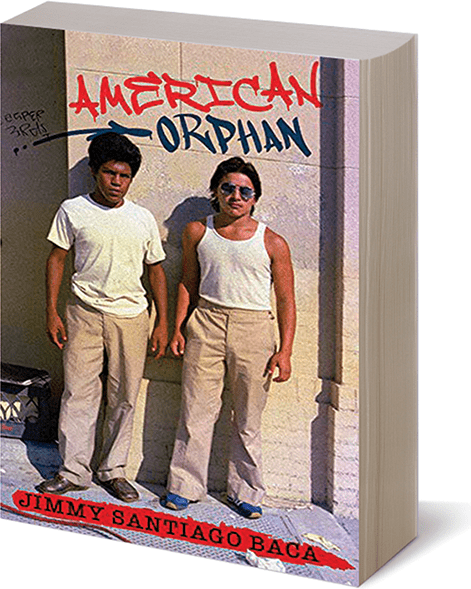
American Orphan (Arte Publico Press 2021) isn’t an autobiography, but the story of Orlando Lucero, imprisoned at an early age, in love with words and trying to find his way to a life of letters, mirrors the life of author Jimmie Santiago Baca (’88 BA, ’03 HOND). Baca, a poet, essayist and novelist and also a runaway and ex-con, chronicles young Lucero’s attempts to live in the free world after a lifetime of institutions — from an orphanage to youth detention. Relocating from Albuquerque to South Carolina to live with his prison pen pal, a woman with her own demons, Lucero marvels at simple acts like fishing or carrying groceries home from the store. But none of it is easy. “I have no training in this kind of stuff, the stuff called free-living,” Lucero thinks. “Getting up, working, talking to people, doing what people do”

"Laughing in the Light" cover by Jimmy Santiago Baca

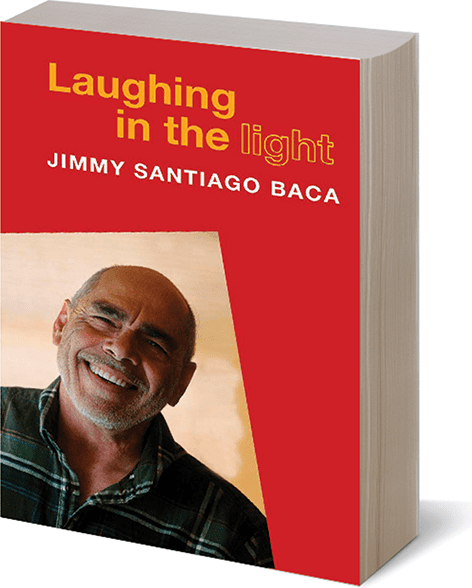
Baca has had a prolific pandemic, also releasing Laughing in the Light (Museum of New Mexico Press, 2020). A follow-up to Working in the Dark: Reflections of a Poet of the Barrio, published in 1994, Laughing in the Light contains 30 essays that reflect with laid-bare honesty on the passage of time, “I had a death wish for the longest time, and it stemmed from my fear of living without drugs, living without being high to guard against being vulnerable and open and embracing the world.” As he puts it in the essay Caught Up!, which bemoans the nation’s 45th president and the ideological battle lines we have drawn, Baca has developed “an addiction to joy. Laughing in the light has been my choice of drugs.”

"Sharing Code" cover by Joseph Traugott

Joseph Traugott (’94 PhD) writes the forward to Sharing Code: Art1, Frederick Hammersley, and the Dawn of Computer Art (Museum of New Mexico Press, 2020). It’s a large-format book in black and white, the color palette of computer-generated printed patterns. As Traugott explains, Albuquerque is the birthplace of computer art, which grew out of the atomic research of the Manhattan Project. While Los Alamos produced the theoretical research behind nuclear weapons, Sandia National Laboratory developed delivery systems for the bombs and UNM launched a computer engineering program in support. At UNM, computer engineering met the Department of Art and the computer program Art1, which allowed artists to use computers to make art, was born. Sharing Code contains four dozen examples of early computer art by a dozen different artists, each managing to use the form with surprisingly different results.

"Lágrimas: Poems of Joy and Sorrow" cover by Nasario Garcia
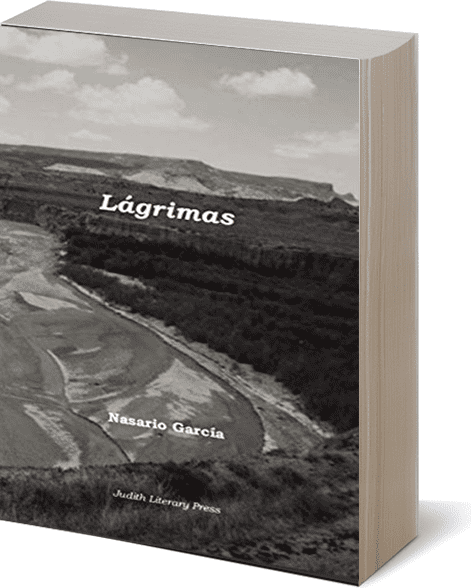
In Lágrimas: Poems of Joy and Sorrow (Judith Literary Press, 2020) Nasario Garcia’s book of poems, the verse is first written in Spanish, followed by the same poem in English. Garcia (’62 BA, ’63 MA), a folklorist and prolific author, has published many books that zigzag between Spanish and English, as well as two previous bilingual collections of poems. As he has many times before, Garcia brings the reader into village life in the Rio Puerco Valley where he was raised. The Woman is an example of Garcia’s efficiency with language: “The power of a woman at home, with the door open. And the latch that opens and closes the spirit she shares day upon day with her husband and children, with honor and pleasure. With a strong woman there’s no latch that will not open.”
"Friendship" cover by Victor Lee Austin
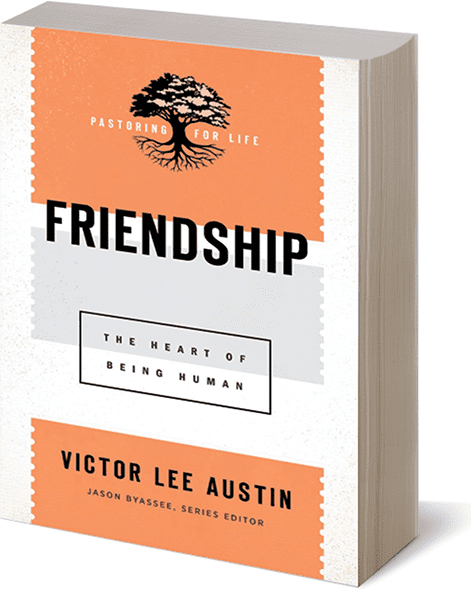
Friendship: The Heart of Being Human (Baker Academic, 2020) speaks to what author Victor Lee Austin (’82 MA) calls our heart’s desire for intimacy and companionship. Austin is a pastor and he explores one of life’s fundamental and often vexing components through a Christian perspective, arguing that friendship is the key to being human and that “there is a hole in our reality where friendship used to be.” To explore the importance of friend connection, he goes back to Socrates, Cicero and Aristotle, and of course Scripture. And he explores aspects of friendship from marriage to moral friendships to friendships with God.
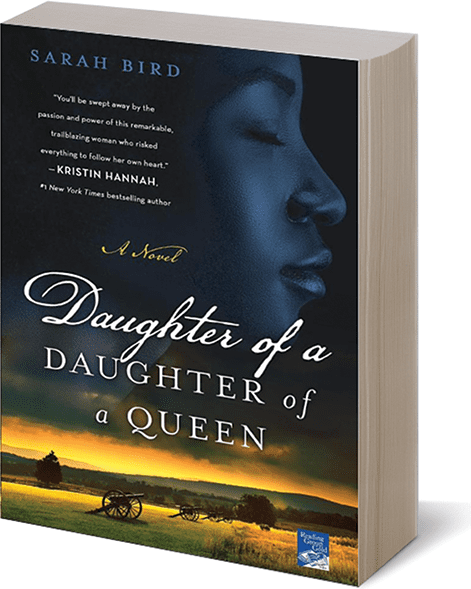
"Daughter of a Daughter of a Queen" cover by Sarah Bird
The true story of Cathy Williams, a slave in Mississippi who fought for the Union and enlisted in the U.S. Army’s Buffalo Soldier brigade at the end of the Civil War, forms the foundation for Daughter of a Daughter of a Queen (St. Martin’s Griffin, 2020), the 10th novel published by Sarah Bird (’73 BA). Historical record of Williams’ incredible life is scant, and Bird takes liberties in her sweeping piece of historical fiction that spans from the Civil War through Reconstruction. While Williams was an infantrywoman (posing as a man) and based in New Mexico, Bird’s character is a member of the cavalry and stationed in Texas. Not lost in the battle scenes and romantic plot turns is the bravery of Private Williams amid the Army’s war against Native Americans as she fights for her personal freedom and reconnection to her family.
"Common Ground" cover by Lacey Chrisco
Lacey Chrisco (’20 BA), assistant curator at the Albuquerque Museum, teams with museum Director Andrew Connors and Curator of Art Josie Lopez to chronicle the museum’s vast, diverse and impressive permanent art collection in Common Ground (Museum of New Mexico Press, 2020). If you’ve ever spent an afternoon in the Old Town museum and thought you’d pick up some postcards of what you saw for souvenirs, this big heavy book — with a large depiction of an artwork on nearly every page — will find a permanent place on your coffee table. In addition to exciting the eyes, Common Ground explores some important questions: Is any heritage in New Mexico completely pure of outside influence? What is the real New Mexico?
"Fringe" cover by Jaima Chevalier
“During her long professional career,” Jaima Chevalier (’80 BA) writes in Fringe (Atomic City Lights, 2019), a large-format biography of flamenco legend Maria Benitez, “Maria spoke through footfalls and body language and gestures as much as she did through words.” The daughter of a mother of Chippewa, Algonquin, Oneida and Iroquois parentage and a Puerto Rican father, Benitez grew up in Taos and ventured to Spain to study flamenco dance, then returned to New Mexico where her legend grew as a teacher and performer. Fans of Benitez will appreciate nearly 100 pages of photos the dancer.

Attention Published Alumni Authors:

We would like to add your book to the alumni library in Hodgin Hall and consider it for a review in Shelf Life.
Please send an autographed copy to:

Shelf Life, UNM Alumni Relations
1 UNM, MSC01-1160, Albuquerque, NM 87131

Fierce Defenders

Fierce Defenders

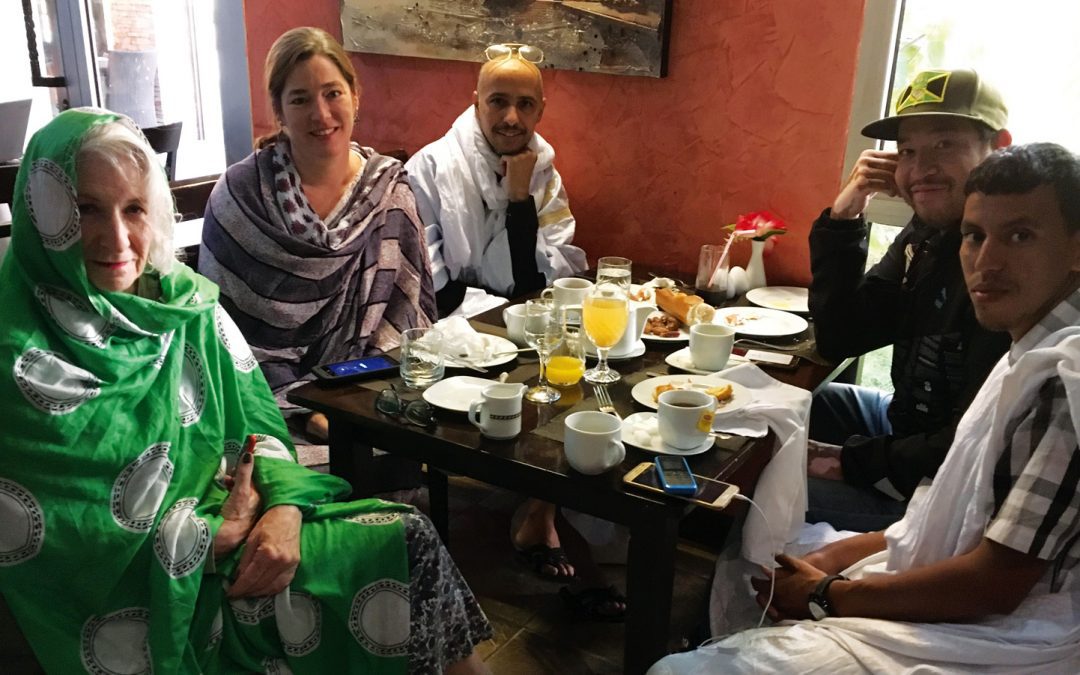
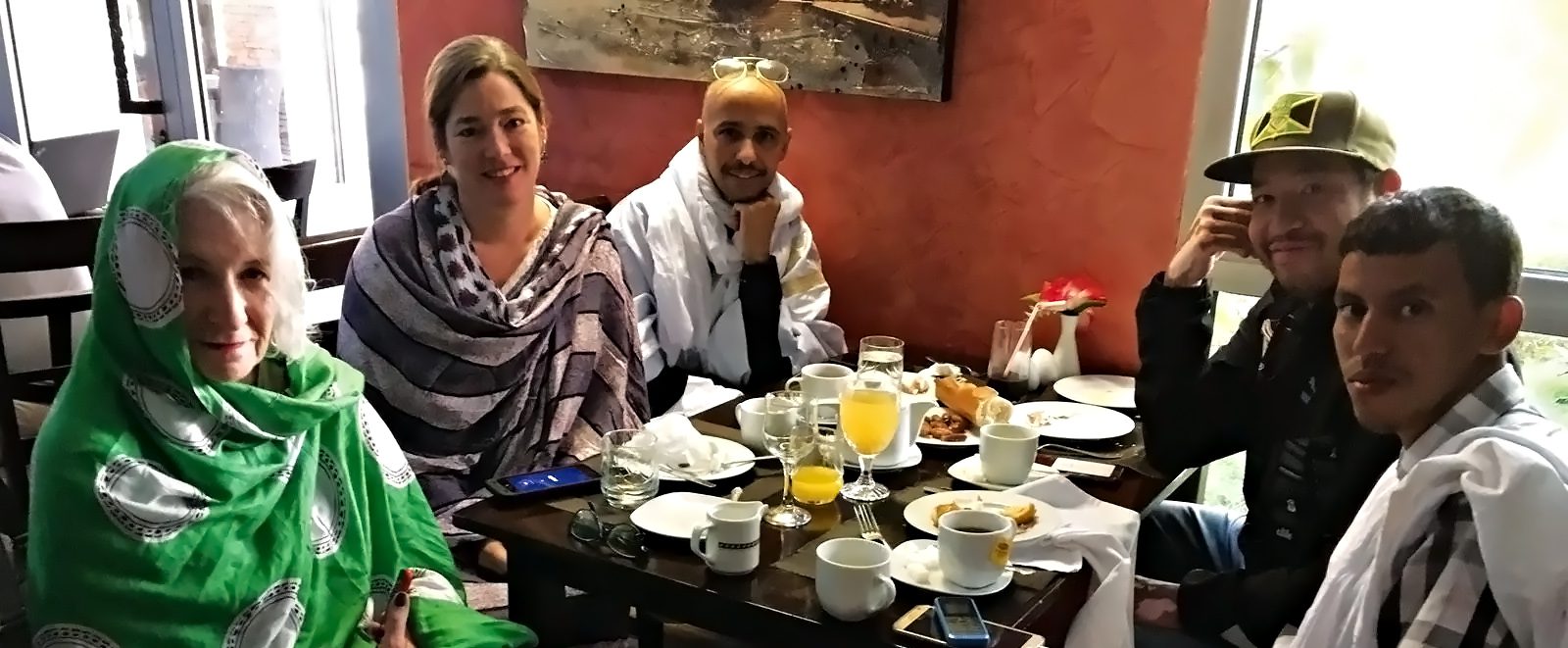
fierce defenders article subjects sitting around a breakfast table smiling at camera

Fierce Defenders: UNM alumnae take on tough legal cases and unpopular clients

by Leslie Linthicum

In the film The Mauritanian, which won Jodie Foster a best supporting actress Golden Globe award this year, Foster plays attorney Nancy Hollander and Shailene Woodley plays attorney Teri Duncan, colleagues at an Albuquerque law firm who take on a habeas corpus case for Mohamedou Salahi, a Bedouin electrical engineer accused of being an Al Qaida recruiter and terror plot mastermind, who was imprisoned and tortured by American soldiers at Guantanamo Bay, Cuba.

Their work led a federal judge to order Salahi released from the government’s “black site” at Guantanamo after being held there without charges for seven years. Salahi stayed imprisoned for another seven years while the government appealed and was finally freed in 2016.

Both received their law degrees from UNM ­­– Hollander in 1978 and Duncan in 2000.

The film tells only a slice of each woman’s distinguished career. Driven to uphold the Constitution even when it’s inconvenient, both have taken on unpopular cases and defended some of the most vilified defendants in the American legal system.

Theresa Duncan

If it weren’t for a few twists of fate, Theresa “Teri” Duncan might have been a prosecutor instead of one of the nation’s most respected defenders of people facing the federal death penalty.

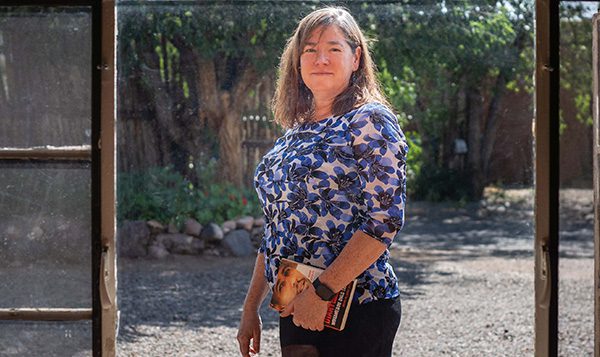
Theresa Duncan wearing a floral print shirt holding a book in her backyard

Teri Duncan is based in Santa Fe but works on appellate cases throughout the nation. Photo: Roberto E. Rosales (’96 BFA, ’14 MA)

After coming to St. John’s College in Santa Fe from Rhode Island, Duncan fell in love with New Mexico and stayed after she graduated from college, working as a grant writer for nonprofits in Santa Fe. She loved helping social causes she cared about but wanted a career that would allow her to more directly make a difference.

She picked law school and enrolled at UNM.

Why law?

“My mother says I came out of the womb arguing,” Duncan says.

It may come a surprise, but Duncan says, “I actually went into law school thinking I would be a prosecutor.” She had volunteered in development for the Santa Fe Rape Crisis Center and was interested in prosecuting as a way of defending people who were the victims of violence.

But the summer after her first year of law school she shadowed a public defender for a few days and found her niche. “From then on,” she says, “I was a hard-core criminal defense lawyer and never looked back.”

Duncan took special interest in the social and psychological underpinnings of criminal behavior, finding insight into the ways childhood trauma is associated with criminal behavior.

“I came to understand that there really are two sides to every story, that people who are charged with criminal offenses have very complicated backgrounds,” she says.

She cites as an example John McCluskey, who was charged with carjacking and murdering a couple traveling in their RV from the Midwest to Colorado. McCluskey was big and tattooed, an escaped convict with a hefty rap sheet when he grabbed the couple.

“When I met him, he presented himself as this dangerous tough guy, consistent with the “monster” the media portrayed him as,” says Duncan, who defended McCluskey against the death penalty. “By the end of the case,” she says, “I understood he was this incredibly complicated, kind and connected human being who was, of course, terribly flawed. There was no excuse for what he did, but I came to understand why he did what he did. People are sometimes surprised to hear this, but I really like my clients.”

With each client, Duncan has gotten a little closer to understanding human nature. It may come as a surprise that spending two decades involved with people accused of grisly murders has brightened Duncan’s outlook.

“I feel better as a human being having reached the conclusion that there is no evil. As Rudolfo Anaya writes in Bless Me, Ultima, there is no such thing as evil, there are just things we don’t understand.”

After law school Duncan clerked for New Mexico Court of Appeals Judge Lynn Pickard and then joined the Public Defender’s Office. She was torn between two job openings – one in the appellate division in Santa Fe and the other in the juvenile division in Albuquerque. When her car broke down and commuting to Albuquerque was off the table, she took the appellate job.

Duncan was still green when the opportunity arose to join the legal team defending Terry Nichols, accused of conspiring with Timothy McVeigh to blow up the federal building in Oklahoma City in 1995 and killing 168 people. In separate trials in federal court, McVeigh was found guilty of murder, conspiracy and using a weapon of mass destruction and was sentenced to death. Nichols, who was not physically in Oklahoma on the day of the bombing, was found guilty of conspiracy and involuntary manslaughter, but spared the death penalty when the jury deadlocked. He was sentenced to life in prison. The state of Oklahoma then charged Nichols with 160 counts of murder and sought the death penalty.

Duncan had just started dating Mark Earnest, a colleague in the Public Defender’s Office who defended capital crimes, when UNM law Prof. Barbara Bergman, who was on Nichols’ defense team, asked Earnest to help her as an investigator and Duncan to help her with writing motions. One of Earnest and Duncan’s first dates had been a trip to the prison in Hobbs to interview a witness in a murder case, so it wasn’t a stretch for the two to pack up and move to Oklahoma for a year and a half to defend a man who was accused of the country’s most deadly domestic terrorist attack.

Even though Nichols had been tried in federal court, the new legal team started over, spending over a year investigating his involvement in the bomb making and spending months in trial. It was a valuable learning experience for Duncan and it solidified the Duncan-Earnest relationship. They married and now own a law practice, Duncan Earnest, in Santa Fe.

Nichols was found guilty of all 160 murder charges, but the jury again deadlocked on the death penalty and he was sentenced to life in prison.

Duncan then joined the law firm now known as Freedman, Boyd, Hollander, Goldberg, Urias & Ward, where she teamed with Hollander when a court ruled that Guantanamo prisoners had rights to legal counsel.

The character in The Mauritanian played by Woodley is named Teri Duncan, but is based on several lawyers on the team. “There were a lot of people working on the case and there was some good drama on the team, so rather than add a whole group of lawyers they consolidated it all into me,” Duncan says.

Duncan speaks French in the movie; she doesn’t in real life. She is portrayed as wide-eyed, innocent and fragile, and in one scene, Hollander fires Duncan when Duncan sees some troubling evidence that disturbs her. 

“The one way I was really naive,” Duncan says, “was in my faith in the federal government. I knew that our government had done horrible, horrible things over the centuries but I was one of those Americans who thought that was all in our past. As we learned about Mohamedou’s case and the black sites, I was shocked. It’s made me a better lawyer because I no longer take the government at its word the way I used to.”

From a filmmaking standpoint, Duncan understands that her character is a relatable foil to Hollander’s strong, almost heroic, persona. “And,” she says, “I think my character personifies the question, ‘How do you represent someone who society sees as a monster?’ My character provides a passageway for the audience to overcome their skepticism, to get to know Mohamedou as a human being and ultimately to care about him and what happened to him.”

She isn’t too worried about the big screen Teri Duncan overshadowing the real-life one.

“I think fortunately that the people who know me, know me,” she says. “A lot of lawyers I’ve worked with over the years say, ‘I loved the movie but that’s not the Teri Duncan I know.’ And of course Shailene Woodley is amazing, so to be able to say you’re played by Shailene Woodley is absolutely fabulous.”

An aspect of The Mauritanian that rings very true, according to Duncan, is the bond she and Hollander forged with Salahi. And Duncan credits the UNM School of Law with helping that along.

“Because of the diversity of UNM’s faculty, students and curriculum I learned the importance of culture and understanding culture in representing people,” Duncan says.

She and Hollander learned about Islam and world history from Salahi’s perspective, connected with him as a person and because of that were able to represent him better.

Knowing and representing Salahi also taught Duncan about compassion.

“He’s such a compassionate human being and so forgiving. Watching him interact with the guards and maintain a sense of dignity and compassion, I became more compassionate,” she says.” It’s challenging to feel self-righteous and entitled when someone like Mohamedou is wrongly imprisoned in Guantanamo, brutally tortured and is still kind and respectful to the people who wronged him.”

Duncan, who decompresses by walking her dogs and hiking in the forest outside Santa Fe, tries cases with literally life and death consequences for her clients.

“It’s a struggle,” she acknowledges. “I’m fortunate to have people in my personal life and my professional life who are supportive of me and who I can reach out to when it feels too heavy. I do have to stay after my mental health. There have been times and there will be times in the future when it almost feels like too much.”

Nancy Hollander

The first time Nancy Hollander got arrested, she was 17, a pre-med freshman at the University of Michigan refusing to move at a sit-in for fair housing at Ann Arbor’s city hall.

Nancy Hollander with Mohamedou Salahi outdoors in a lush, green environment

Nancy Hollander with Mohamedou Salahi. Photo: Courtesy Nancy Hollander

Three years later, she was arrested again during an anti-apartheid sit-in on Wall Street. After graduating from Michigan, Hollander moved to Chicago and was arrested for her third – and last – time while she was taking pictures of police at City Hall during a demonstration.

Since fleeing a chaotic marriage with her toddler son and taking off for Albuquerque with nothing besides their clothes and her cameras, Hollander dropped the idea of becoming a doctor, earned a law degree and has used it for more than 40 years in the defense of civil rights, the rule of law and some famously unpopular criminal defendants.

The theme of her career has been standing up to authority.

“I don’t do well with authority,” Hollander says. She traces her rebellious streak to her parents – her father, a labor organizer in his youth, and her mother, a feminist who rose to be vice president at a major publishing company.

“My mother taught me at a young age to be a feminist,” Hollander says. Growing up in Dallas, Hollander was in elementary school when her mother handed her Henrik Ibsen’s critique of the patriarchy, “A Doll’s House,” and said, “Read this. It will make you a feminist.”

When Hollander landed at Michigan she quickly joined a student activism group that would become a chapter of Students for a Democratic Society and became its president, introducing Malcolm X at a campus event.

When she found herself in Albuquerque, working for the New Mexico Civil Liberties Union and looking for another career, she found her life’s calling in law school.

“The only thing I wanted to do was criminal defense work,” says Hollander. “I never was interested in anything else. I like to say I’ve been fighting the government since I was 17 and got arrested in Ann Arbor, but now sometimes I get paid to do it.”

After 14 months with the Public Defender, Hollander joined what was then Freedman, Boyd and Daniels and quickly became a national name.

She, along with others in the firm, defended Wen Ho Lee, a Los Alamos National Laboratory mechanical engineer who was accused in 1999 of stealing nuclear secrets and giving them to China. After he was held in solitary confinement for nearly a year, the government’s case crumbled and all but one of the charges were dropped in 2000. As part of a settlement, he pled guilty to improper handling of restricted data. The judge overseeing the case apologized to Lee for the way the case had been handled.

That same year, Hollander sued the government on behalf of União do Vegetal, a Brazil-based religious organization with congregations in New Mexico after customs agents seized hoasca tea, which contains a small amount of an illegal hallucinogen. In 2006, the U.S. Supreme Court ruled in favor of União do Vegetal, affirming its members’ right to use the tea as a sacrament.

Hollander teamed with Duncan to defend a top official of the Holy Land Foundation, the largest Muslim charity in the country, against federal charges the charity conspired to support Palestinian militant group Hamas.

She and partner Vince Ward (’01 JD) handled Army Private Chelsea Manning’s appeal of her court martial and sentence of 35 years in military prison under the Espionage Act for disclosing thousands of military documents to WikiLeaks, and also represented Manning in her appeal for clemency, which President Obama granted, commuting Manning’s sentence in 2017 after she had spent seven years in prison.

And she and Duncan had earlier, in 2005, teamed to take on the habeas corpus case of Mohamedou Salahi, held in Guantanamo, Cuba, by U.S. authorities under suspicion of terrorism.

Hollander and Duncan traveled frequently to Guantanamo to meet with Salahi and another of their clients, Abd Al-Rahim Al-Nashiri, a Saudi/Yemeni who is alleged to have been the mastermind behind the bombing of the U.S.S. Cole.

In 2010, Hollander wrote an op-ed for the International Herald Tribune titled “A Terrorist Lawyer, and Proud of It,” in which she defended herself and other attorneys who represented those imprisoned at Guantanamo.

While Hollander has grown a thick skin against criticism during her decades defending people accused of horrible crimes, it was the suggestion that lawyers who defend terrorism suspects are disloyal to the country that pushed Hollander to speak out.

“Contrary to recent attacks by those who claim to be supporters of American justice, my defense of people accused of serious and sometimes horrific crimes is not an endorsement of those crimes,” she wrote. “Rather, it is a testament to the strength of my belief in, and commitment to, the American system of justice.”

Hollander now handles al-Nashiri’s cases only in foreign courts including the European Court of Human Rights and the International Criminal Court, which means she no longer travels to Guantanamo.

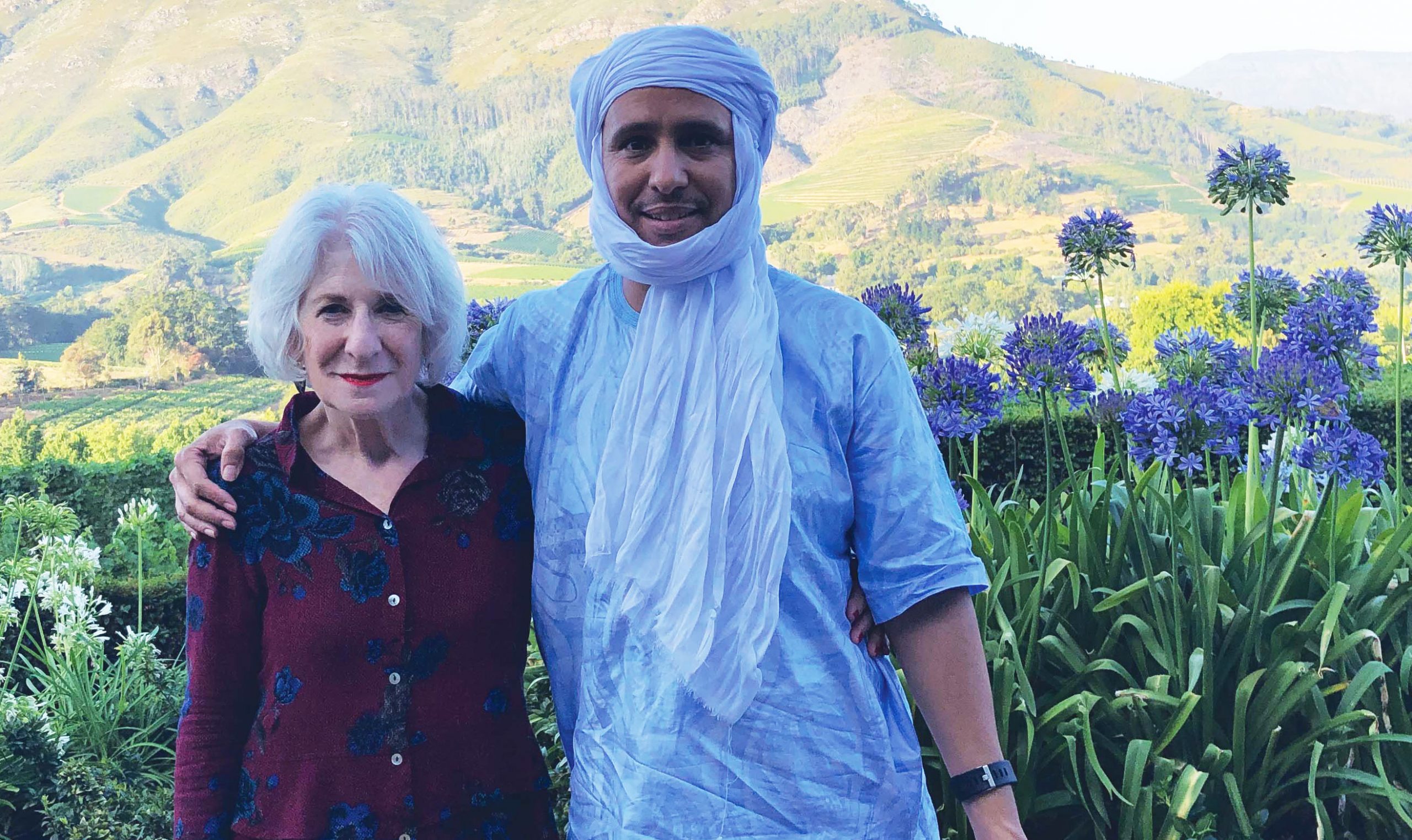
Nancy Hollander wearing an orange long sleeve button up shirt with Ahmed Salahi, Mohamedou Salahi’s son and her godson

Hollander with Ahmed Salahi, Mohamedou Salahi’s son and her godson.

“For me, she says, “it has been a bit of a blessing. I hated going there. I hated leaving Mohamedou. We’d walk out and we’d hug. I’d start crying. He’d said, ‘No, don’t cry.’ I just hated leaving him there.”

While handling Salahi’s habeas corpus case, Hollander and Duncan also fought to get the memoir he had written while at Guantanamo released so it could be published. “Guantanamo Diary” was published in 2015 and was the basis for the film, The Mauritanian.

Hollander and Duncan negotiated film rights to the book and while it was in development Hollander thought about who might play her if the movie ever came to screen.

“People tell me sometimes that I look like Helen Mirren when my hair’s short,” Hollander says. “Then, all of a sudden it was Jodie (Foster) and I said, ’Wow!’”

Foster’s Hollander character has some aspects taken directly from the real-life Hollander: the bright red fingernails, the fast cars and a curt demeanor.

Other aspects are fiction, notably Foster’s wigs of steel-gray helmet hair and her absence of a sense of humor.

“I’m the first living real person she’s played,” Hollander notes. “She wrote to me and she said (the portrayal) will be some of you and some of me. And it wasn’t an impersonation. I think she’s meaner than I am. I think she’s harsher than I am. (Although some of my friends would disagree with that.) I’ve gotten used to it now because I’ve seen the movie so many times. But it was just an odd feeling to see someone else being me.”

Foster, in an interview with Deadline, the entertainment industry news site, said, “I always say, even though I dress like her in the movie, and we look a little bit alike, the real Nancy is a lot nicer than my Nancy. No, way nicer.”

When the movie was released, Hollander did weeks of Zoom press interviews. She was at home watching the Golden Globes ceremony on TV when Foster won the best supporting actress award.

“And I thought if it hadn’t been for COVID, I’d be somewhere with her in a fancy dress,” Hollander says.

Despite her international acclaim, Hollander still describes herself as “a down-in-the-dirt criminal defense lawyer.”

She moved to New York about three years ago to make international travel more convenient. She sold her condo in Albuquerque and all of her furniture and shipped her BMW to Florida to be inherited by a teenage granddaughter.

“I don’t own anything,” says Hollander, who rents an apartment on the Upper West Side and stays with a friend when she comes to Albuquerque to work and visit her standard poodle Luna, who she co-parents with a friend. She is also perhaps the only woman in Manhattan who comes to Albuquerque to get her hair done, returning for cuts to her longtime stylist Roberto Vasquez.

At 77, Hollander is less of a trial warrior these days.

“I don’t want to have to go to court. Trials are really stressful,” she says. “I’ll do cases – edit briefs, maybe argue some things. I have trouble with the word retirement. I don’t like it.  I like to say that I’m changing. “

Pin It on Pinterest