From the Roof to the Field

From the Roof to the Field

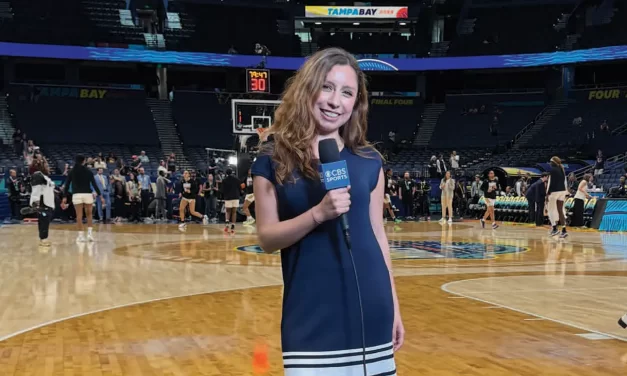
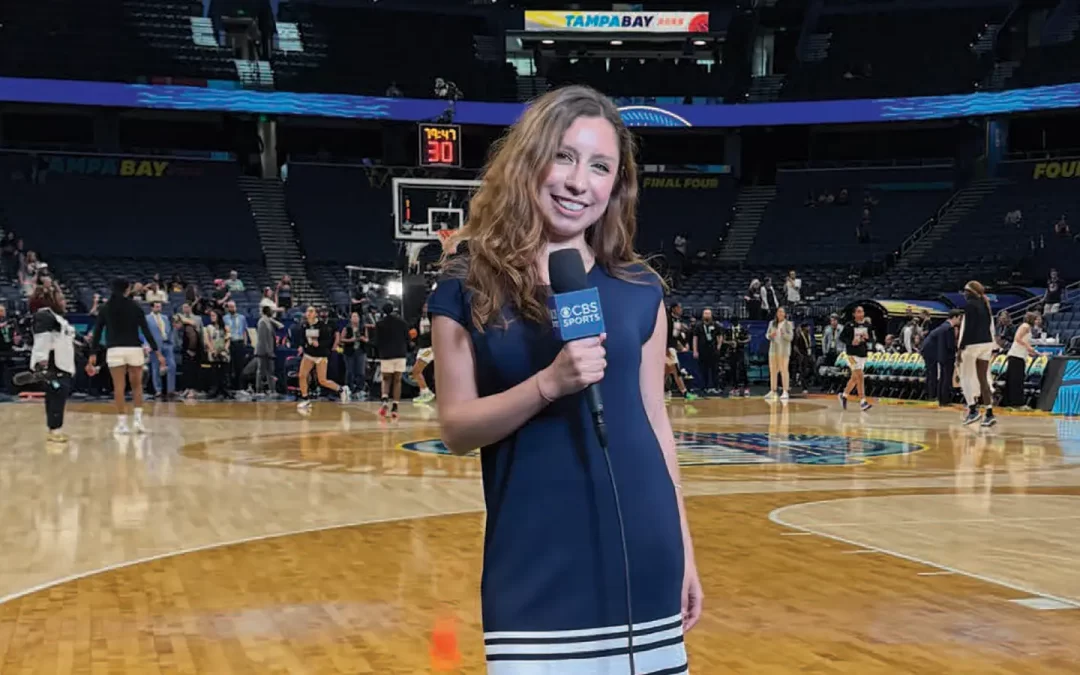
Isabel Gonzalez covering the 2025 NCAA Women’s Basketball Final Four in Tampa Bay, Fla.

From the Roof to the Field

By Coline Bernal

On her 27th birthday, Isabel Gonzalez received a job offer from CBS Sports while standing at the front desk of her godparents’ Styrofoam business. At the time, she was helping them run the family operation while juggling life as an NBA and college basketball freelance writer and quietly wondering what her future might look like.

When she opened the email, she broke down in tears. A minute later, the phone rang. She wiped her face, answered the call and went back to work, knowing everything had changed.

From the outside, Gonzalez’s career may look like a clean ascent leading to her current role as a basketball writer at CBS Sports. But her path was built through years of learning, uncertainty and a deeply rooted philosophy that followed her at every stage: say yes, even when you don’t feel ready. Especially when you don’t feel ready.

“I was just taking every opportunity I could to grow,” Gonzalez said. “I said yes to everything.”

Gonzalez was born in Mexico, surrounded by a family that loved soccer. Her dad, brother and cousins celebrated it passionately, but she didn’t quite share their enthusiasm. Still, she followed them to practices and games and slowly grew attached to the ritual. “You start loving what you’re watching all the time,” she said.

After a brief stop in South Carolina, her family settled in New Mexico when she was 13. It’s where she would spend some of her most formative years.

At the University of New Mexico, she intended to pursue advertising or film. A high school adviser had encouraged her to consider UNM’s film program, and she imagined herself working on music videos or commercials. Journalism entered her life because of a misunderstanding. While registering for classes, she asked an upperclassman about two communication tracks.

Portrait of University of New Mexico alumna Isabel Gonzalez

University of New Mexico alumna Isabel Gonzalez.

“She told me, ‘One, you kind of study things. The other, you do things,’” Gonzalez said. The answer seemed obvious. “So of course I was like, I want to do things!”

Only later did she realize she had signed up for journalism instead of advertising.

Her first real experience in sports media came through a freshman internship with the Mountain West Network at Lobo TV. She learned to operate a camera covering soccer. For men’s games, she worked the main angle from the stadium roof, alone. From there, the players looked like “tiny little people moving,” she said, and she didn’t get to talk to anyone. It left her asking a simple question: “How do I get down there?”

Saying Yes

The opportunity arrived unexpectedly. As a sophomore, she overheard classmates discussing open positions at the Daily Lobo sports desk. She got hired assuming she would help with social media or video. Instead, she started writing.

Journalism wasn’t her dream job, but she was already on the path, so she decided to make the most of it. At first, the motivation to write was practical: getting published meant extra credit, and posting on social media came with a little extra pay.

She approached the job strategically, but along the way found herself drawn to the access and interaction more than she expected.

“I still didn’t consider myself a writer,” she said. “But I loved being in the environment, talking to players, coaches, meeting the fans.”

By her senior year, she wanted to cover basketball more consistently. UNM men’s basketball was the biggest stage, and she wanted to test herself there. That was when it clicked. “I was getting pretty good at this,” she said.

After graduating with a bachelor’s degree in digital communication and media/multimedia, Gonzalez returned to her original plan and worked in film for a few months. A mentor brought her in as an assistant to a director and producer. She enjoyed the work, but not the instability. “You work six months,” she said, “and then you have to figure out what you’re going to do next.”

Around the same time, the UNM soccer coach asked whether she wanted to produce and host the official men’s soccer show. Gonzalez had never done anything like it before, but true to form, she said yes.

That experience clarified something. For the first time, she allowed herself to imagine a future in sports reporting.

After that season, she met Kurt Roth, a UNM alum and owner of The Lair, an insider site focused on local athletics. The site had started as a forum and grown into a community-driven website, and Roth didn’t want it to disappear. Gonzalez was fresh out of college. She remembers thinking she did not know how to run a website and barely considered herself a journalist. Still, she agreed.

The Lair became one of the most demanding learning periods of her career. “That’s probably where I learned the most,” she said, “because you just had to do it.” She wrote stories, maintained the website, learned to answer IT questions, worked with moderators and navigated the challenges without the structure of a traditional newsroom.

There were no editors. “It was just me,” she said.

What mattered most was the fan base and the responsibility she felt to serve it well. The people who followed The Lair were deeply passionate about local athletics, and she wanted to provide them with high-quality articles and a modern community space.

From there, she kept expanding her coverage. She began taking on more Mountain West teams. She got opportunities through SB Nation’s Mid-Major Madness and covered Gonzaga and other men’s basketball programs around the nation for a full season. Much of that year overlapped with COVID-19, when access shifted to Zoom, and the remote format made it possible to cover a program she hadn’t been physically close to before. She also freelanced NBA work.

More Than the Game

Her voice as a writer developed alongside those opportunities. She traces it back to early English classes and reading children’s books like Junie B. Jones, which taught her to write in a simple and descriptive way. She likes stories that feel human, textured, and colorful. If a coach loves to cook for his players, she wants to write about how he grills, how intentional he is with the ingredients he prepares. Those are the moments that draw her in. They may have nothing to do with basketball, she said, but at the same time, they have everything to do with it.

For Gonzalez, the game itself is only part of the story. Fans already have access to everything: they can watch the game, look up stats, and stream press conferences. What they don’t see is what happens behind the scenes.

Now off the roof, Gonzalez watches from closer range, paying attention to the athletes, the bench, and everything unfolding around the action. Sometimes, she said, people talk about athletes as if they are just pieces of a game. But they are people, and their performance is shaped by their mental state and their relationships with teammates.

She studies who is cheering on the bench, how the handshake line looks, and who leans in during timeouts. If a team is thriving, she said, it is not just about the stats. Something is happening inside the locker room. Building those insights requires trust and genuine curiosity.

“If you ask someone what show they are watching, you have to remember,” she said. “The next time you see them, you follow up and ask how the show is going.” That kind of attention, she said, is what builds real relationships.

A Bigger Stage

All of it eventually led to a direct message from CBS Sports on X—formerly known as Twitter—that she nearly ignored. At first, she assumed it was spam; there was no way it could be real.

Following a demanding interview process, she was offered a position with the network on her birthday. Not just any role, but the opportunity to become CBS Sports’ first writer dedicated to women’s basketball.

Coming from men’s basketball coverage, she understood the responsibility that came with the position and knew she would need to put in the work to build the same depth of knowledge in the women’s field.

Her first day fell in the middle of March Madness, the busiest stretch of the season. Her manager asked her to submit a list of her top 10 women’s players by the end of the day. She remembers starting to sweat. How was she supposed to do it in a day when she was new to women’s basketball?

Later, he told her the assignment had been intentional. He wanted her to jump right in, confident she had the skills to figure it out. More than anything, he wanted her to see that herself.

Looking back, Gonzalez speaks fondly of the people who believed in her before she believed in herself. A high school English teacher insisted she belonged in honors English, even when she still saw English as her second language. A broadcasting professor at UNM kept putting her in front of the camera because he knew she could do it. She remembered finding it “so cool that someone believed in me before I believed in myself.”

When she began working in journalism, that trust followed her: through sideline reporting opportunities, through Kurt Roth at The Lair, through editors who gave her room to grow. Over time, she stopped seeing those moments as coincidences. “When something is right for you,” she said, “it will find you.”

That sense of belonging extends beyond the newsroom. Gonzalez is proud of being born in Mexico, of speaking Spanish and of carving out space in an industry where she sees few Mexican writers. Her move to the United States was made possible by her parents’ sacrifice, a gift she carries with deep gratitude.

“They are a big part of my story,” she said. “I couldn’t have done it without them.”

The transition left her unsure where she fit at times, but over the years, New Mexico became home and, eventually, something deeper.
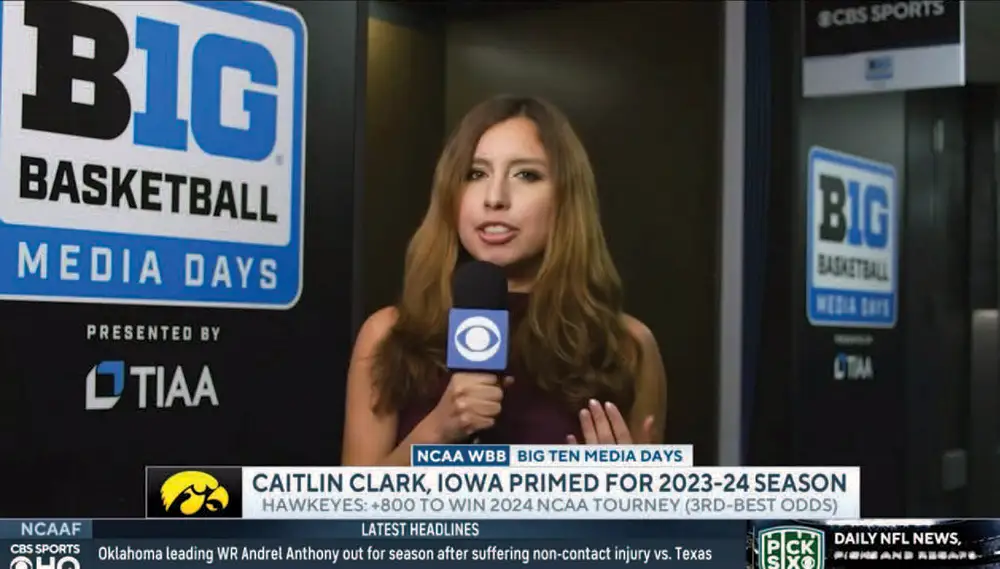
Isabel Gonzalez covering women’s basketball Big Ten Media Days
Isabel Gonzalez covering the women’s basketball Big Ten Media Days prior to the 2023-24 season.

Sometimes, she comes across comments that read:

“Isabel came from New Mexico; she’s one of ours!” That support, she said, means more than most people realize.

Now several seasons into her role, Gonzalez remains energized by where women’s basketball is headed. The surge in attention, amplified by players such as Caitlin Clark and Paige Bueckers, has strengthened her ambition to continue expanding women’s basketball coverage and to show that these stories matter just as much as stories in men’s sports.

March Madness remains her favorite time of year. The travel, the unpredictability, and the intensity remind her why she chose this path in the first place. Still, her curiosity stretches beyond basketball. A former figure skater, she watches the Winter Olympics with a trained eye, ready to field any technical question in the newsroom. She’s also looking ahead to the 2026 World Cup and the 2028 Summer Olympics, ready for whatever assignment comes her way.

“When all the fans come together, and something big is happening,” she said. “That’s truly what I love.”

Those global events remind her why she fell in love with sports in the first place. “When all the fans come together, and something big is happening,” she said. “That’s truly what I love.”

Those moments are why Gonzalez has never chased the final score. She chases what happens around it: the energy on the bench, the conversations on the sideline, the crowd rising together.
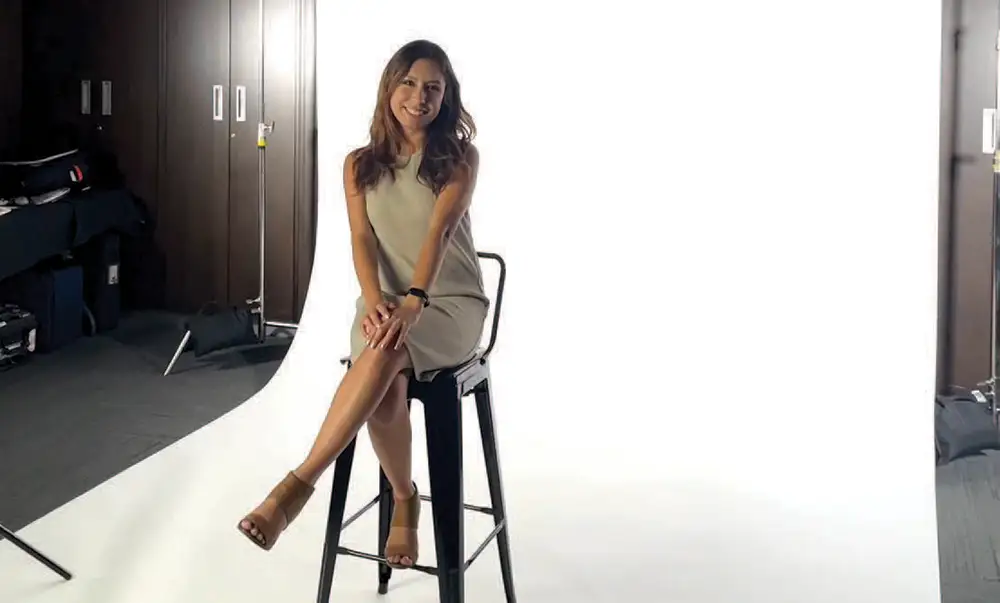
Young Isabel Gonzalez with her family after moving to the United States
Born in Mexico, Isabel Gonzalez and her family moved to the United States and settled in New Mexico when she was 13 years old.

Years ago, she stood alone on a stadium roof, watching players who looked small from that distance and wondering how to get down to the field. Now she works inside that space, telling the stories behind the result and carrying them back to the fans who give it meaning.

Spring 2026 Mirage Magazine Features

Loading

Keeping Traditions Alive: Mayordomo Earns Degree, Inspires Rural Students

Keeping Traditions Alive: Mayordomo Earns Degree, Inspires Rural Students

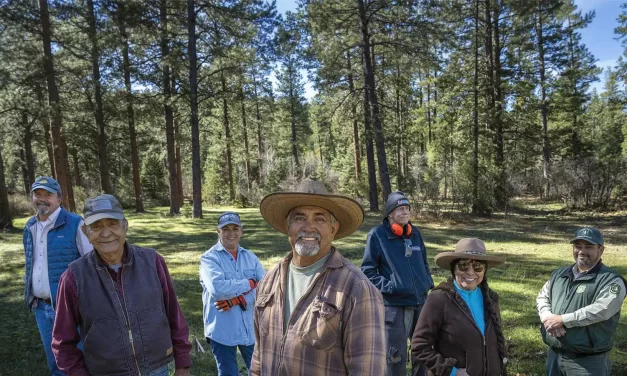
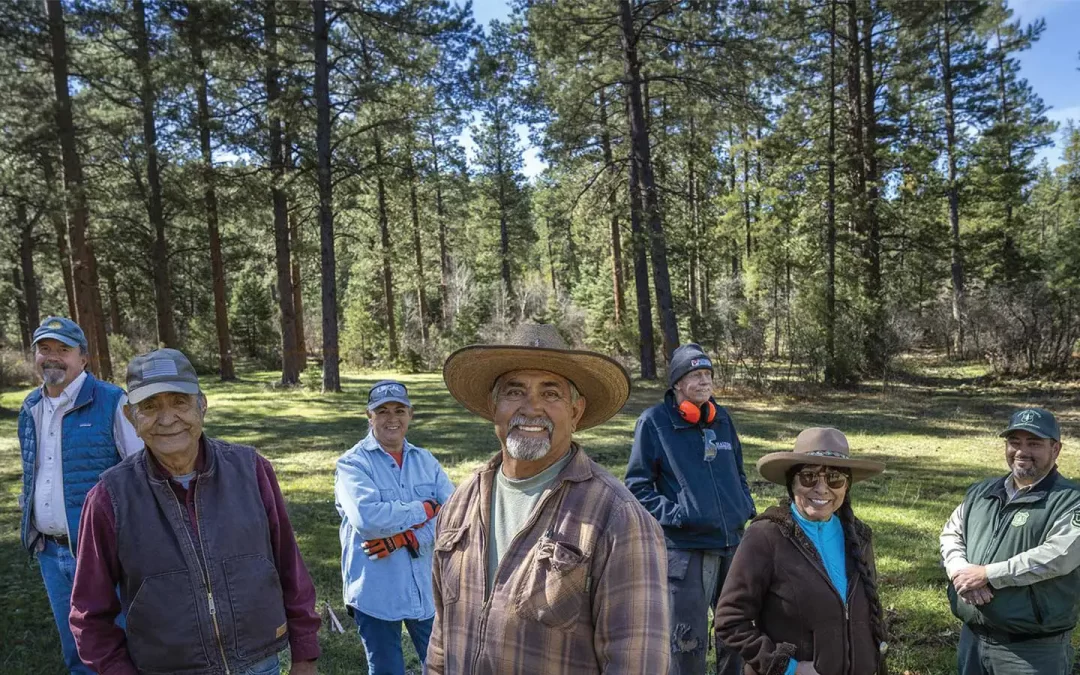
Vicente Fernandez, center, is the mayordomo of the Acequia Madre del Sur de Cañon del Don Fernando and helps maintain one of the region’s oldest communal traditions.

Keeping Traditions Alive: Mayordomo Earns Degree, Inspires Rural Students

By Manuel Valdez

“I got tired of being a statistic of those without a degree,” says Vicente Fernandez.

So, after more than four decades of military service and a lifetime rooted in the rural communities of northern New Mexico, Fernandez decided it was finally time to pursue something he had long set aside: a college education.

“I always wanted to obtain a degree so I could further enrich my life as well as my family and community,” said Fernandez. “Society views those without a degree as a person of lesser intellect, which is not true.”

For years, raising a family young, balancing work, and lacking resources meant college remained out of reach. Only after retiring from the military with more than 41 years of service did he finally have the time to begin.

“I started at UNM at a later stage in my life,” said Fernandez. “My family was in a good place, and I had the time to pursue something I had always wanted.”

Fernandez enrolled at UNM Taos, spending two years there before transitioning to main campus in Albuquerque. He earned his Liberal Arts degree, completing a mix of in-person and online courses that allowed him to stay connected to the nonprofit work that remains central to his life.

“I chose to take some courses at the university and some online. I tried to schedule them as close to each other as possible so I would not have the long commute,” said Fernandez. “Although I enjoyed being in the classroom better, the online courses worked well as my schedule with nonprofit organizations was taking up a lot of my time.”

Throughout his studies, one motivation remained constant: giving back to his community.

“I have always believed that community is a very important part of our lives,” said Fernandez. “Being able to give back to the community is very rewarding and gratifying. A lot of people get educated but never give back to the community that raised them. That was my big motivation.”

His coursework also strengthened a passion he has carried since childhood, protecting the land and water systems that sustain northern New Mexico.

“I have always had a deep reverence for both water management and the environment. They go hand in hand,” said Fernandez. “My studies there at UNM and the people I met opened a world of information where I could research and talk to experts in these areas.”

As mayordomo of the Acequia Madre del Sur de Cañon del Don Fernando, Fernandez helps maintain one of the region’s oldest communal traditions.

“Acequias are the glue that keep the community together,” said Fernandez. “It is so rewarding knowing that you are keeping a tradition that our culture has depended on for hundreds of years alive and well and knowing that what you are doing will last well after you are gone.”

His leadership also extends to the Rio Don Fernando watershed project, where he recently welcomed his younger brother to the effort.

“To keep the project going, I need to train someone to take over after I am gone,” said Fernandez. “We are continually recruiting people for our project.”

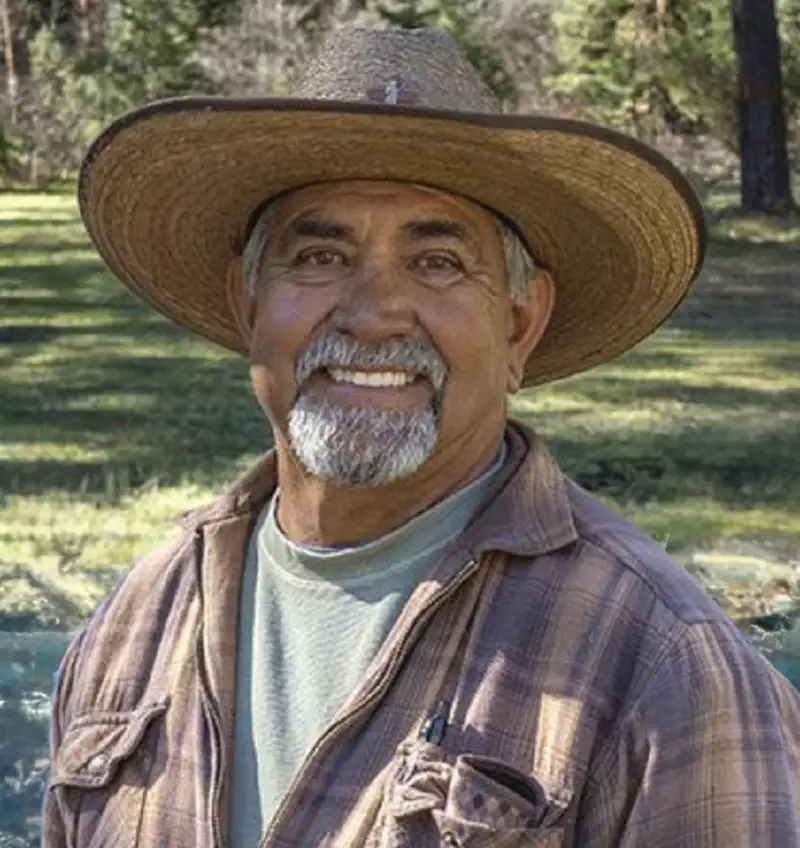
Vicente Fernandez

After four decades of military service, Vicente Fernandez obtained his degree at UNM.

“It has been hard to get people involved, but through community meetings and word of mouth, we will achieve our goal of saving our watershed and our forests for future generations.”

Ensuring the stability of tradition means inspiring young people to step into leadership roles.

“We involve younger students by offering them a chance to work with one of our participants and through community meetings,” said Fernandez. “Working with other nonprofit organizations is also a way of finding young people that are interested.”

His hope is that future generations not only inherit the landscape he has worked to protect, but the values that shaped it.

“I hope that the younger generation gets more involved,” said Fernandez. “Most young people from rural areas move out due to lack of opportunity. But my hope is that they will return to the place that nurtured them and give back to the community to keep our culture and traditions alive.”

Fernandez also encourages anyone from locals or newcomers to engage with the community and its traditions.

“Come to our acequia or community meetings,” said Fernandez. “Speak with locals. They will tell you what needs to be done.”

As both a UNM alumnus and a community leader, Fernandez hopes people remember the shared effort behind keeping northern New Mexico’s traditions thriving.

“My hope is that they remember why our acequias, our forest, our community, our traditions, and our culture are still thriving,” said Fernandez. “Not only because of my efforts, but the efforts of those that came before us—the blood, sweat, and tears that go into keeping a community alive.”

Education, he said, empowered him to become a stronger advocate and leader.

“Having a good education where you can make things happen and not have to wait for others, that is what my time at UNM taught me.”

And for students in rural communities who may feel the challenges, Fernandez offers a simple message.

“I would tell them not to give up,” said Fernandez. “It takes discipline, hard work, and time. But the results you get at the end will forever be with you. They will make your life better.”

Campus Connections

Latest
Sorry, No Posts Found

Spring 2026 Mirage Magazine Features

Loading

A World of Opportunity Close to Home

A World of Opportunity Close to Home

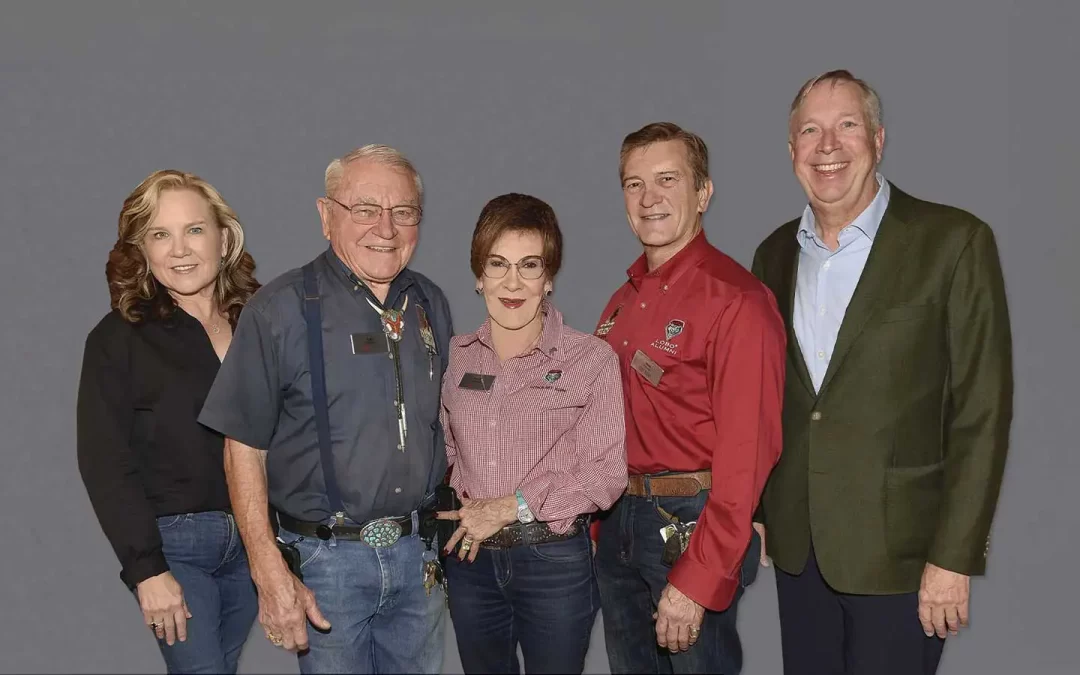
The Rainosek family with Jeff Todd, president and CEO of the UNM Foundation.

A World of Opportunity Close to Home

Presidential Scholarship Program marks 50 years of supporting exceptional New Mexico students

By Michelle G. McRuiz

For half a century, UNM’s Presidential Scholarship Program (PSP) has invested in identifying, supporting, and retaining New Mexico talent by offering renewable scholarships to extraordinary high school students from every county in the state.

The program has grown into one of the university’s most defining investments in student success and talent development. That investment is made possible in large part by generous donors who make annual gifts and create endowments to support PSP.

Each full Sponsor can be matched with a Presidential Scholar and has multiple opportunities to meet and connect with them.

This unique structure makes the Presidential Scholarship something larger than a source of financial aid. While reducing financial stress allows students to focus fully on their studies, the program functions as an intentional partnership among the university, donors, and Scholars themselves.

Together, that partnership creates a powerful model of shared investment in New Mexico’s future. Sustained support gives students the freedom to explore academic and professional paths they might otherwise never consider—and helps ensure that exceptional talent can grow, contribute, and lead close to home.

A Natural Choice

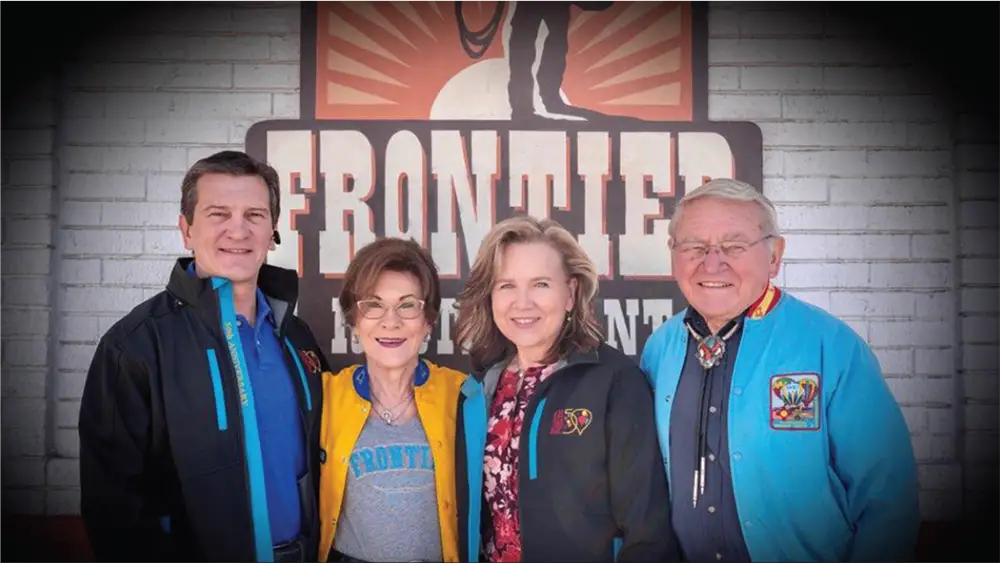
A thread of continuity runs through the PSP: Many PSP donors once were Presidential Scholars themselves. Mark Rainosek, BS ’87, MD ’92, is one such donor. For him, giving to UNM has been a family tradition. His parents, Dorothy and Larry Rainosek, are longtime donors and the owners of two perennially popular Albuquerque eateries, Frontier Restaurant and Golden Pride BBQ, Chicken, & Ribs. They inspired Mark, an anesthesiologist who practices in Albuquerque and Anchorage, Alaska, to help New Mexico students succeed.

The Rainosek family standing together at the Frontier Restaurant
The Rainosek family have been longtime supporters of the Presidential Scholarship program and UNM.

“Education has always been important in my family,” Mark says. “And UNM has a solid, respectable reputation.”

When Mark finished his residency at the UNM School of Medicine, he decided to give back to UNM as a PSP Sponsor.

“It was a natural choice because I was a Presidential Scholar myself,” he says. “I wanted to invest in my community to help those people who can’t get through school on their own. And it helps keep New Mexico’s brightest young people in the state.”

Over time, PSP has grown in both reach and ambition, supporting generations of high-achieving students while building a powerful community of alumni and donors committed to New Mexico’s future.

More Than Medicine

Mark has supported many Presidential Scholars over the years, including through the newly created PSP Graduate Award. One of his current undergraduate Scholars, Ankit Jaiswal, is a senior in the BA/MD program, a rigorous eight-year curriculum that puts students on a pathway from undergraduate education to the UNM School of Medicine.

“Education has always been important in my family, and UNM has a solid, respectable reputation.”

“The program’s mission is to address the healthcare shortage in rural and underserved areas of New Mexico, and to find students who are dedicated to helping New Mexicans,” Ankit says.

Ankit always had been interested in medicine, particularly surgery, but his undergraduate curriculum in health, medicine, and human values opened his eyes to community and global health.

“It looks at health through a broader lens,” he says. “It’s about social determinants of health, lifestyle factors, health policy—all the things that make up a person’s health. My BA program has motivated me to explore other ways to impact health in addition to treating a person.”

Ankit graduates with his BA in Spring 2026 and will enter medical school in July. He’s already racked up some impressive credentials at UNM. In addition to maintaining a 4.0 GPA, he won the Anderson School of Business Tech Navigator challenge two years in a row with his designs for a helmet that monitors concussions in real time and an injectable, expandable foam that can be used for emergency hemorrhage control.

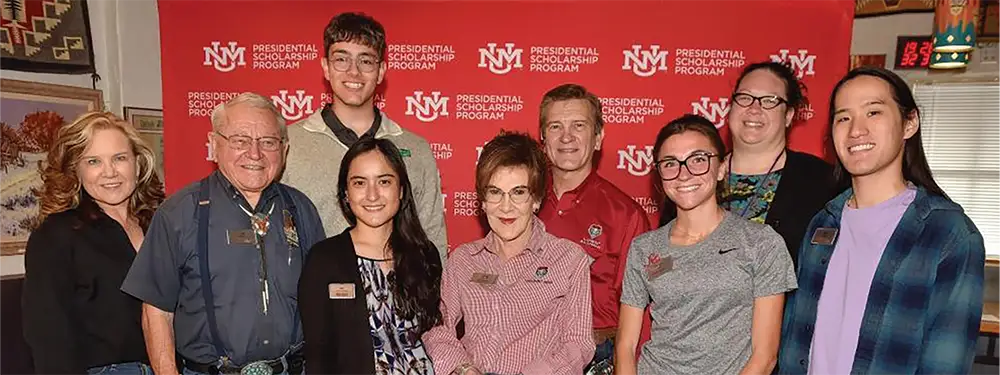
The Rainosek family with Presidential Scholarship Program recipients at the Frontier Restaurant
The Rainosek family with a group of Presidential Scholarship Program recipients at the Frontier Restaurant.

In 2024, Ankit spent six months in South America, shadowing and observing physicians as they worked to implement telemedicine programs in rural areas. He also accompanied nursing staff on visits to low-income households and spoke about telemedicine in local media.

“That work was an amazing experience,” says Ankit.

“In those parts of the world, people don’t know much about telemedicine. I got to be part of starting a rural telemedicine program and convincing people to adopt it.”

Motivated to Give Back

Another highlight of Ankit’s undergraduate program was meeting his PSP donor, Dr. Mark Rainosek.

“It was awesome to find out that Dr. Rainosek was my donor because he’s an anesthesiologist,” he says.

“He works in Alaska a lot, helping rural communities, so our interests are aligned. He has been a great role model for me by investing in UNM students and being interested in hearing our stories. That speaks a lot about his character.”

Being a Presidential Scholar not only eliminated Ankit’s undergraduate financial burden; it opened new academic and professional vistas.

“I was not forced to make decisions based on income or job stability; I could focus on growing through research and community work. My Presidential Scholarship allowed me to take risks and explore things like business and global travel that otherwise I would not have done.”

As Ankit looks ahead to medical school, he feels excited and self-assured. UNM’s supportive environment has helped him connect with mentors and step into leadership roles. That confidence has sparked a desire in Ankit to pay it forward—through medicine and philanthropy.

“I’m proud of being a Presidential Scholar,” Ankit says. “Knowing that Dr. Rainosek believed in me motivates me to continue building. I want to become a PSP donor one day and help motivate future generations.”

PSP Graduate Award Now in Second Year

The Presidential Scholarship Program began offering graduate scholarships two years ago. Their first Graduate Award Scholar, Maya Dawson, BA ’21, MS ’25, is pursuing a Ph.D. in biomedical engineering at UNM.

“Presidential Scholarship donors made it possible for me to attend a university close to my family and make invaluable connections with members of the New Mexico community,” says Maya. “I’m grateful to continue living and learning in the place I call home. And I’m very excited to continue with my Ph.D. with Dr. Olivia Lanier’s Nanomedicine Toward Health Equity Lab.”

Campus Connections

Latest
Sorry, No Posts Found

Spring 2026 Mirage Magazine Features

Sorry, No Posts Found

In Heels, She Climbed

In Heels, She Climbed

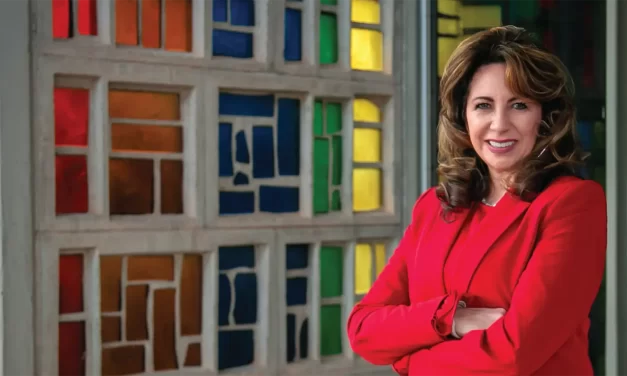
Aprilyn Chavez Geissler is an executive leader at Gateway Insurance and Financial Services.

In Heels, She Climbed

By Coline Bernal

There was a winter when Aprilyn Chavez Geissler studied for finals from the driver’s seat of her car.

She parked in different corners of campus so no one would notice. “I went to classes. I took showers in the SUB. I ate at Golden Pride Chicken. And I just made it work,” she said.

Today, Chavez Geissler serves in executive leadership at Gateway Insurance and Financial Services, where she advises clients and advocates for broader representation in an industry where she once struggled to see herself reflected. But her path upward began with rupture.

As a freshman at Central New Mexico Community College, then Technical Vocational Institute, Chavez Geissler was engaged to the man she had dated since high school. The relationship escalated into physical violence. “Typically, it takes a woman seven tries before she leaves,” she said. “I finally left.”

When she did, her parents asked her to leave their home, and she moved into her car. Despite the instability and trauma, she continued going to class, determined not to let her circumstances define her.

Eventually, someone noticed her unstable situation and offered her a room to rent at a low cost. That woman also helped her find a needs-based therapist. Chavez Geissler credits therapy as a crucial part of her healing and rebuilding. “I needed it to regain my confidence and move beyond what I was facing,” she said.

Five years later, Chavez Geissler graduated from the University of New Mexico Anderson School of Management with a bachelor’s degree in finance, her tuition paid in full. More than the coursework, she said, college taught her grit and emotional intelligence.

Determined to Belong

Since high school, Chavez Geissler was set on becoming a financial adviser. Determined to get an early start, she entered the industry at 20, taking a receptionist job at what is now Ameriprise Financial. The leap was intimidating. She remembers being “really nervous and scared” as she stepped far outside her comfort zone, determined to reach the goals she had set for herself.

Her determination did not go unnoticed. The financial advisers in the office took her under their wing, paying her to stay late, inviting her to sit in on client appointments and giving her access to lessons no textbook could offer.

But even as she gained experience, she carried quiet insecurity. At that time, she did not see herself as a survivor. She saw herself as someone who had been financially unstable.

She feared her past might undermine her credibility in a field centered on wealth management, so she kept her story to herself. “For years, I never told anybody what had gone on with me,” she said.

The industry added another layer of doubt. In the positions she hoped to hold one day, she rarely saw anyone who looked like her. There was, as she puts it, “no Hispanic financial advisor Barbie.”

So she worked harder, learning every aspect of the business to prove she belonged. Looking back, she describes those years with a metaphor that still resonates.

“Some days, I feel like I’m climbing a mountain and I’m wearing heels and everybody else is wearing hiking boots.”

Aprilyn Chavez Geissler with UNM Alumni Board members during Homecoming
UNM Alumni Board President Aprilyn Chavez Geissler, center, and other board members enjoy a fun night during 2025 UNM Homecoming Week.

Finding Her Voice

Her trajectory began to shift when she stopped trying to blend in. There was a time, she recalls, when she tried to be like everyone else. But when she started bringing her authentic self into the room, when she stopped being afraid to speak up or share her perspective, was when she began to have the greatest impact. Her mentors did not try to reshape her; they encouraged her. Their acceptance allowed her to stop shrinking herself to fit the room and to own who she was, regardless of others’ expectations.

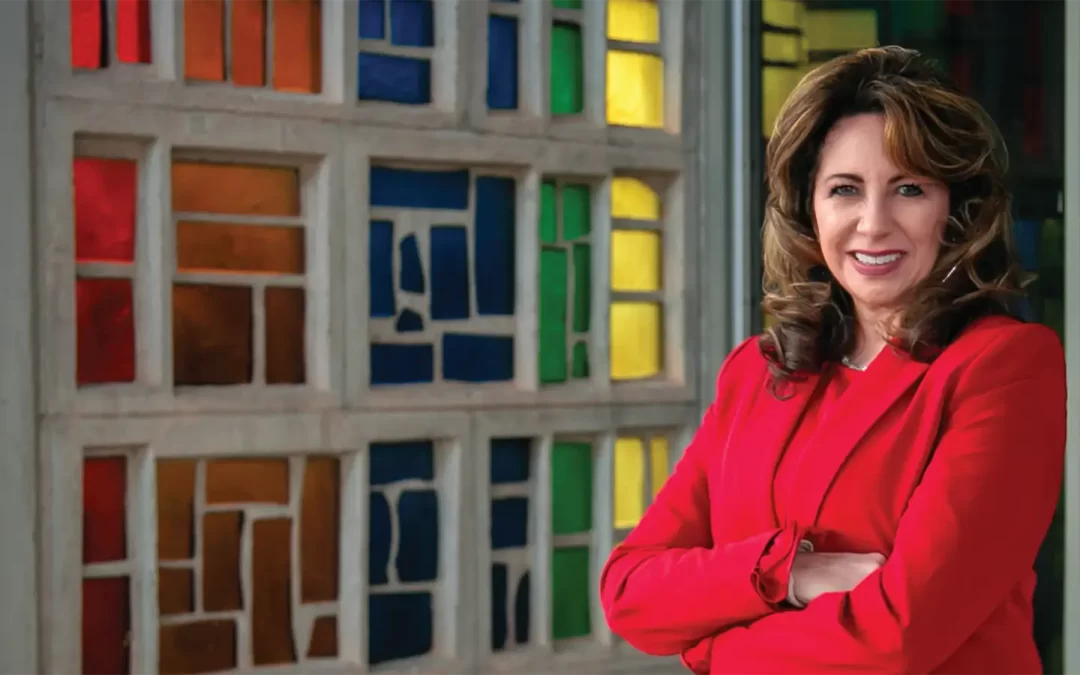
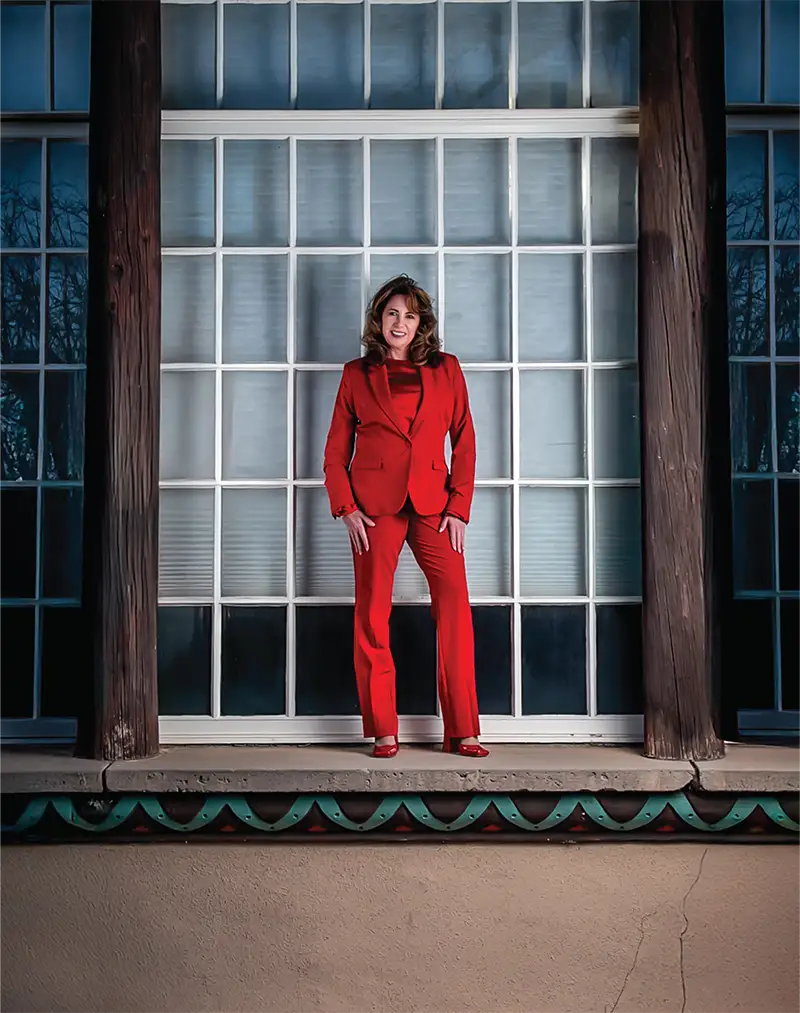
Aprilyn Chavez Geissler standing in a red suit in front of a large window
Aprilyn Chavez Geissler is the president of the UNM Alumni Association and an Anderson School of Management Hall of Fame inductee.

From that shift came her guiding mantra: “Let your struggle be your strength, not your identity.”

In 2015, Chavez Geissler was introduced to the owners of Gateway Insurance and Financial Services. They saw her potential and invited her to join. By then, she had already built her own practice as a financial professional and insurance agent. “I learned every aspect of the industry I could,” she said, determined to always be prepared, “so when I was asked to step into new roles, I was ready.”

She eventually became the first executive vice president of a $30 million organization, a role in which she frames leadership as inspiration: helping others join the mission and engage in ways meaningful to them.

Today, her professional fulfillment comes in two forms: helping financial professionals build practices aligned with their goals and sitting one-on-one with clients to guide financial decisions.

Her philosophy of advising is rooted in lived experience. The past she once viewed as a liability has become one of her greatest assets.

Too often, she believes, financial professionals speak at a high level, when most people simply need someone who can meet them where they are. For some clients, financial literacy begins with opening a checking account or understanding credit. Chavez Geissler meets them there.

Rising to Give Back

She has received numerous recognitions throughout her career, including being named the 2020 Top Woman to Watch by InvestmentNewsNet and a 2019 NAIFA National Diversity Champion.

Yet the moment she fully grasped how far she had come was when she learned she would be inducted into the Anderson School of Management Hall of Fame in 2025. The recognition was “pretty special,” she said, “because they were acknowledging me for the things that I do every day.” It forced her to pause. “Sometimes you just don’t realize what you’ve done or where you’ve come from.”

“You have to rise above it, because everything you need is already inside you.”

She was also named the “Phoenix of Albuquerque” by Insurance News. Initially hesitant to embrace the title, she later recognized it as an accurate reflection of her resilience.

“When you are in the ashes and unsure how you will eat your next meal,” she said, “you have to rise above it, because everything you need is already inside you.”

Chavez Geissler has never forgotten the people who extended a hand when she needed it most. Advancing in her career, she committed herself to giving back.

She chooses her commitments intentionally, serving in spaces that reflect both her values and her story. As treasurer of the Women in Financial Services Association, she works to attract and advance women in a profession where representation remains limited, an effort that mirrors her own early experience in the industry. Her ties to UNM, the institution that shaped her growth, remain just as strong. She now serves as president of the UNM Alumni Relations Board and leads the New Mexico Sports Hall of Fame.

Quoting Mohandas K. Gandhi, she often returns to a guiding principle:

“The best way to find yourself is to lose yourself in the service of others.”

Executive leadership, volunteer commitments and motherhood do not exist in separate compartments of her life but overlap in ways that demand constant recalibration. Some days begin before sunrise and stretch long past sunset, and fatigue can be real. Still, she says, as long as there is purpose behind the work, she keeps going. For Chavez Geissler, work and life are intertwined, “all in conjunction, all together.”

If Chavez Geissler could speak to the young woman studying for finals in a parked car, she would not promise ease but purpose. She would tell her: “You’ll change lives in ways you don’t even imagine. Even when it’s not comfortable or easy, you will move mountains.”

Even in heels, she did.

Securities offered through Registered Representatives of Cambridge Investment Research, Inc. a Broker/Dealer, Member FINRA/SIPC. Advisory services through Cambridge Investment Research Advisors, Inc., a Registered Investment Advisor.

Gateway Financial Advisors, LLC., DBA: Quality Life Insurance Agency, DBA: Gateway Insurance and Financial Services, LLC., Cambridge is partial owner of Gateway Financial Advisors, LLC.

Campus Connections

Latest
Sorry, No Posts Found

Spring 2026 Mirage Magazine Features

Sorry, No Posts Found

UNM and The Mother Road

UNM and The Mother Road

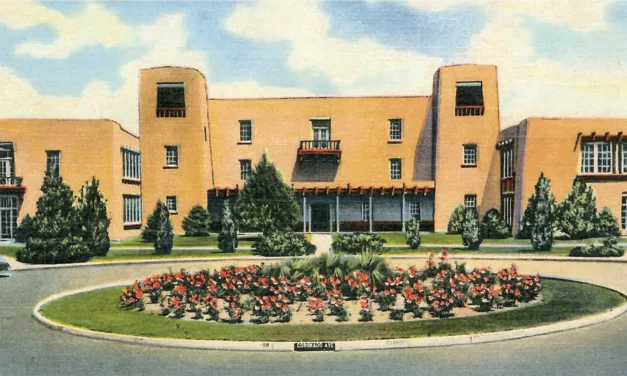
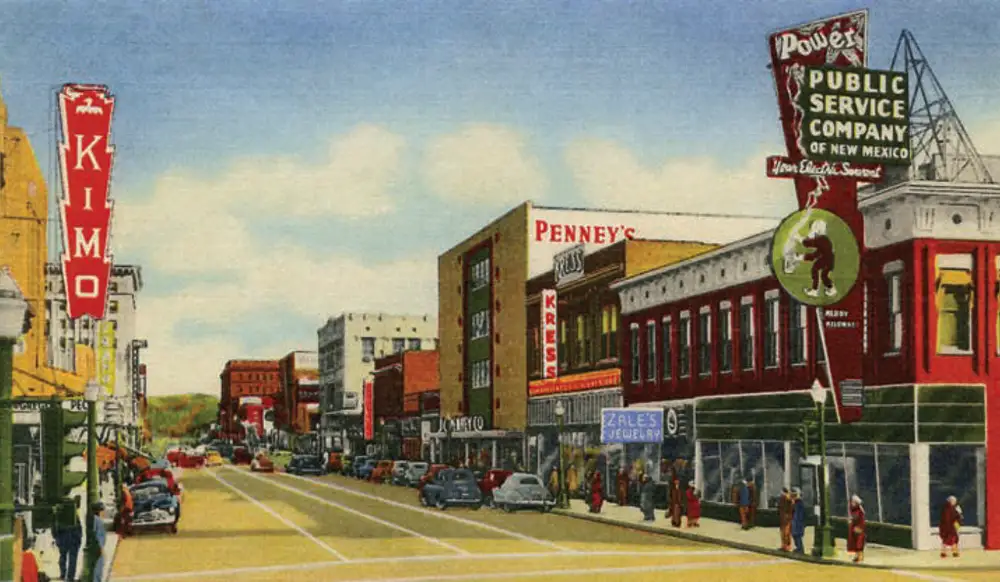
The Kimo Theatre and Public Service Company of New Mexico on Route 66. Photo courtesy UNM CSWR.

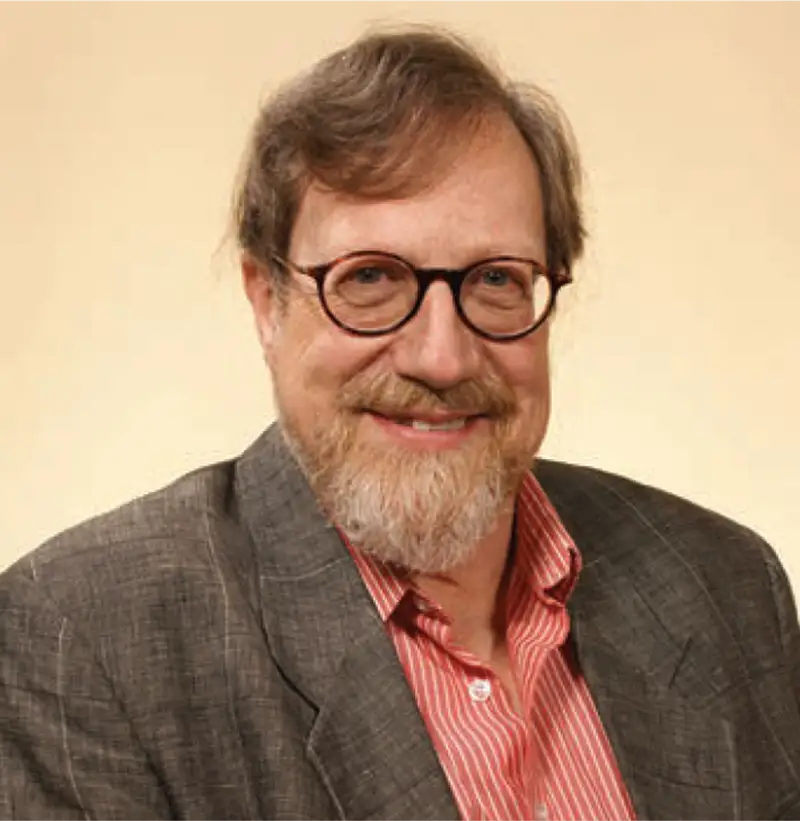
Portrait of Professor Emeritus David Dunaway

Professor Emeritus David Dunaway

UNM and The Mother Road

By Mary Beth King

Before there was a Route 66, The University of New Mexico was already an established college, sitting high on a hill above Albuquerque. At the time, the whole university was contained in one building, Hodgin Hall—administration, faculty and staff offices, library, labs, and classrooms. It wasn’t until 1926 that Route 66 was established, linking Chicago to Santa Monica and passing through New Mexico along the way.

“Route 66 passes right in front of the University, making us the largest university on Route 66,” said UNM Professor Emeritus of English David Dunaway. Dunaway is an authority on Route 66, producer of Across the Tracks; A Route 66 Story, and editor of A Route 66 Companion, an anthology of history and literature with pieces by authors such as Sylvia Plath, Thomas Wolfe, Ross McDonald, and Raymond Chandler.

Dunaway recently wrote an oral history of Route 66, co-authored by Associate Professor Stephen Benz of the UNM English department. But he wasn’t always as aware of the legendary Mother Road. For years, Dunaway never gave a second thought about Route 66.

“For me, Route 66 was just a street where I went to get a cup of coffee, where I went to the gym. It wasn’t Route 66 in capital letters. I didn’t visit Route 66. I just worked there. It wasn’t the destination that people from all over the world hope they can someday, on their bucket list, make it to Albuquerque and a hundred other cities and towns on the world’s most famous road.”

When Dunaway learned that Central Avenue was Route 66, an 18-mile swath through Albuquerque and past the UNM campus, he saw a new perspective.

“That exposes a fundamental tension between the Route 66 of the traveler and the tourist, and the Route 66 of the resident for whom the road may be just a way to the post office… It’s the road we live on and work on.”

Following that realization about 30 years ago, he began to dig into the history and culture of Route 66 and produced for National Public Radio (NPR) a three-hour documentary on Route 66 and pieces for the popular radio program All Things Considered.

The series has since been remastered and will air nationally to mark the Mother Road’s centennial on July 4 and again on Nov. 11, the anniversary of the official opening of the road. Dunaway explained how Route 66 came to be located adjacent to the UNM campus.

“More than 100 years ago, there was a path that went from Tijeras to the other side of Albuquerque and headed west toward Mount Taylor. It was natural that it would go past the University of New Mexico and pass through the center of the city, back when we were a town with wool wagons making their way through downtown. So, Route 66 and the university have always been entwined.”

There are other universities along Route 66, he noted, “but none of them have the population or prestige of the University of New Mexico.”

“At one point, the University, such as it was in the 1920s, would actually have had horses, maybe drawing drag lines to set up this major road to build it from a trail, a dirt road, then a graded road, and then a paved road in 1938.”

But unlike other roads that cross the country, Route 66 became much more than a paved road, but rather a cultural icon, immortalized in music, literature, and broadcast media, drawing visitors from all over the world to immerse themselves in the romance.

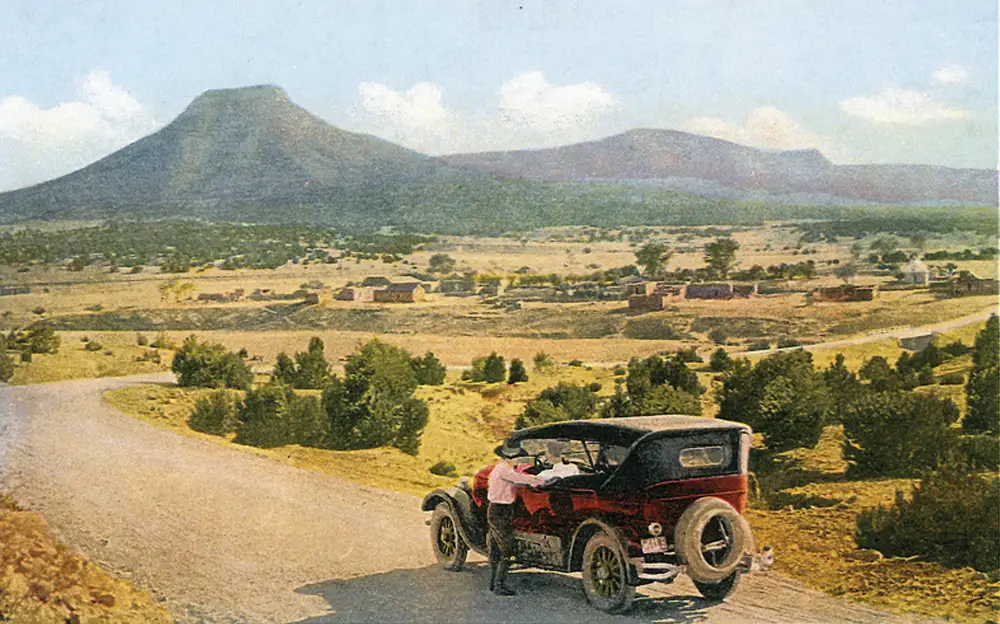
Historic Route 66 postcard showing Starvation Peak between Las Vegas and Santa Fe
Photo courtesy UNM CSWR.

Historic Route 66 postcard featuring Bernalillo, New Mexico

From Albuquerque, Route 66 headed north through Bernalillo and towards Santa Fe and Las Vegas. Photo courtesy UNM CSWR.

“Everybody knows the story of how the Dust Bowl in Oklahoma and Texas created an exodus from that part of the American Southwest, and most people went west to California, to the land of opportunity and, as Jimmy Rodgers sang in ‘Blue Yodel No. 4 (California Blues),’ ‘I’m going to California where they sleep out every night…’”

After the war, Dunaway explained, there was a burst of travel along the old road with returning soldiers who, with their families, wanted to take a vacation.

“Route 66 was the all-weather road from the beginning. That’s the way it was designed. Route 10 on the border was too hot. The Lincoln Highway to the north was too snowy. Route 66 was a road you could drive at all times, so people began taking this trip, and it was a very exotic one. It took people to Native American tribes they’d never seen. It was full of oddities and strange items, and people came back. Into the ’50s, with this notion that here was an unusual experience.”

Then popular singer Nat King Cole and his trio recorded a song in 1946.

“If you ever plan to motor west
Travel my way, take the highway that’s the best
Get your kicks on Route 66
It winds from Chicago to LA
More than two thousand miles all the way
Get your kicks on Route 66…”

“That stirred things up even more, and from 1959 to 1963, we actually had a television series called Route 66 about a pair of young guys traveling around in a fast Corvette with no particular destination,” Dunaway said, noting that the show is still popular and running in syndication around the world.

“The combination of a road which tickled people’s fancy, which had its own theme song, which had its own TV series, all of these added up to an evocation of what Route 66 came to mean to America and to the world. The chance to drive for Europeans 2,000 miles without hitting a single border, without hitting a single checkpoint. The chance to travel out of the two great cities at either end, into really rural areas, into deep forests near Flagstaff and the Continental Divide, into small-town life. All these together, merged into a sense of American adventure, and that’s what makes Route 66 arguably the most famous road in the world.”

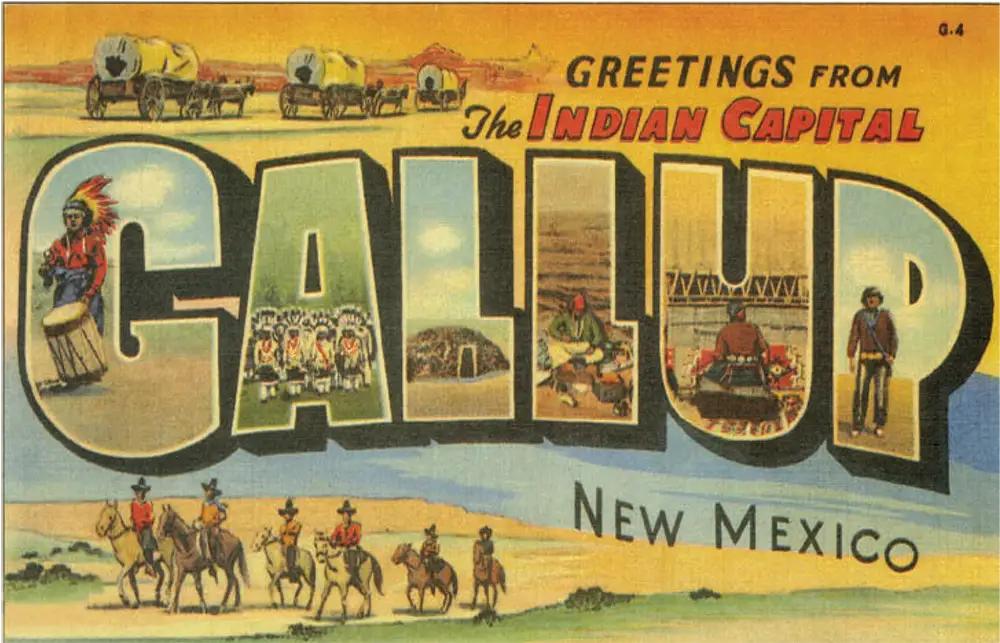
Historic postcard featuring El Rancho in Gallup, New Mexico
Postcard, El Rancho, Gallup, NM, on Route 66, by M.W.M., Aurora, MO, from Postcard Coll., CSWR

Dunaway would like to see UNM take more advantage of its proximity to the historic cultural icon and has been trying to organize a national center for the study of Route 66 on campus for about 20 years. Plans were for an effort that would draw people from across the University, from real estate, from finance, from various departments who were teaching or doing research on Route 66. Space was allotted at the corner of University Avenue and Central Avenue.

Historic postcard showing the Kimo Theatre and Public Service Company of New Mexico on Route 66
The Kimo Theatre and Public Service Company of New Mexico on Route 66. Photo courtesy UNM CSWR.

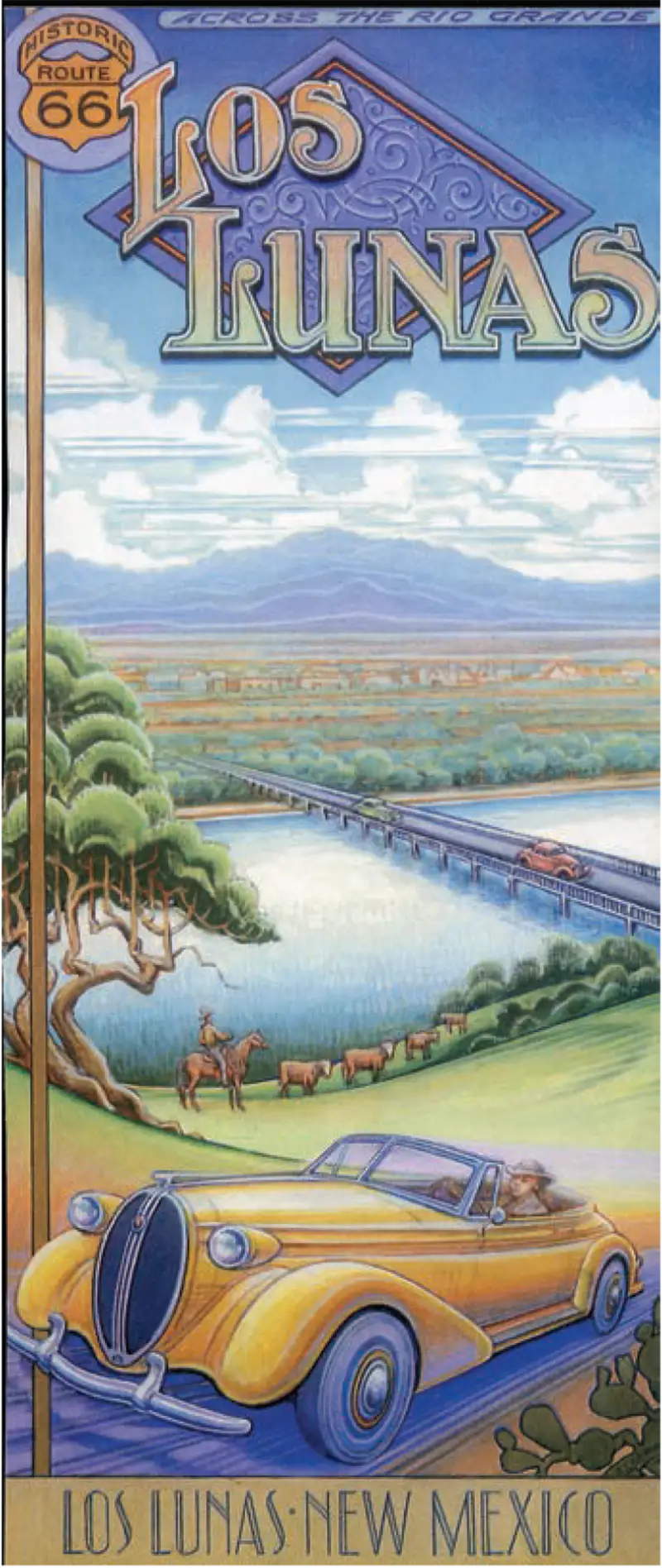
Historic Route 66 postcard showing the road crossing the Rio Grande near Los Lunas

Historic Route 66, Across the Rio Grande, Los Lunas, N.M. Photo courtesy UNM CSWR.

“UNM is a logical place for a national center on Route 66. We’re on 66, we have a great library collection of interviews and books on Route 66, and we have faculty such as me who have devoted a part of their lives to the road… The idea fell apart and has not been reorganized… yet.”

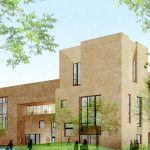
UNM’s new Center for Collaborative Arts & Technology is being built on Route 66. Its location along Central Avenue, it is hoped, will animate the street, create new vibrancy, and showcase the talents of the UNM College of Fine Arts to the public.

“Just as UNM’s connection to Route 66 has long inspired new beginnings through exploration, CCAT represents what can be achieved through collaboration and innovation,” said College of Fine Arts Dean Harris Smith.

Dunaway acknowledges there is some ugliness in the history of the road too: “I want to rebalance Route 66, to consider the communities that willingly and unwillingly gave up their land for the railroad to come through, and later Route 66. The Native and Hispanic communities. It’s also a road that was difficult for African Americans to travel. They needed the Green Book to get them to places. So, my Route 66 is a broad avenue into American history, which opens up many of its unresolved issues. I want Route 66 to be seen as a road for all and with a place for all.”

“Although it’s an American road, it belongs to the world. There are Route 66 societies in Switzerland, Brazil, Japan, Germany. We have offered the world an ideal. Of small-town living, big city life, and vast spaces in between. And they come by the thousands to visit. It’s time that Albuquerque and the University step up and recognize the incredible potential… I’m hopeful that will come about as a result of interest this year in the Mother Road, as John Steinbeck called it.”

Beyond Route 66, Dunaway’s scholarship spans other cultural histories. His latest book is A Four-eyed World: How Glasses Changed the Way We See, a historical and humorous look at how eyeglasses shaped culture, science and the way we see today and quotes well-known people from Shakespeare to James Bond to Marilyn Monroe on the subject of glasses.

Campus Connections

Latest
Sorry, No Posts Found

Spring 2026 Mirage Magazine Features

Sorry, No Posts Found

Pin It on Pinterest