
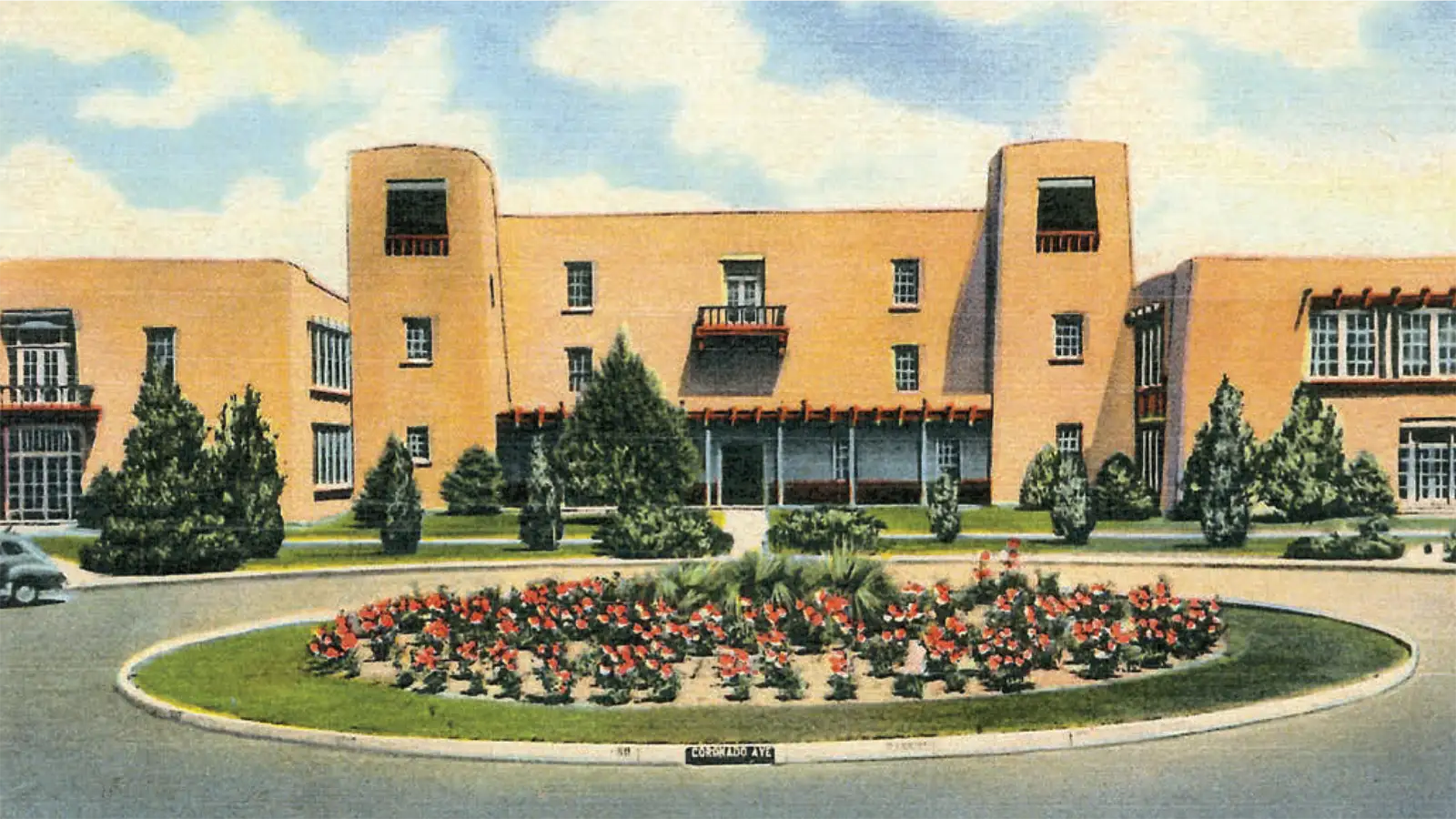
The Kimo Theatre and Public Service Company of New Mexico on Route 66. Photo courtesy UNM CSWR.
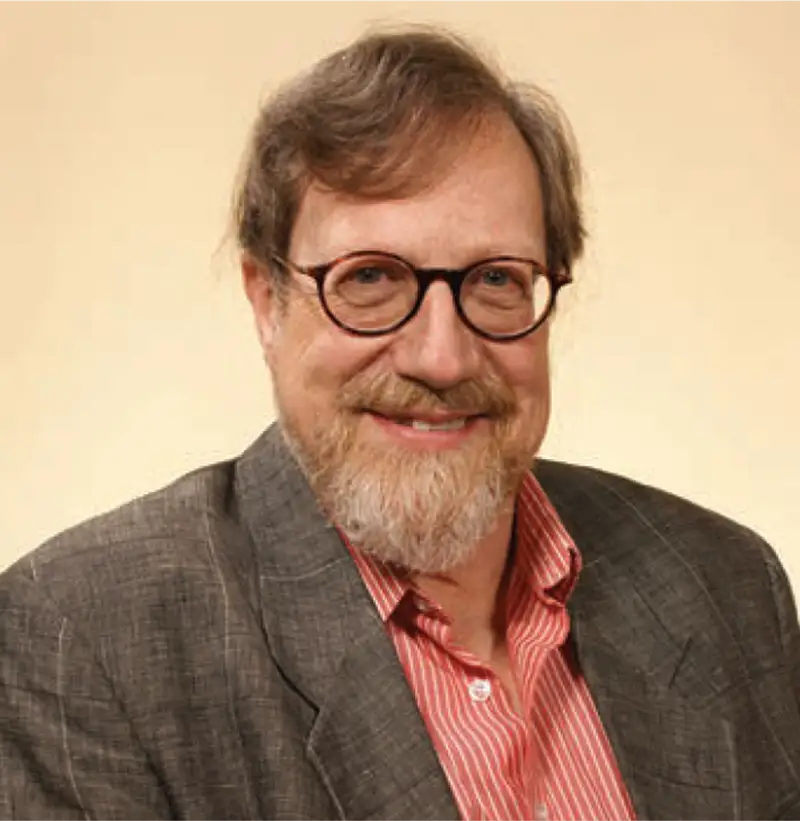
Professor Emeritus David Dunaway
UNM and The Mother Road
By Mary Beth King
Before there was a Route 66, The University of New Mexico was already an established college, sitting high on a hill above Albuquerque. At the time, the whole university was contained in one building, Hodgin Hall—administration, faculty and staff offices, library, labs, and classrooms. It wasn’t until 1926 that Route 66 was established, linking Chicago to Santa Monica and passing through New Mexico along the way.
“Route 66 passes right in front of the University, making us the largest university on Route 66,” said UNM Professor Emeritus of English David Dunaway. Dunaway is an authority on Route 66, producer of Across the Tracks; A Route 66 Story, and editor of A Route 66 Companion, an anthology of history and literature with pieces by authors such as Sylvia Plath, Thomas Wolfe, Ross McDonald, and Raymond Chandler.
Dunaway recently wrote an oral history of Route 66, co-authored by Associate Professor Stephen Benz of the UNM English department. But he wasn’t always as aware of the legendary Mother Road. For years, Dunaway never gave a second thought about Route 66.
“For me, Route 66 was just a street where I went to get a cup of coffee, where I went to the gym. It wasn’t Route 66 in capital letters. I didn’t visit Route 66. I just worked there. It wasn’t the destination that people from all over the world hope they can someday, on their bucket list, make it to Albuquerque and a hundred other cities and towns on the world’s most famous road.”
When Dunaway learned that Central Avenue was Route 66, an 18-mile swath through Albuquerque and past the UNM campus, he saw a new perspective.
“That exposes a fundamental tension between the Route 66 of the traveler and the tourist, and the Route 66 of the resident for whom the road may be just a way to the post office… It’s the road we live on and work on.”
Following that realization about 30 years ago, he began to dig into the history and culture of Route 66 and produced for National Public Radio (NPR) a three-hour documentary on Route 66 and pieces for the popular radio program All Things Considered.
The series has since been remastered and will air nationally to mark the Mother Road’s centennial on July 4 and again on Nov. 11, the anniversary of the official opening of the road. Dunaway explained how Route 66 came to be located adjacent to the UNM campus.
“More than 100 years ago, there was a path that went from Tijeras to the other side of Albuquerque and headed west toward Mount Taylor. It was natural that it would go past the University of New Mexico and pass through the center of the city, back when we were a town with wool wagons making their way through downtown. So, Route 66 and the university have always been entwined.”
There are other universities along Route 66, he noted, “but none of them have the population or prestige of the University of New Mexico.”
“At one point, the University, such as it was in the 1920s, would actually have had horses, maybe drawing drag lines to set up this major road to build it from a trail, a dirt road, then a graded road, and then a paved road in 1938.”
But unlike other roads that cross the country, Route 66 became much more than a paved road, but rather a cultural icon, immortalized in music, literature, and broadcast media, drawing visitors from all over the world to immerse themselves in the romance.
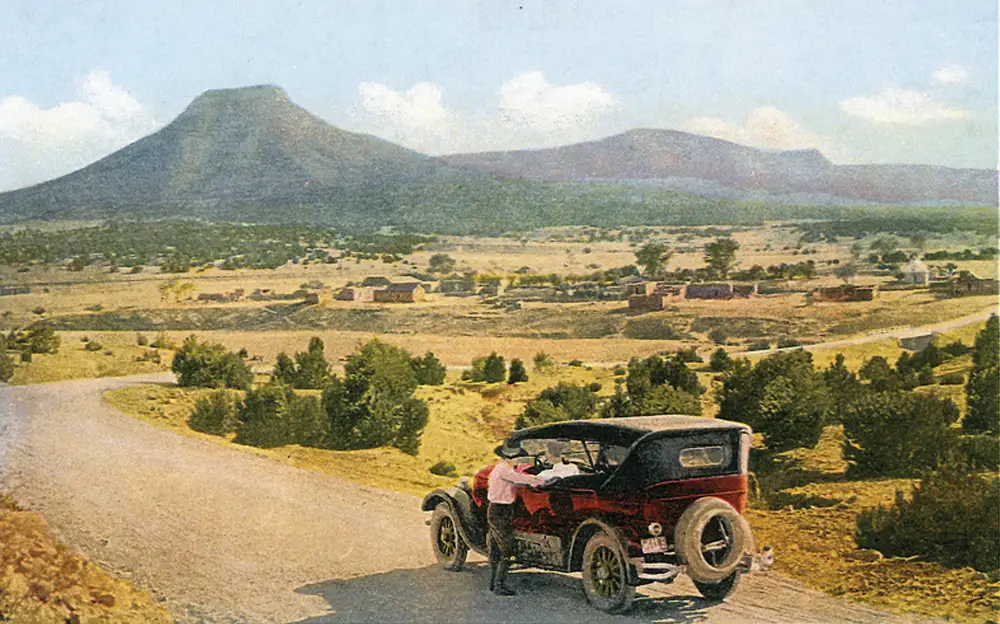
Photo courtesy UNM CSWR.

From Albuquerque, Route 66 headed north through Bernalillo and towards Santa Fe and Las Vegas. Photo courtesy UNM CSWR.
“Everybody knows the story of how the Dust Bowl in Oklahoma and Texas created an exodus from that part of the American Southwest, and most people went west to California, to the land of opportunity and, as Jimmy Rodgers sang in ‘Blue Yodel No. 4 (California Blues),’ ‘I’m going to California where they sleep out every night…’”
After the war, Dunaway explained, there was a burst of travel along the old road with returning soldiers who, with their families, wanted to take a vacation.
“Route 66 was the all-weather road from the beginning. That’s the way it was designed. Route 10 on the border was too hot. The Lincoln Highway to the north was too snowy. Route 66 was a road you could drive at all times, so people began taking this trip, and it was a very exotic one. It took people to Native American tribes they’d never seen. It was full of oddities and strange items, and people came back. Into the ’50s, with this notion that here was an unusual experience.”
Then popular singer Nat King Cole and his trio recorded a song in 1946.
“If you ever plan to motor west
Travel my way, take the highway that’s the best
Get your kicks on Route 66
It winds from Chicago to LA
More than two thousand miles all the way
Get your kicks on Route 66…”
“That stirred things up even more, and from 1959 to 1963, we actually had a television series called Route 66 about a pair of young guys traveling around in a fast Corvette with no particular destination,” Dunaway said, noting that the show is still popular and running in syndication around the world.
“The combination of a road which tickled people’s fancy, which had its own theme song, which had its own TV series, all of these added up to an evocation of what Route 66 came to mean to America and to the world. The chance to drive for Europeans 2,000 miles without hitting a single border, without hitting a single checkpoint. The chance to travel out of the two great cities at either end, into really rural areas, into deep forests near Flagstaff and the Continental Divide, into small-town life. All these together, merged into a sense of American adventure, and that’s what makes Route 66 arguably the most famous road in the world.”
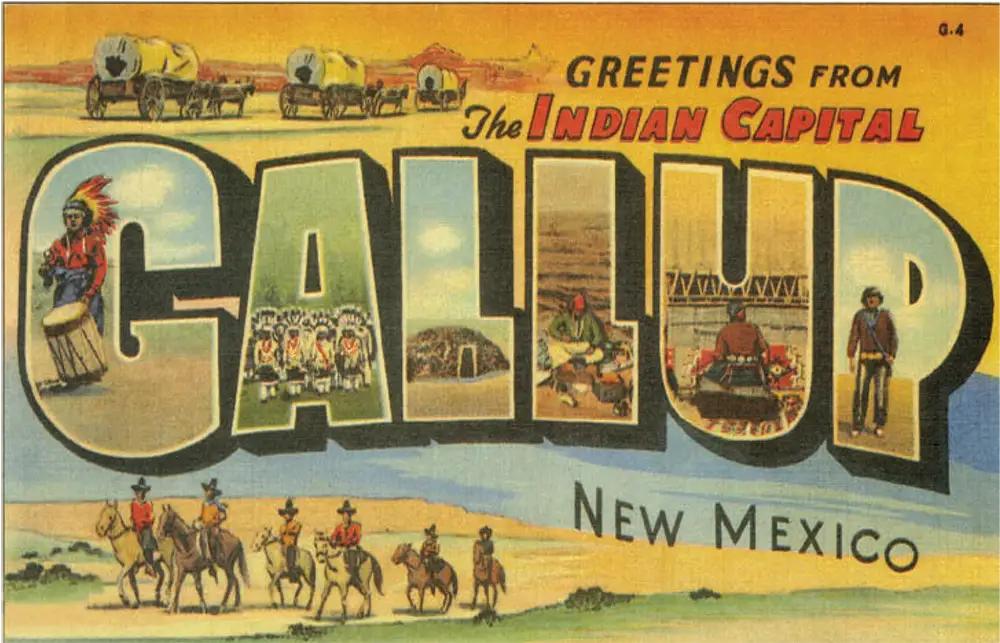
Postcard, El Rancho, Gallup, NM, on Route 66, by M.W.M., Aurora, MO, from Postcard Coll., CSWR
Dunaway would like to see UNM take more advantage of its proximity to the historic cultural icon and has been trying to organize a national center for the study of Route 66 on campus for about 20 years. Plans were for an effort that would draw people from across the University, from real estate, from finance, from various departments who were teaching or doing research on Route 66. Space was allotted at the corner of University Avenue and Central Avenue.
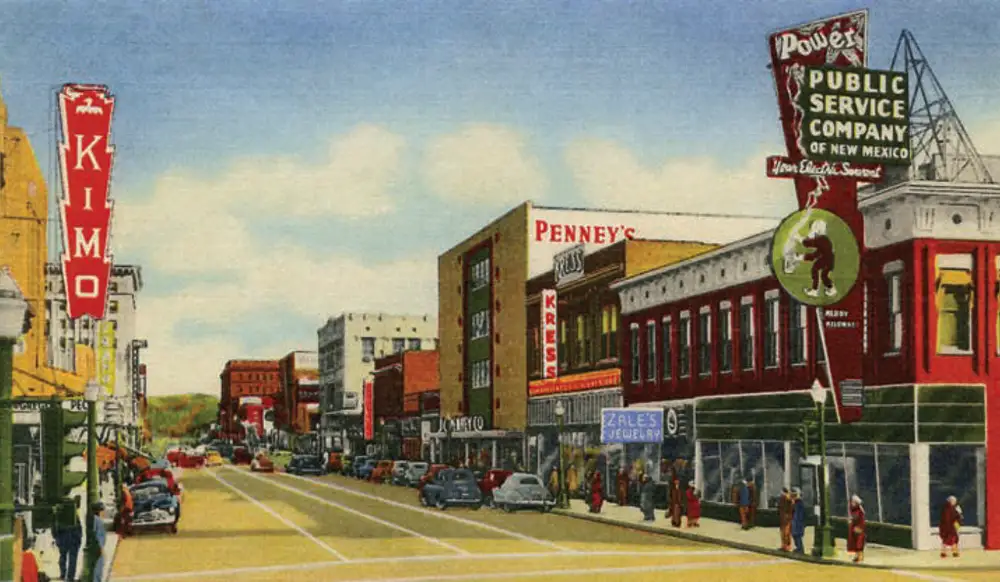
The Kimo Theatre and Public Service Company of New Mexico on Route 66. Photo courtesy UNM CSWR.
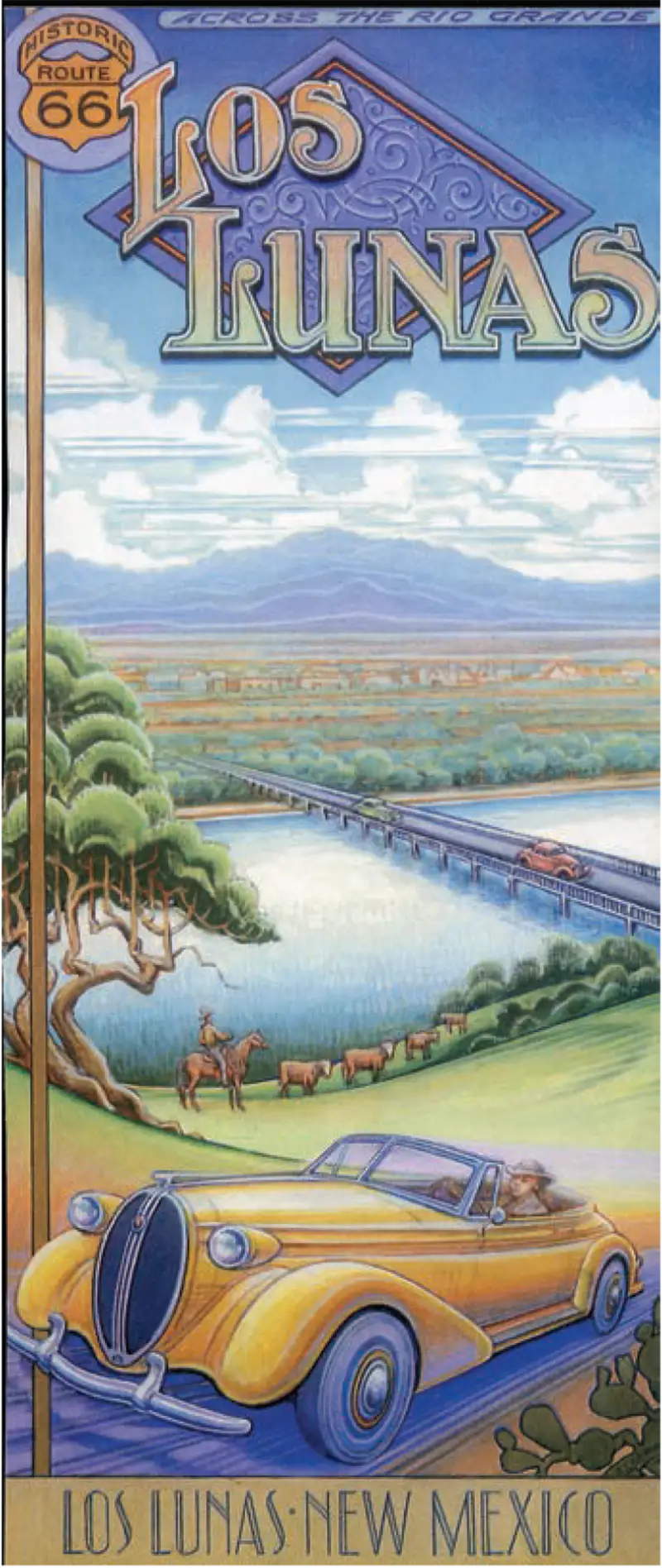
Historic Route 66, Across the Rio Grande, Los Lunas, N.M. Photo courtesy UNM CSWR.
UNM’s new Center for Collaborative Arts & Technology is being built on Route 66. Its location along Central Avenue, it is hoped, will animate the street, create new vibrancy, and showcase the talents of the UNM College of Fine Arts to the public.
“Just as UNM’s connection to Route 66 has long inspired new beginnings through exploration, CCAT represents what can be achieved through collaboration and innovation,” said College of Fine Arts Dean Harris Smith.
Dunaway acknowledges there is some ugliness in the history of the road too: “I want to rebalance Route 66, to consider the communities that willingly and unwillingly gave up their land for the railroad to come through, and later Route 66. The Native and Hispanic communities. It’s also a road that was difficult for African Americans to travel. They needed the Green Book to get them to places. So, my Route 66 is a broad avenue into American history, which opens up many of its unresolved issues. I want Route 66 to be seen as a road for all and with a place for all.”
“Although it’s an American road, it belongs to the world. There are Route 66 societies in Switzerland, Brazil, Japan, Germany. We have offered the world an ideal. Of small-town living, big city life, and vast spaces in between. And they come by the thousands to visit. It’s time that Albuquerque and the University step up and recognize the incredible potential… I’m hopeful that will come about as a result of interest this year in the Mother Road, as John Steinbeck called it.”
Beyond Route 66, Dunaway’s scholarship spans other cultural histories. His latest book is A Four-eyed World: How Glasses Changed the Way We See, a historical and humorous look at how eyeglasses shaped culture, science and the way we see today and quotes well-known people from Shakespeare to James Bond to Marilyn Monroe on the subject of glasses.
Campus Connections
Latest
UNM Receives Renewal of Carnegie Elective Classification for Community Engagement
The University of New Mexico’s commitment to serving communities across the state continues to gain national recognition—something Lobo alumni know well through the University’s lasting impact.



Spring 2026 Mirage Magazine Features
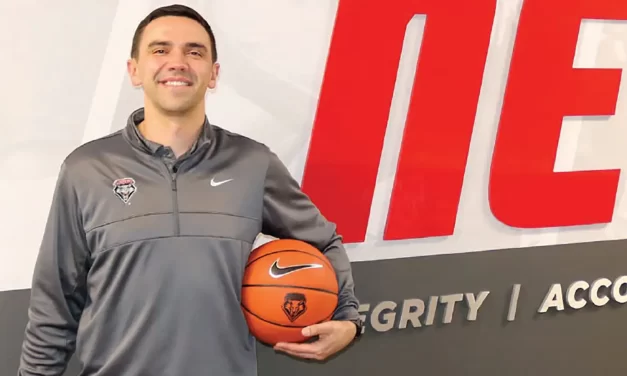
Lobo Alliance Launches New Era for UNM Athletics
On March 4, Ryan Berryman was appointed Vice President and Director of Athletics. A three-time UNM...
Read More
From the Roof to the Field
Isabel Gonzalez covering the 2025 NCAA Women’s Basketball Final Four in Tampa Bay, Fla. From the...
Read More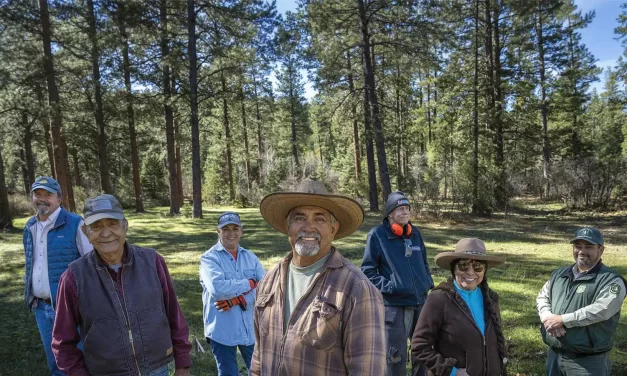
Keeping Traditions Alive: Mayordomo Earns Degree, Inspires Rural Students
Vicente Fernandez, center, is the mayordomo of the Acequia Madre del Sur de Cañon del Don Fernando...
Read More
A World of Opportunity Close to Home
The Rainosek family with Jeff Todd, president and CEO of the UNM Foundation. A World of...
Read More
In Heels, She Climbed
Aprilyn Chavez Geissler is an executive leader at Gateway Insurance and Financial Services. In...
Read More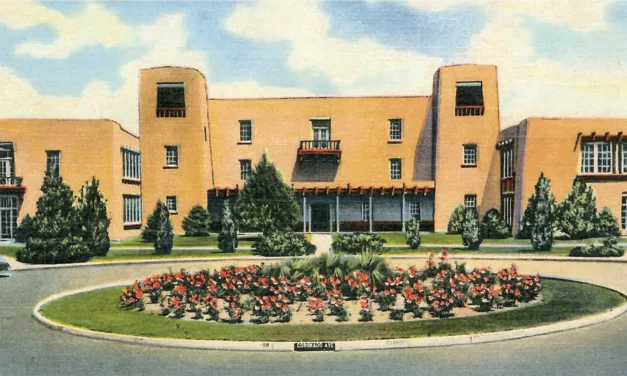
UNM and The Mother Road
The Kimo Theatre and Public Service Company of New Mexico on Route 66. Photo courtesy UNM CSWR....
Read More