Lobo Alliance Launches New Era for UNM Athletics

Lobo Alliance Launches New Era for UNM Athletics

On March 4, Ryan Berryman was appointed Vice President and Director of Athletics. A three-time UNM graduate and New Mexico native, Berryman becomes one of the youngest athletics directors in Division I, and the first Lobo alumnus to lead the department in the modern era.

Lobo Alliance Launches New Era for UNM Athletics

By Steve Carr

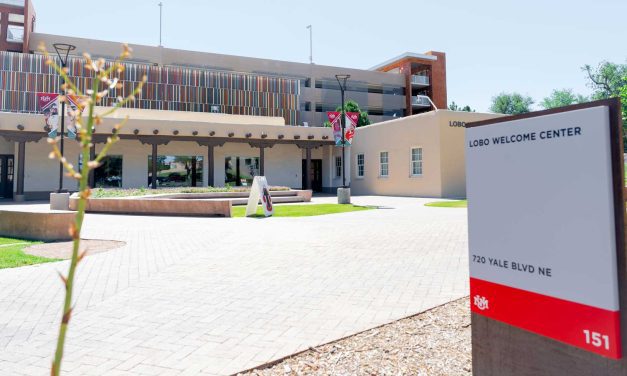
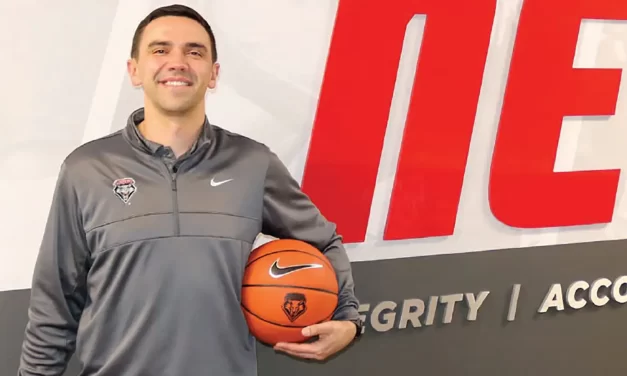
New Mexico Lobos athletics department wall

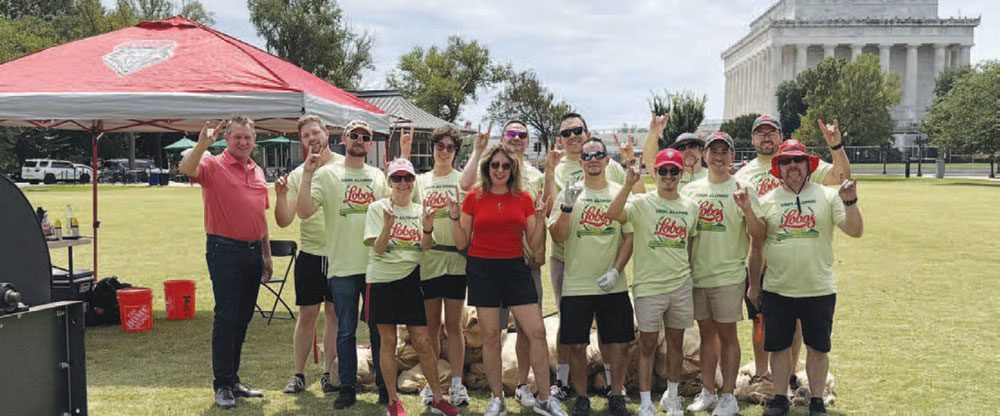
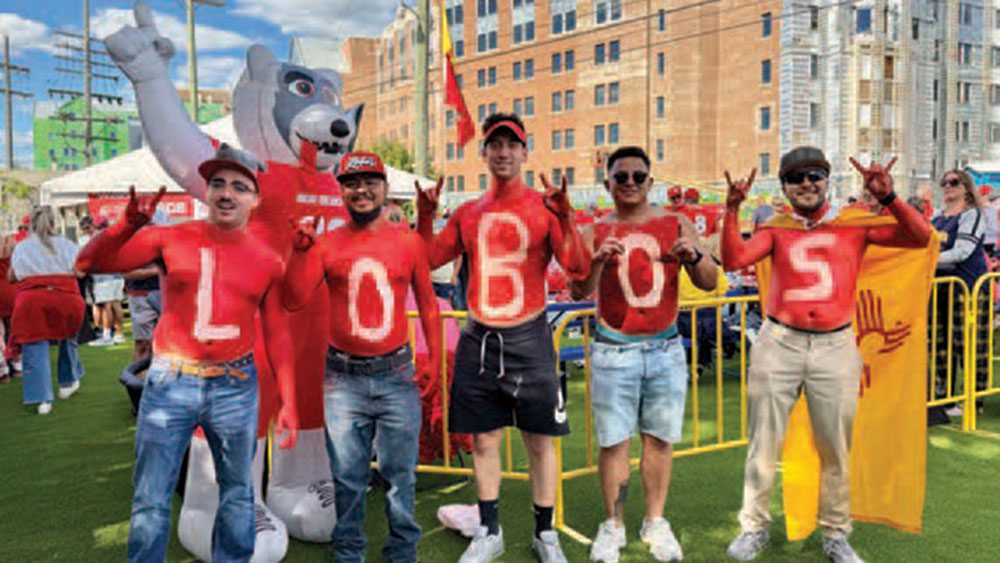
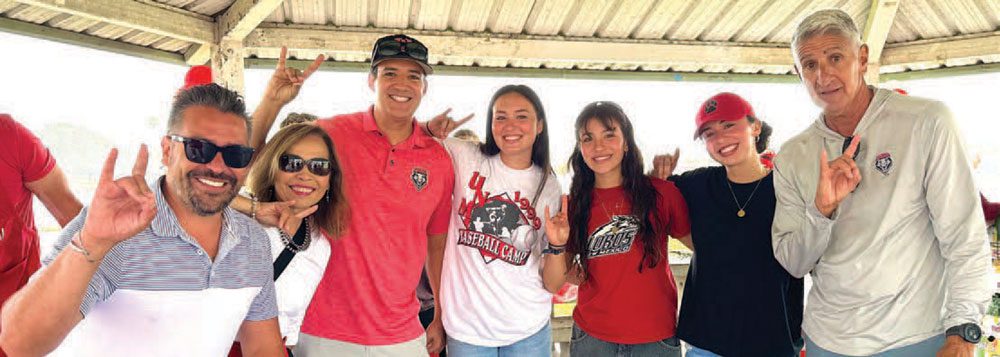
Collegiate athletics has undergone significant changes over the past several years, and recently, to stay competitive and uphold its mission as a leading public institution, The University of New Mexico launched the Lobo Alliance, a coordinated, community-driven approach to supporting student-athletes through Name, Image, and Likeness (NIL) with a new revenue-sharing model.

The initiative follows last summer’s House v. NCAA settlement, which reshaped how universities can support and compensate student-athletes. Under the agreement, Division I schools that opt in will help fund $2.8 billion in backpay for former athletes through NCAA reserves and reductions in annual NCAA distributions over the next decade. As a result, UNM will receive less NCAA funding but can now directly compensate student-athletes.

Ryan Berryman standing in front of an illuminated Lobos logo on the wall

While participation is optional, schools may share up to an estimated $20.5 million annually, about 22% of average Power Five athletics revenue from media rights, ticket sales, licensing, and sponsorships. Traditionally, student-athlete support came through scholarships, stipends, and more recently, third-party NIL collectives.

The new model adds a direct institutional component, updates roster limits, and opens the door for expanded scholarship opportunities.

For a couple of years, NIL efforts at UNM were led externally through the 505 Sports Venture Foundation (505SVF), founded by Kurt Roth, a UNM graduate and current UNM Alumni Association Board Member. The House settlement changed that landscape, allowing athletics departments nationwide to directly facilitate NIL opportunities and revenue-sharing programs.

“When the rules changed to allow institutions to directly compensate student-athletes, it created a major opportunity for us,” said UNM Vice President and Director of Athletics Ryan Berryman. “Recently, Kurt Roth led those efforts independently because schools weren’t permitted to do so, and we saw the impact from Kurt’s efforts when our teams won Mountain West Basketball Championships in 2024 and 2025.

“With the new rules in place, we launched the Lobo Alliance to bring those efforts under the university umbrella. Now, supporters can make tax-deductible gifts through the Lobo Club to directly support our NIL initiatives and help us remain competitive moving forward.”

Portrait of Ryan Berryman

Ryan Berryman, Vice President and Director of Athletics.

Aligning Philanthropy, Sponsorship, and Athletics

The Lobo Alliance unifies philanthropy, corporate sponsorship, NIL activities, and the long-standing Lobo Club into one coordinated strategy. The model opens new opportunities for businesses to partner with UNM and feature student-athletes in marketing and community engagements, while also encouraging broad-based community support in what leadership describes as a “Green Bay Packers model.”

“There’s a philanthropic side, where people give because they believe in the student-athlete experience,” Berryman said. “But there’s also a true business component. Companies want student-athletes representing their brand and in Lobo uniforms, and we can now facilitate that.”

These agreements generate revenue that directly supports student-athletes and strengthens the athletics department’s sustainability.

While the model creates new opportunities, it also brings financial challenges, particularly for non-Power Four schools. Lower NCAA distributions, combined with revenue-sharing expectations, require athletics departments to reassess their budgets. UNM leaders say the university is entering this era from a position of relative strength, but discipline and strong revenue generation will be essential.

“It’s something every athletic department in the country is grappling with right now. If you follow college athletics, you see programs carrying significant debt as they try to stay competitive,” Berryman noted. “We’ve built a solid financial foundation, but we must continue to focus on fundraising, corporate sponsorships, and strong competitive performance. Success in our revenue-producing sports, football and basketball, creates a lift across all 450 student-athletes and every program in the department.”

Media rights remain the largest revenue engine in college sports, and conference realignment continues to underscore the importance of visibility in football and basketball.

“We’ve seen this more than ever in the past few years, especially with conference realignment. Much of that movement is driven by the value institutions and conferences bring to television partners,” said Berryman. “When media contracts expire, schools reassess their position because there’s so much money on the line tied to multimedia rights. Those deals are largely driven by football and basketball, which generate the most visibility and viewership.”

UNM’s NIL efforts now operate fully within the university ecosystem, with the Lobo Club Board of Directors overseeing fund movement under established donor and compliance protocols. “There are a lot of eyes on this,” Berryman said, crediting both Roth and Deputy Athletic Director and Chief Revenue Officer Jalen Dominguez for the development of the Lobo Alliance and a smooth transition.

Beyond Compensation: Education and Life Skills

The platform of being a Lobo continues to change lives, whether athletes remain at UNM, transfer elsewhere, or arrive from other programs seeking expanded opportunity. To that end, UNM is working with corporate partners, particularly in banking and finance, to provide early and ongoing financial education, helping student-athletes make informed decisions that impact their futures.

“What can’t get lost in all this change is the value of the experience we provide,” Berryman said. “College sports still change lives through education, competition, and holistic development. That mission hasn’t changed. We’re still focused on creating meaningful opportunities and life-changing experiences for the vast majority of our student-athletes.”

Success in the next several years will be measured in both competitive outcomes and community engagement. Athletics success brings national visibility that influences alumni pride, enrollment trends, and broader perceptions of UNM. Research across higher education has shown that athletic momentum can create broader institutional value.

Pamela Kosgei, Samuel Habtom and Ryan Berryman
UNM cross country and track and field standouts Pamela Kosgei (left), Samuel Habtom (right) and Vice President and Director of Athletics Ryan Berryman.

“This effort is about community,” Berryman said. “It’s not driven by one billionaire—it’s powered by many people giving what they can. If, five years from now, supporters feel they helped put New Mexico on the national stage, that’s success.”

One community partner who recently signed a naming rights agreement for The Pit is Nusenda Credit Union. The 10-year partnership will provide an average annual value of $1.74 million in support of UNM Athletics. As part of the agreement, University Arena—The Pit will carry the name The Pit—Powered by Nusenda, preserving the iconic identity of one of college basketball’s most storied venues while recognizing Nusenda’s longstanding investment in the University and the state.

“We are thrilled to enter into this historic partnership between two of New Mexico’s most identifiable brands—The University of New Mexico Lobos and Nusenda Credit Union. In this era of collegiate athletics, sustained excellence requires collective investment,” said Berryman. “This agreement provides meaningful operating support for our programs while honoring the tradition and legacy of The Pit. I hope that our community will be inspired by what is possible through The Power of We.”

Supporting the Lobo Alliance

Supporters who want to strengthen UNM Athletics in this new era can make a tax-deductible gift to the Lobo Alliance through the Lobo Club. These contributions directly fund NIL initiatives, helping UNM recruit, retain, and develop student-athletes.

Looking ahead, Berryman hopes the Lobo Alliance will be remembered as a turning point that elevated both athletics and the university’s national profile. As he notes, “The more people who see your brand, the more weight it carries.”

The Lobo Alliance is more than a funding model—it is a shared commitment to elevating New Mexico.

Campus Connections

Latest
Sorry, No Posts Found

Spring 2026 Mirage Magazine Features

Loading

From the Roof to the Field

From the Roof to the Field

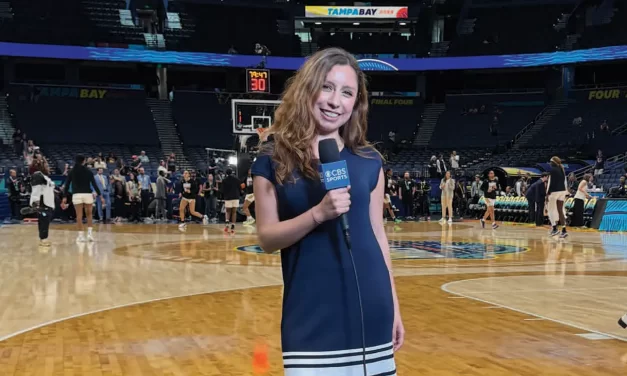
Isabel Gonzalez covering the 2025 NCAA Women’s Basketball Final Four in Tampa Bay, Fla.

From the Roof to the Field

By Coline Bernal

On her 27th birthday, Isabel Gonzalez received a job offer from CBS Sports while standing at the front desk of her godparents’ Styrofoam business. At the time, she was helping them run the family operation while juggling life as an NBA and college basketball freelance writer and quietly wondering what her future might look like.

When she opened the email, she broke down in tears. A minute later, the phone rang. She wiped her face, answered the call and went back to work, knowing everything had changed.

From the outside, Gonzalez’s career may look like a clean ascent leading to her current role as a basketball writer at CBS Sports. But her path was built through years of learning, uncertainty and a deeply rooted philosophy that followed her at every stage: say yes, even when you don’t feel ready. Especially when you don’t feel ready.

“I was just taking every opportunity I could to grow,” Gonzalez said. “I said yes to everything.”

Gonzalez was born in Mexico, surrounded by a family that loved soccer. Her dad, brother and cousins celebrated it passionately, but she didn’t quite share their enthusiasm. Still, she followed them to practices and games and slowly grew attached to the ritual. “You start loving what you’re watching all the time,” she said.

After a brief stop in South Carolina, her family settled in New Mexico when she was 13. It’s where she would spend some of her most formative years.

At the University of New Mexico, she intended to pursue advertising or film. A high school adviser had encouraged her to consider UNM’s film program, and she imagined herself working on music videos or commercials. Journalism entered her life because of a misunderstanding. While registering for classes, she asked an upperclassman about two communication tracks.

Portrait of University of New Mexico alumna Isabel Gonzalez

University of New Mexico alumna Isabel Gonzalez.

“She told me, ‘One, you kind of study things. The other, you do things,’” Gonzalez said. The answer seemed obvious. “So of course I was like, I want to do things!”

Only later did she realize she had signed up for journalism instead of advertising.

Her first real experience in sports media came through a freshman internship with the Mountain West Network at Lobo TV. She learned to operate a camera covering soccer. For men’s games, she worked the main angle from the stadium roof, alone. From there, the players looked like “tiny little people moving,” she said, and she didn’t get to talk to anyone. It left her asking a simple question: “How do I get down there?”

Saying Yes

The opportunity arrived unexpectedly. As a sophomore, she overheard classmates discussing open positions at the Daily Lobo sports desk. She got hired assuming she would help with social media or video. Instead, she started writing.

Journalism wasn’t her dream job, but she was already on the path, so she decided to make the most of it. At first, the motivation to write was practical: getting published meant extra credit, and posting on social media came with a little extra pay.

She approached the job strategically, but along the way found herself drawn to the access and interaction more than she expected.

“I still didn’t consider myself a writer,” she said. “But I loved being in the environment, talking to players, coaches, meeting the fans.”

By her senior year, she wanted to cover basketball more consistently. UNM men’s basketball was the biggest stage, and she wanted to test herself there. That was when it clicked. “I was getting pretty good at this,” she said.

After graduating with a bachelor’s degree in digital communication and media/multimedia, Gonzalez returned to her original plan and worked in film for a few months. A mentor brought her in as an assistant to a director and producer. She enjoyed the work, but not the instability. “You work six months,” she said, “and then you have to figure out what you’re going to do next.”

Around the same time, the UNM soccer coach asked whether she wanted to produce and host the official men’s soccer show. Gonzalez had never done anything like it before, but true to form, she said yes.

That experience clarified something. For the first time, she allowed herself to imagine a future in sports reporting.

After that season, she met Kurt Roth, a UNM alum and owner of The Lair, an insider site focused on local athletics. The site had started as a forum and grown into a community-driven website, and Roth didn’t want it to disappear. Gonzalez was fresh out of college. She remembers thinking she did not know how to run a website and barely considered herself a journalist. Still, she agreed.

The Lair became one of the most demanding learning periods of her career. “That’s probably where I learned the most,” she said, “because you just had to do it.” She wrote stories, maintained the website, learned to answer IT questions, worked with moderators and navigated the challenges without the structure of a traditional newsroom.

There were no editors. “It was just me,” she said.

What mattered most was the fan base and the responsibility she felt to serve it well. The people who followed The Lair were deeply passionate about local athletics, and she wanted to provide them with high-quality articles and a modern community space.

From there, she kept expanding her coverage. She began taking on more Mountain West teams. She got opportunities through SB Nation’s Mid-Major Madness and covered Gonzaga and other men’s basketball programs around the nation for a full season. Much of that year overlapped with COVID-19, when access shifted to Zoom, and the remote format made it possible to cover a program she hadn’t been physically close to before. She also freelanced NBA work.

More Than the Game

Her voice as a writer developed alongside those opportunities. She traces it back to early English classes and reading children’s books like Junie B. Jones, which taught her to write in a simple and descriptive way. She likes stories that feel human, textured, and colorful. If a coach loves to cook for his players, she wants to write about how he grills, how intentional he is with the ingredients he prepares. Those are the moments that draw her in. They may have nothing to do with basketball, she said, but at the same time, they have everything to do with it.

For Gonzalez, the game itself is only part of the story. Fans already have access to everything: they can watch the game, look up stats, and stream press conferences. What they don’t see is what happens behind the scenes.

Now off the roof, Gonzalez watches from closer range, paying attention to the athletes, the bench, and everything unfolding around the action. Sometimes, she said, people talk about athletes as if they are just pieces of a game. But they are people, and their performance is shaped by their mental state and their relationships with teammates.

She studies who is cheering on the bench, how the handshake line looks, and who leans in during timeouts. If a team is thriving, she said, it is not just about the stats. Something is happening inside the locker room. Building those insights requires trust and genuine curiosity.

“If you ask someone what show they are watching, you have to remember,” she said. “The next time you see them, you follow up and ask how the show is going.” That kind of attention, she said, is what builds real relationships.

A Bigger Stage

All of it eventually led to a direct message from CBS Sports on X—formerly known as Twitter—that she nearly ignored. At first, she assumed it was spam; there was no way it could be real.

Following a demanding interview process, she was offered a position with the network on her birthday. Not just any role, but the opportunity to become CBS Sports’ first writer dedicated to women’s basketball.

Coming from men’s basketball coverage, she understood the responsibility that came with the position and knew she would need to put in the work to build the same depth of knowledge in the women’s field.

Her first day fell in the middle of March Madness, the busiest stretch of the season. Her manager asked her to submit a list of her top 10 women’s players by the end of the day. She remembers starting to sweat. How was she supposed to do it in a day when she was new to women’s basketball?

Later, he told her the assignment had been intentional. He wanted her to jump right in, confident she had the skills to figure it out. More than anything, he wanted her to see that herself.

Looking back, Gonzalez speaks fondly of the people who believed in her before she believed in herself. A high school English teacher insisted she belonged in honors English, even when she still saw English as her second language. A broadcasting professor at UNM kept putting her in front of the camera because he knew she could do it. She remembered finding it “so cool that someone believed in me before I believed in myself.”

When she began working in journalism, that trust followed her: through sideline reporting opportunities, through Kurt Roth at The Lair, through editors who gave her room to grow. Over time, she stopped seeing those moments as coincidences. “When something is right for you,” she said, “it will find you.”

That sense of belonging extends beyond the newsroom. Gonzalez is proud of being born in Mexico, of speaking Spanish and of carving out space in an industry where she sees few Mexican writers. Her move to the United States was made possible by her parents’ sacrifice, a gift she carries with deep gratitude.

“They are a big part of my story,” she said. “I couldn’t have done it without them.”

The transition left her unsure where she fit at times, but over the years, New Mexico became home and, eventually, something deeper.

Isabel Gonzalez covering women’s basketball Big Ten Media Days
Isabel Gonzalez covering the women’s basketball Big Ten Media Days prior to the 2023-24 season.

Sometimes, she comes across comments that read:

“Isabel came from New Mexico; she’s one of ours!” That support, she said, means more than most people realize.

Now several seasons into her role, Gonzalez remains energized by where women’s basketball is headed. The surge in attention, amplified by players such as Caitlin Clark and Paige Bueckers, has strengthened her ambition to continue expanding women’s basketball coverage and to show that these stories matter just as much as stories in men’s sports.

March Madness remains her favorite time of year. The travel, the unpredictability, and the intensity remind her why she chose this path in the first place. Still, her curiosity stretches beyond basketball. A former figure skater, she watches the Winter Olympics with a trained eye, ready to field any technical question in the newsroom. She’s also looking ahead to the 2026 World Cup and the 2028 Summer Olympics, ready for whatever assignment comes her way.

“When all the fans come together, and something big is happening,” she said. “That’s truly what I love.”

Those global events remind her why she fell in love with sports in the first place. “When all the fans come together, and something big is happening,” she said. “That’s truly what I love.”

Those moments are why Gonzalez has never chased the final score. She chases what happens around it: the energy on the bench, the conversations on the sideline, the crowd rising together.

Young Isabel Gonzalez with her family after moving to the United States
Born in Mexico, Isabel Gonzalez and her family moved to the United States and settled in New Mexico when she was 13 years old.

Years ago, she stood alone on a stadium roof, watching players who looked small from that distance and wondering how to get down to the field. Now she works inside that space, telling the stories behind the result and carrying them back to the fans who give it meaning.

Campus Connections

Latest
Sorry, No Posts Found

Spring 2026 Mirage Magazine Features

Loading

Keeping Traditions Alive: Mayordomo Earns Degree, Inspires Rural Students

Keeping Traditions Alive: Mayordomo Earns Degree, Inspires Rural Students

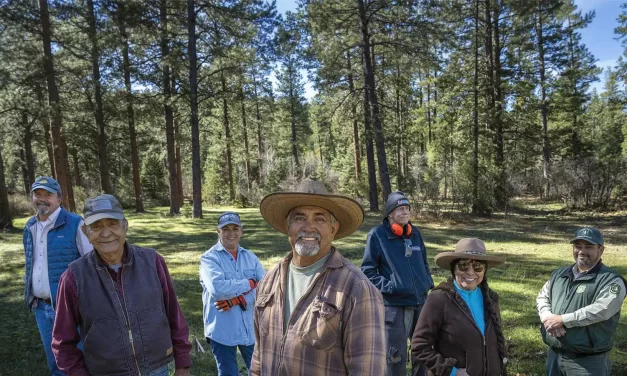
Vicente Fernandez, center, is the mayordomo of the Acequia Madre del Sur de Cañon del Don Fernando and helps maintain one of the region’s oldest communal traditions.

Keeping Traditions Alive: Mayordomo Earns Degree, Inspires Rural Students

By Manuel Valdez

“I got tired of being a statistic of those without a degree,” says Vicente Fernandez.

So, after more than four decades of military service and a lifetime rooted in the rural communities of northern New Mexico, Fernandez decided it was finally time to pursue something he had long set aside: a college education.

“I always wanted to obtain a degree so I could further enrich my life as well as my family and community,” said Fernandez. “Society views those without a degree as a person of lesser intellect, which is not true.”

For years, raising a family young, balancing work, and lacking resources meant college remained out of reach. Only after retiring from the military with more than 41 years of service did he finally have the time to begin.

“I started at UNM at a later stage in my life,” said Fernandez. “My family was in a good place, and I had the time to pursue something I had always wanted.”

Fernandez enrolled at UNM Taos, spending two years there before transitioning to main campus in Albuquerque. He earned his Liberal Arts degree, completing a mix of in-person and online courses that allowed him to stay connected to the nonprofit work that remains central to his life.

“I chose to take some courses at the university and some online. I tried to schedule them as close to each other as possible so I would not have the long commute,” said Fernandez. “Although I enjoyed being in the classroom better, the online courses worked well as my schedule with nonprofit organizations was taking up a lot of my time.”

Throughout his studies, one motivation remained constant: giving back to his community.

“I have always believed that community is a very important part of our lives,” said Fernandez. “Being able to give back to the community is very rewarding and gratifying. A lot of people get educated but never give back to the community that raised them. That was my big motivation.”

His coursework also strengthened a passion he has carried since childhood, protecting the land and water systems that sustain northern New Mexico.

“I have always had a deep reverence for both water management and the environment. They go hand in hand,” said Fernandez. “My studies there at UNM and the people I met opened a world of information where I could research and talk to experts in these areas.”

As mayordomo of the Acequia Madre del Sur de Cañon del Don Fernando, Fernandez helps maintain one of the region’s oldest communal traditions.

“Acequias are the glue that keep the community together,” said Fernandez. “It is so rewarding knowing that you are keeping a tradition that our culture has depended on for hundreds of years alive and well and knowing that what you are doing will last well after you are gone.”

His leadership also extends to the Rio Don Fernando watershed project, where he recently welcomed his younger brother to the effort.

“To keep the project going, I need to train someone to take over after I am gone,” said Fernandez. “We are continually recruiting people for our project.”

Vicente Fernandez

After four decades of military service, Vicente Fernandez obtained his degree at UNM.

“It has been hard to get people involved, but through community meetings and word of mouth, we will achieve our goal of saving our watershed and our forests for future generations.”

Ensuring the stability of tradition means inspiring young people to step into leadership roles.

“We involve younger students by offering them a chance to work with one of our participants and through community meetings,” said Fernandez. “Working with other nonprofit organizations is also a way of finding young people that are interested.”

His hope is that future generations not only inherit the landscape he has worked to protect, but the values that shaped it.

“I hope that the younger generation gets more involved,” said Fernandez. “Most young people from rural areas move out due to lack of opportunity. But my hope is that they will return to the place that nurtured them and give back to the community to keep our culture and traditions alive.”

Fernandez also encourages anyone from locals or newcomers to engage with the community and its traditions.

“Come to our acequia or community meetings,” said Fernandez. “Speak with locals. They will tell you what needs to be done.”

As both a UNM alumnus and a community leader, Fernandez hopes people remember the shared effort behind keeping northern New Mexico’s traditions thriving.

“My hope is that they remember why our acequias, our forest, our community, our traditions, and our culture are still thriving,” said Fernandez. “Not only because of my efforts, but the efforts of those that came before us—the blood, sweat, and tears that go into keeping a community alive.”

Education, he said, empowered him to become a stronger advocate and leader.

“Having a good education where you can make things happen and not have to wait for others, that is what my time at UNM taught me.”

And for students in rural communities who may feel the challenges, Fernandez offers a simple message.

“I would tell them not to give up,” said Fernandez. “It takes discipline, hard work, and time. But the results you get at the end will forever be with you. They will make your life better.”

Campus Connections

Latest
Sorry, No Posts Found

Spring 2026 Mirage Magazine Features

Sorry, No Posts Found

A World of Opportunity Close to Home

A World of Opportunity Close to Home

The Rainosek family with Jeff Todd, president and CEO of the UNM Foundation.

A World of Opportunity Close to Home

Presidential Scholarship Program marks 50 years of supporting exceptional New Mexico students

By Michelle G. McRuiz

For half a century, UNM’s Presidential Scholarship Program (PSP) has invested in identifying, supporting, and retaining New Mexico talent by offering renewable scholarships to extraordinary high school students from every county in the state.

The program has grown into one of the university’s most defining investments in student success and talent development. That investment is made possible in large part by generous donors who make annual gifts and create endowments to support PSP.

Each full Sponsor can be matched with a Presidential Scholar and has multiple opportunities to meet and connect with them.

This unique structure makes the Presidential Scholarship something larger than a source of financial aid. While reducing financial stress allows students to focus fully on their studies, the program functions as an intentional partnership among the university, donors, and Scholars themselves.

Together, that partnership creates a powerful model of shared investment in New Mexico’s future. Sustained support gives students the freedom to explore academic and professional paths they might otherwise never consider—and helps ensure that exceptional talent can grow, contribute, and lead close to home.

A Natural Choice

A thread of continuity runs through the PSP: Many PSP donors once were Presidential Scholars themselves. Mark Rainosek, BS ’87, MD ’92, is one such donor. For him, giving to UNM has been a family tradition. His parents, Dorothy and Larry Rainosek, are longtime donors and the owners of two perennially popular Albuquerque eateries, Frontier Restaurant and Golden Pride BBQ, Chicken, & Ribs. They inspired Mark, an anesthesiologist who practices in Albuquerque and Anchorage, Alaska, to help New Mexico students succeed.

The Rainosek family standing together at the Frontier Restaurant
The Rainosek family have been longtime supporters of the Presidential Scholarship program and UNM.

“Education has always been important in my family,” Mark says. “And UNM has a solid, respectable reputation.”

When Mark finished his residency at the UNM School of Medicine, he decided to give back to UNM as a PSP Sponsor.

“It was a natural choice because I was a Presidential Scholar myself,” he says. “I wanted to invest in my community to help those people who can’t get through school on their own. And it helps keep New Mexico’s brightest young people in the state.”

Over time, PSP has grown in both reach and ambition, supporting generations of high-achieving students while building a powerful community of alumni and donors committed to New Mexico’s future.

More Than Medicine

Mark has supported many Presidential Scholars over the years, including through the newly created PSP Graduate Award. One of his current undergraduate Scholars, Ankit Jaiswal, is a senior in the BA/MD program, a rigorous eight-year curriculum that puts students on a pathway from undergraduate education to the UNM School of Medicine.

“Education has always been important in my family, and UNM has a solid, respectable reputation.”

“The program’s mission is to address the healthcare shortage in rural and underserved areas of New Mexico, and to find students who are dedicated to helping New Mexicans,” Ankit says.

Ankit always had been interested in medicine, particularly surgery, but his undergraduate curriculum in health, medicine, and human values opened his eyes to community and global health.

“It looks at health through a broader lens,” he says. “It’s about social determinants of health, lifestyle factors, health policy—all the things that make up a person’s health. My BA program has motivated me to explore other ways to impact health in addition to treating a person.”

Ankit graduates with his BA in Spring 2026 and will enter medical school in July. He’s already racked up some impressive credentials at UNM. In addition to maintaining a 4.0 GPA, he won the Anderson School of Business Tech Navigator challenge two years in a row with his designs for a helmet that monitors concussions in real time and an injectable, expandable foam that can be used for emergency hemorrhage control.

The Rainosek family with Presidential Scholarship Program recipients at the Frontier Restaurant
The Rainosek family with a group of Presidential Scholarship Program recipients at the Frontier Restaurant.

In 2024, Ankit spent six months in South America, shadowing and observing physicians as they worked to implement telemedicine programs in rural areas. He also accompanied nursing staff on visits to low-income households and spoke about telemedicine in local media.

“That work was an amazing experience,” says Ankit.

“In those parts of the world, people don’t know much about telemedicine. I got to be part of starting a rural telemedicine program and convincing people to adopt it.”

Motivated to Give Back

Another highlight of Ankit’s undergraduate program was meeting his PSP donor, Dr. Mark Rainosek.

“It was awesome to find out that Dr. Rainosek was my donor because he’s an anesthesiologist,” he says.

“He works in Alaska a lot, helping rural communities, so our interests are aligned. He has been a great role model for me by investing in UNM students and being interested in hearing our stories. That speaks a lot about his character.”

Being a Presidential Scholar not only eliminated Ankit’s undergraduate financial burden; it opened new academic and professional vistas.

“I was not forced to make decisions based on income or job stability; I could focus on growing through research and community work. My Presidential Scholarship allowed me to take risks and explore things like business and global travel that otherwise I would not have done.”

As Ankit looks ahead to medical school, he feels excited and self-assured. UNM’s supportive environment has helped him connect with mentors and step into leadership roles. That confidence has sparked a desire in Ankit to pay it forward—through medicine and philanthropy.

“I’m proud of being a Presidential Scholar,” Ankit says. “Knowing that Dr. Rainosek believed in me motivates me to continue building. I want to become a PSP donor one day and help motivate future generations.”

PSP Graduate Award Now in Second Year

The Presidential Scholarship Program began offering graduate scholarships two years ago. Their first Graduate Award Scholar, Maya Dawson, BA ’21, MS ’25, is pursuing a Ph.D. in biomedical engineering at UNM.

“Presidential Scholarship donors made it possible for me to attend a university close to my family and make invaluable connections with members of the New Mexico community,” says Maya. “I’m grateful to continue living and learning in the place I call home. And I’m very excited to continue with my Ph.D. with Dr. Olivia Lanier’s Nanomedicine Toward Health Equity Lab.”

Campus Connections

Latest
Sorry, No Posts Found

Spring 2026 Mirage Magazine Features

Sorry, No Posts Found

In Heels, She Climbed

In Heels, She Climbed

Aprilyn Chavez Geissler is an executive leader at Gateway Insurance and Financial Services.

In Heels, She Climbed

By Coline Bernal

There was a winter when Aprilyn Chavez Geissler studied for finals from the driver’s seat of her car.

She parked in different corners of campus so no one would notice. “I went to classes. I took showers in the SUB. I ate at Golden Pride Chicken. And I just made it work,” she said.

Today, Chavez Geissler serves in executive leadership at Gateway Insurance and Financial Services, where she advises clients and advocates for broader representation in an industry where she once struggled to see herself reflected. But her path upward began with rupture.

As a freshman at Central New Mexico Community College, then Technical Vocational Institute, Chavez Geissler was engaged to the man she had dated since high school. The relationship escalated into physical violence. “Typically, it takes a woman seven tries before she leaves,” she said. “I finally left.”

When she did, her parents asked her to leave their home, and she moved into her car. Despite the instability and trauma, she continued going to class, determined not to let her circumstances define her.

Eventually, someone noticed her unstable situation and offered her a room to rent at a low cost. That woman also helped her find a needs-based therapist. Chavez Geissler credits therapy as a crucial part of her healing and rebuilding. “I needed it to regain my confidence and move beyond what I was facing,” she said.

Five years later, Chavez Geissler graduated from the University of New Mexico Anderson School of Management with a bachelor’s degree in finance, her tuition paid in full. More than the coursework, she said, college taught her grit and emotional intelligence.

Determined to Belong

Since high school, Chavez Geissler was set on becoming a financial adviser. Determined to get an early start, she entered the industry at 20, taking a receptionist job at what is now Ameriprise Financial. The leap was intimidating. She remembers being “really nervous and scared” as she stepped far outside her comfort zone, determined to reach the goals she had set for herself.

Her determination did not go unnoticed. The financial advisers in the office took her under their wing, paying her to stay late, inviting her to sit in on client appointments and giving her access to lessons no textbook could offer.

But even as she gained experience, she carried quiet insecurity. At that time, she did not see herself as a survivor. She saw herself as someone who had been financially unstable.

She feared her past might undermine her credibility in a field centered on wealth management, so she kept her story to herself. “For years, I never told anybody what had gone on with me,” she said.

The industry added another layer of doubt. In the positions she hoped to hold one day, she rarely saw anyone who looked like her. There was, as she puts it, “no Hispanic financial advisor Barbie.”

So she worked harder, learning every aspect of the business to prove she belonged. Looking back, she describes those years with a metaphor that still resonates.

“Some days, I feel like I’m climbing a mountain and I’m wearing heels and everybody else is wearing hiking boots.”

Aprilyn Chavez Geissler with UNM Alumni Board members during Homecoming
UNM Alumni Board President Aprilyn Chavez Geissler, center, and other board members enjoy a fun night during 2025 UNM Homecoming Week.

Finding Her Voice

Her trajectory began to shift when she stopped trying to blend in. There was a time, she recalls, when she tried to be like everyone else. But when she started bringing her authentic self into the room, when she stopped being afraid to speak up or share her perspective, was when she began to have the greatest impact. Her mentors did not try to reshape her; they encouraged her. Their acceptance allowed her to stop shrinking herself to fit the room and to own who she was, regardless of others’ expectations.

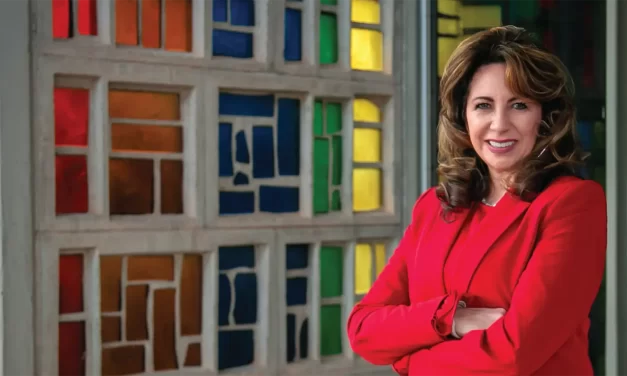
Aprilyn Chavez Geissler standing in a red suit in front of a large window
Aprilyn Chavez Geissler is the president of the UNM Alumni Association and an Anderson School of Management Hall of Fame inductee.

From that shift came her guiding mantra: “Let your struggle be your strength, not your identity.”

In 2015, Chavez Geissler was introduced to the owners of Gateway Insurance and Financial Services. They saw her potential and invited her to join. By then, she had already built her own practice as a financial professional and insurance agent. “I learned every aspect of the industry I could,” she said, determined to always be prepared, “so when I was asked to step into new roles, I was ready.”

She eventually became the first executive vice president of a $30 million organization, a role in which she frames leadership as inspiration: helping others join the mission and engage in ways meaningful to them.

Today, her professional fulfillment comes in two forms: helping financial professionals build practices aligned with their goals and sitting one-on-one with clients to guide financial decisions.

Her philosophy of advising is rooted in lived experience. The past she once viewed as a liability has become one of her greatest assets.

Too often, she believes, financial professionals speak at a high level, when most people simply need someone who can meet them where they are. For some clients, financial literacy begins with opening a checking account or understanding credit. Chavez Geissler meets them there.

Rising to Give Back

She has received numerous recognitions throughout her career, including being named the 2020 Top Woman to Watch by InvestmentNewsNet and a 2019 NAIFA National Diversity Champion.

Yet the moment she fully grasped how far she had come was when she learned she would be inducted into the Anderson School of Management Hall of Fame in 2025. The recognition was “pretty special,” she said, “because they were acknowledging me for the things that I do every day.” It forced her to pause. “Sometimes you just don’t realize what you’ve done or where you’ve come from.”

“You have to rise above it, because everything you need is already inside you.”

She was also named the “Phoenix of Albuquerque” by Insurance News. Initially hesitant to embrace the title, she later recognized it as an accurate reflection of her resilience.

“When you are in the ashes and unsure how you will eat your next meal,” she said, “you have to rise above it, because everything you need is already inside you.”

Chavez Geissler has never forgotten the people who extended a hand when she needed it most. Advancing in her career, she committed herself to giving back.

She chooses her commitments intentionally, serving in spaces that reflect both her values and her story. As treasurer of the Women in Financial Services Association, she works to attract and advance women in a profession where representation remains limited, an effort that mirrors her own early experience in the industry. Her ties to UNM, the institution that shaped her growth, remain just as strong. She now serves as president of the UNM Alumni Relations Board and leads the New Mexico Sports Hall of Fame.

Quoting Mohandas K. Gandhi, she often returns to a guiding principle:

“The best way to find yourself is to lose yourself in the service of others.”

Executive leadership, volunteer commitments and motherhood do not exist in separate compartments of her life but overlap in ways that demand constant recalibration. Some days begin before sunrise and stretch long past sunset, and fatigue can be real. Still, she says, as long as there is purpose behind the work, she keeps going. For Chavez Geissler, work and life are intertwined, “all in conjunction, all together.”

If Chavez Geissler could speak to the young woman studying for finals in a parked car, she would not promise ease but purpose. She would tell her: “You’ll change lives in ways you don’t even imagine. Even when it’s not comfortable or easy, you will move mountains.”

Even in heels, she did.

Securities offered through Registered Representatives of Cambridge Investment Research, Inc. a Broker/Dealer, Member FINRA/SIPC. Advisory services through Cambridge Investment Research Advisors, Inc., a Registered Investment Advisor.

Gateway Financial Advisors, LLC., DBA: Quality Life Insurance Agency, DBA: Gateway Insurance and Financial Services, LLC., Cambridge is partial owner of Gateway Financial Advisors, LLC.

Campus Connections

Latest
Sorry, No Posts Found

Spring 2026 Mirage Magazine Features

Sorry, No Posts Found

Pin It on Pinterest