Faculty Spotlight: Larry Leeman

Faculty Spotlight: Larry Leeman

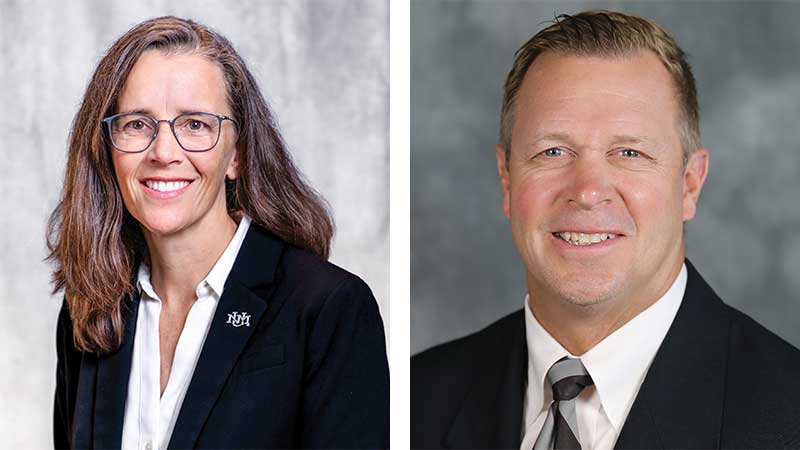
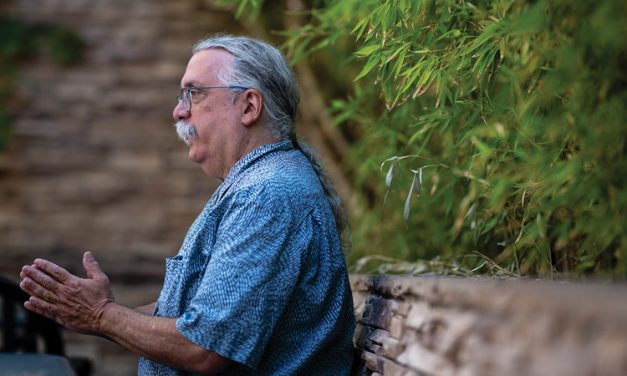
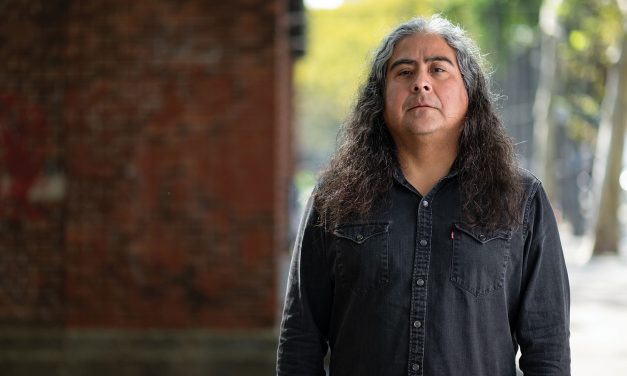
UNM researcher Larry Leeman explores connections between psychedelics and better mental health. (Photo: Roberto E. Rosales)

Faculty Spotlight: Larry Leeman

By Leslie Linthicum

Larry Leeman, MD, has worked with thousands of pregnant women and their newborns at UNM’s Milagro Perinatal Substance Use program over the past 20 years.

He has also developed an interest in how psychedelic compounds can be used as medicines.

Putting those two interests together, Leeman is embarking this Spring on a study of how talk therapy combined with the use of MDMA (the compound in the party drug known as Ecstasy or Molly) might help new mothers recover from PTSD and opioid use disorder.

Mirage sat down with Leeman to talk about his research and the broader spectrum of clinical trials involving psychedelics that are being undertaken at UNM and across the country.

Mirage: I’d like to talk about the ‘psychedelic renaissance.’ There was a real explosion of research into the therapeutic potential of LSD and other psychedelics in the 1950s and 60s and then the research really was shut down for over 20 years. Rick Strassman in Psychiatry rebooted psychedelic research with his work with the psychedelic DMT at UNM in the 1990s. Now there’s Michael Pollan’s bestseller, “How to Change Your Mind.” And people are microdosing and there seems to be a new push for medical research using psychedelic compounds.

Leeman: When people describe a psychedelic renaissance, they tend to be talking about that from a Western and Anglo perspective. And I think it’s important, especially in New Mexico, to acknowledge that the use of psychedelic therapies dates back millennia in the Indigenous populations throughout the hemisphere. This wasn’t invented in the 70s.

Mirage: Noted. Research is about asking questions. What questions about the use of psychedelics interest you?

Leeman: I’m first and foremost a physician clinician. I’m very active in maternal and child health, delivering babies, taking care of people with addiction. And so a burning question for me is can these compounds help with addiction? Can they help with trauma? Can they help with PTSD? Preliminary research suggests yes, at least for MDMA for PTSD. But then, it gets deeper. It gets into what is it that’s effective about these? Do these psychedelic-assisted therapies work? If they do work, what are the psychological mechanisms? What is the best type of accompanying therapy? What are the biological mechanisms? Are there ways to develop new compounds?

Mirage: In these studies, using MDMA, psylocibin and ketamine along with psychotherapy, is it less about the emotional or psychological experience of having the drug on board and more about what that does in terms of the therapy that occurs?

Leeman: So the simple answer would be, we don’t know. We don’t know how important what you went through during the experience is. Most of us think it’s important, and that it forms the background for what we call the ‘integration,’ where insights that have been learned and processed can be integrated into one’s behaviors and one’s daily life. But that needs to be studied more.

Mirage: People who use psilocybin and MDMA recreationally report an increased sense of connection — connection to other people, to themselves, nature, the universe. How important is that aspect in your therapy?

Leeman: You’re talking to someone who’s an addiction medicine doctor.

There’s a quote that’s been used in the past that addiction is the opposite of connection. People that are addicted have a very narrow aperture. Eventually, it basically comes down to you and your substance, and that may be the only thing that you’re focused on. Almost everything else may be being manipulated to get your substance, and you will lose connection. I view connectedness as having multiple levels. One is the inner sense of connectedness, that we’re in touch with our own emotional feeling, self- awareness, our somatic state. The next level would be connectedness with your family, your partner, your community, your friends. And then the other level gets broader — our connection with the world or the universe. Those are three levels, some of the scales, that we’re using to look at that. A lot of this is theoretical.

We need to see what actually is associated with improvement in mental health and behavioral change. Because if we can figure that out, there’s ways to achieve some of these states without drugs. There are ways to achieve some of these states through meditation, there’s even forms of breathwork that you can use to facilitate these states of consciousness.

Mirage: So let’s talk about the study that you’re undertaking. MDMA-assisted therapy for helping relieve PTSD in postpartum women who are opioid dependent. What were your experiences at Milagro that led you to this research?

Leeman: When I first started working in addiction and pregnancy, I was taking care of the babies that had neonatal opioid withdrawal syndrome. And then that expanded to interest in the prenatal care and the childbirth. Part of what I saw is that a large proportion of the people we worked with who we were able to get stabilized, usually with the help of medicines including buprenorphine or methadone, and through the pregnancy and initial postpartum time. But then I started seeing people coming back. Two years later they were pregnant again and back on opioids despite having achieved stopping use during and immediately after the last pregnancy, which is what they wanted. Sometimes we can all be slow to understand, but eventually I got it. Okay. We’re helping with the addiction. We’re helping with the craving for the opioids. But we’re not getting to what causes the addiction. I wasn’t doing anything to help them with their trauma, which is causing this self-medication with opioids. We weren’t actually treating the trauma. And PTSD has been notoriously difficult to treat, especially in the people who had it for a long time. So I started doing some exploration of what are the ways of treating that? One of the innovative ways was with MDMA-assisted therapy, which has demonstrated high levels of success, where about 70% of people after the course of treatment no longer meet the criteria for PTSD, about twice the proportion of people that are using a placebo in studies. The University of New Mexico supported me in doing a sabbatical in psychedelic- assisted therapies and addiction at Madison, Wisc. I was able to become a researcher and a therapist on their Phase 3 MDMA study to learn how to use MDMA-assisted therapy. One of the goals of that sabbatical was to come back here and bring this research and therapies to New Mexico.

Mirage: Why are you choosing to study a population that has PTSD and substance use disorder and recently had a baby?

Leeman: Yeah, so what’s the reason for studying these complicated people? Well, I guess there’s two ways of answering. First, that’s the people I’m taking care of. But on a deeper level, this is our future. In the families I work with I had trouble identifying anyone in the family that didn’t have addiction. It goes back multiple generations.

Mirage: Is the goal of this to have women who are having babies have safer and healthier experiences because they’re no longer using opioids? Or is it to have them have better experiences with their children because they’re having less trauma, less PTSD, and therefore more connection?

Leeman: All of the above. But we think that may happen in sequence. So what are our actual research objectives? One of them is seeing, can you treat PTSD in people that have opioid use disorder successfully with MDMA? The next part, which is major, is decreasing resumption of opioid use. We know that within the first 12 months after childbirth, over 50% of people resume use. In our study we will be watching people out to six months after treatment to see if they’ll be less likely to resume use of opioids. Resuming use of opioids has all sorts of bad outcomes. As you mentioned, it can affect your parenting. It can actually affect custody of your children if it gets bad enough. We see many pregnant postpartum people lose custody of their children. That’s a major life trauma. Another concern, unfortunately, is that a common time for overdose is postpartum. The last goal of the study is the most exploratory, which is looking at how the MDMA – assisted therapy affects parenting. We have a series of assessment tools that we’re using — the maternal-infant bonding assessment and a video assessment where we observe the study participant and we watch how they’re interacting with their baby. It’s based on the idea that trauma affects bonding and attachment.

Mirage: What’s the tie between trauma and addiction?

Leeman: When you look at causes of addiction, the roots are often in adverse childhood experiences. When we think of adverse childhood experiences, they can be various forms of trauma – Big-T or Little-T trauma. Big-T trauma is something major that happened- your parent is shot, you’re in a war, you experienced sexual abuse — those are all Big-T trauma. But the addiction is also associated with other kinds of trauma. You have a parent who’s emotionally absent and don’t experience feeling of love and safe attachment. Those are deep rooted. Our hope is that early in the lifespan of the mother and baby that we may be able to affect that. This is very preliminary, but we’re going to look at that both from the questionnaires and from the videos and from qualitative analysis by interviewing the mothers six months after completing the MDMA-assisted therapy. And if we do show that there’s a benefit, then we have a new treatment to help with intergenerational trauma. As we see commonly in New Mexico we are kind of in a cycle here. I call it a cycle of despair. People experience trauma, they have addiction, the addiction gets them exposed to more trauma, and the cycle continues.

Mirage: This is about the mother connecting with her trauma in a safe way and also encouraging connections between the mother and her baby. And MDMA is a possible avenue to both?

Leeman: You and I were talking earlier about connectedness, bonding that would be associated with being a new mother. MDMA is a complex chemical, and it works in different ways, but it does increase oxytocin release, which is the same chemical that is involved in maternal- infant bonding. The way MDMA- assisted therapy works, to the best of our knowledge, is that when the therapy is done in a safe container it allows people to process their trauma without the feeling of reexperiencing the trauma.

Mirage: While you’re doing this, are you actively doing therapy? Like asking them questions? Or are you letting this subject just experience the feeling?

Leeman: Great question. During the preparation system sessions, we’re getting to know them, we’re talking about their life. It’s relatively loosely structured and patient-led during the session itself. When you take people who’ve had significant trauma and you give them a compound that temporarily allows them to look at their life and that trauma without getting triggered by those feelings, I do not have to go, ‘Tell me about your trauma.’ People do it themselves. What happens during the session, which usually lasts about five hours, is they have a time when they’re lying down, they have eyeshades on and they have headphones with music. And then they speak with the therapists and share their experience. Commonly they go in and out — times of wearing eyeshades and times of talking. There’s an inner processing, where they’re usually thinking about these sorts of things. and when people come out of it, they talk and share about their experience. And what they’re doing through this is reprocessing the trauma, they’re kind of reframing it. It’s hard to heal from something, if every time you think about something, you go into fight or flight or freeze responses, then you really can’t process that. And we are giving people a temporary holiday from those trauma pathways. But we’re giving them that holiday in a way that they come out and talk about the trauma and have the potential to heal through that.

Mirage: Is there still a stigma to this type of research, especially in the National Institutes of Health, which is a major funder?

Leeman: I think the stigma didn’t originate in the NIH. I think the stigma originated in society.

There’s still a lot of collective cultural memory from the time of the 1970s, when these became part of the culture wars. And in the late 60s and 70s there was an overenthusiasm of some thinking that using these substances was going to change the world. I think we’re societally reframing that to ask, what is a substance of abuse and what is potentially a therapeutic medicine? There are very promising studies that are out there — psilocybin for major depression, MDMA for PTSD, psilocybin for alcohol or tobacco use. As those have come out, the NIH has become interested in and welcoming of research into psychedelic-assisted therapies. They’ve looked at the studies, they’ve had conferences, and they’re starting to support that. It’s still small, but hopefully, there’ll be a lot more. I’m optimistic that, at UNM, we’re in a position to be at the forefront of that area, particularly with addiction and trauma, because we are a major epicenter of opioid use disorder. And most of the early studies of psychedelic medicine occurred with white males. So, we want to also make sure this is being studied in a multicultural population.

Spring 2024 Mirage Magazine Features

Loading

Consonance and Dissonance

Consonance and Dissonance

Photo of Raven Chacon
From thrash metal to a cruise ship symphony, composer Raven Chacon defies labels

Consonance and Dissonance

By Michael Haederle

Raven Chacon sitting on the tailgate of a truck.

Photo: Adam Conte

As a teen, Raven Chacon (’01 BA) was drawn to the urgent rush of thrash metal music and the impetus to play faster and faster, but he wondered whether it might be a dead end. “I got discouraged with that,” he says. “I was thinking, ‘What could be the inverse of that?’ Maybe music could get slower and slower and slower.”

He has been turning musical convention on its head ever since, creating a unique body of work that culminated in the Pulitzer Prize in Music in 2022 for “Voiceless Mass,”

a haunting piece for pipe organ, woodwinds, strings, percussion and sine tone. Last fall, his work won further recognition in the form of a John D. and Catherine T. MacArthur Foundation fellowship, often referred to as a “genius” award.

Chacon, who graduated from The University of New Mexico with a bachelor of arts in music, incorporates film, performance art and other media into his work as he mixes dissonance, environmental noise and other elements in precisely notated compositions. He straddles two worlds, veering from high-culture performances at the Whitney Biennial and the Kennedy Center to machine-gun riffing on recordings with his metal band Tenderizor.

His inventiveness ranges from the playful “Meet the Beatless,” 10 songs created from fragments of Beatles songs, to “Field Recordings,” which eerily captures ambient outdoor sound at Window Rock, Canyon de Chelly and the Sandia Mountain foothills, and “Chorale,” a video recording of dueling cruise ships blasting their horns in a Norwegian fjord.

“This practice is constantly evolving,” Chacon says. “It’s considering the extension of collaborators and mediums that I can work with, thinking about what happens when you include other voices or other tools to use to tell that story or relay that concept.”
Chacon was born at the Fort Defiance Indian Hospital in Arizona, and spent his early years living on the Navajo Nation before his family moved to Albuquerque. His father, Lawrence Chacon (’83 MA, ’86 JD), a lawyer, was from Mora, N.M., while his mother, Gayle Dineyazhe Chacon, (’93 MD), a physician and emerita professor in the UNM School of Medicine, grew up in Chinle, Ariz.

Music was his passion from Day One. He obsessively listened to the entire Beatles catalog. In Albuquerque, his parents met Dawn Chambers (’88 BMusEd, ’92 MMus), a British woman who was pursuing her master’s degree at UNM in keyboard accompaniment. “She offered to give me and my sister free piano lessons, and that’s what started it,” he says. Chacon only studied with Chambers for a few years, but the lessons had sparked something. He was inspired to learn as much as he could about music and taught himself to play the guitar and other instruments. “That’s why I read music. And that’s what got me interested in the classical instruments,” he says. “I’m completely indebted to her.”

Chambers remembers Raven and his sister Nanibah — now a painter and muralist — as “very serious people at a young age.”

She taught her students to sight-read complex scores, sending them home each week with pieces to practice. “One of the most amazing things is he actually did the work,” she says. “Little 10-year-old boys generally don’t like that.”

She also invited Raven and his siblings to a performance at UNM by John Cage on the occasion of the avant-garde composer’s 75th birthday. As he grew older, Chacon became deeply interested in experimental music and contemporary classical composers like Robert Ashley, Iannis Xenakis and Alvin Lucier.

“You could make very raw, ugly-sounding music, and that would be another way of making sound,” he says. “That fascinated me, too. That’s what got me into improvisation and got me interested in making noise music — rejecting virtuosity and trying to be the fastest guitarist on Earth.”

After graduating from Cibola High School, Chacon followed in his parents’ footsteps and enrolled at UNM. Despite his love of music, he didn’t think it was likely to be a viable career, so he took lots of film studies and art classes. But he also learned sound recording from Manny Rettinger, a staffer and adjunct faculty member who ran a studio for the Department of Music, and later studied music composition with Christopher Shultis, now an emeritus professor.

“You could make very raw, ugly-sounding music, and that would be another way of making sound.”

“Manny was teaching recording, but also very encouraging of other kinds of experimental sound,” Chacon says. “I think that started getting me to think about film recordings, sound installations and other components that I still use today.”

Rettinger says that when they met, Chacon had a shaved head and was unusually reticent. “He just didn’t say a word. I thought, ‘OK, that’s great. I can handle this.’ But he started doing this music that was just amazing stuff — almost Zappa-esque stuff. I just thought, ‘This guy is really talented.’”

Chacon at the time “was more like a rock’n’roller,” Rettinger says. “He wasn’t completely into the classical thing, but he had to do it because it was in the program.”

Chacon says his formal musical education at UNM gave him a grounding and formal vocabulary for expressing himself musically. “It is a framework that has been helpful for me to understand concepts of counterpoint as much as it is the understanding of consonant tones, and then being able to counter that with dissonance.”

After graduating from UNM in 2002, Chacon audited visual art classes and applied to graduate schools. “As far as the music I was interested in making, which was something that would be outside of the university, and something maybe more DIY noise-making, I wasn’t finding that in Albuquerque,” he says. He soon moved to Los Angeles for his master’s degree in Music Composition at the California Institute of the Arts.

He lived there for six years while getting commissions to produce and perform his music. But in 2008 he moved back to Albuquerque, where there was now a thriving experimental music scene. He lived for a while in an informal music venue near Downtown located in a former church, and he soon became part of a loose-knit group of collaborators known as the Death Convention Singers, which advertises itself as “a free jazz psychedelic harsh noise collective.”

Chacon also participated in Postcommodity, a collective of Southwest Native American artists collaborating in the use of sound, video and other media to challenge the “commodity” era of Native American art in the late 19th and early 20th centuries.

And, he started his own record label to distribute the music he was making with his friends. (He came up with the name — SickSickSick Distro — when he was a teenager after playing a cassette recording of Yoko Ono’s “Kiss, Kiss, Kiss” backwards.) “The first six releases or so are just me under different names,” he says. With the help of the MacArthur fellowship, which comes with a grant of $800,000 over five years, Chacon says, “I hope to be putting out a whole lot more from New Mexico musicians.”

For Chacon, the creative gesture lies in the conception and performance of a piece. “I make something and get it to a point where I’m satisfied with it,” he says. “It’s not even to say I like the music itself. There are pieces I’ve made where I’m not sure I would listen to them too many times. As conceptual pieces of art, that’s their reason for existing.”

He has often blended his compositions with other forms of artistic expression, including film and performance art.

“It makes sense to me to zigzag through these different mediums for my own interest and my own momentum,” he says. “I am afraid of somebody pigeonholing me. They automatically have an assumption when they hear the label of ‘Native American composer,’ for instance. It’s not that I’m not proud of some of the labels that are assigned to me, especially because they are very few of us Indigenous composers who are able to do this as a living — and my job is to make more of us, to mentor more and more young artists and composers. But at the same time, a large portion of the public doesn’t understand their own label.”

Bringing along the next generation of Indigenous composers has been a longstanding passion of Chacon’s, especially his annual participation in the Native American Composer Apprentice Project. He visits communities on the Navajo, Hopi and Salt River reservations, teaching high school students to write a string quartet.

“Whether they know music notation or not, they undertake that assignment and produce a composition that’s two to three minutes long,” he says. “Every year we have about 20 to 30 students, and on Labor Day weekend, there’s always a concert at the Grand Canyon Music Festival with a professional string quartet playing those compositions.”

These days, Chacon lives in upstate New York with his wife, Candice Hopkins, a Carcross/Tagish First Nation citizen and curator who serves as executive director of the Forge Project, a Native-led initiative that advances Indigenous leadership in arts and culture. He commutes to New York City twice weekly to teach a course at Columbia University’s Graduate School of Architecture, and teaches an MFA class at the Institute of American Indian Arts in Santa Fe via Zoom. He still has a home and roots in Albuquerque and returns regularly.

Chacon is grateful for the recognition the Pulitzer and MacArthur awards have brought to his early work, and with the MacArthur award he expects to have more time to rest, read and recharge.

“I won’t slow down in the sense of making work, but it affords me an opportunity to not have to travel so much, or do every gig and every artist’s talk and every concert,” he says. “I hope to have more time to grow from the things that artists need to grow.”

Dawn Chambers, who has stayed in touch with Chacon through the years, marvels at his new level of recognition. “I remember thinking one day, ‘Oh, Raven has suddenly become something in the eyes of the world,’” she says. “I want to jump up with joy every time I hear a new piece of his. I love what he writes. It’s just so beautiful.”

Spring 2024 Mirage Magazine Features

Loading

Vision

Vision

Telescope pointing at a sunset over a city

Vision

The UNM 2040 planning process asked the University community to put on its long-range vision glasses and tune up its aspirational chops to look toward and plan for the next decades at UNM.

The result, UNM 2040: Opportunity Defined, lays out a vision that will guide the University into a complex higher education future with changing demographics, transformations in technology, environmental threats and ever-changing budgets.

It sets out five over-arching goals:

Advance New Mexico

Understand the needs and unique opportunities of distinct New Mexican cultures and peoples, economic enterprises and communities to address critical issues and opportunities facing humanity and contribute to the quality of life, growth, prosperity and advancement of New Mexico and of human societies across the globe.

Student Experience and Educational Innovation

Transform the educational experience by creating supportive, intellectually challenging, exciting, diverse, joyful learning environments inside and outside of the classroom to ensure the lifelong success, upward social mobility and engagement of all learners.

Inclusive Excellence

Use an equity and inclusion lens to expand opportunity, cultivate the potential of students, faculty and staff, create new knowledge and provide service to all New Mexicans by leveraging assets as a highly research-intensive university and health system.

Sustainability

Create long-term sustainability and ensure human, financial and physical resources to achieve the University’s goals while protecting the natural environment.

One University

As a foundation for achieving the other 2040 goals, align and integrate the University’s distinctive academic, research, patient care and service components, and enhance administrative functions to strengthen the University and its impact.

Campus Connections

Latest

Spring 2024 Mirage Magazine Features

Loading

In Memoriam – Spring 2024

In Memoriam – Spring 2024

pink spring tree blossoms

We remember alumni who recently passed away…

1940-1949

Cinquemani, Dorothy ’41
Cashion, Elaine ’44
Finn, Fred ’44
Gray, Donald ’44
Anderson, Jane ’46
Carlton, Barbara ’47
Sims, Linda ’47
Scott, Cleo ’48
Cashion, William ’49
Malone, Virginia ’49
Swafford, Jack ’49
Easley, Vernon ’49

1950-1959

Barter, Eloise ’50
Hart, Carl ’50
Gonzales, Francis ’50
Hudson, Edward ’50
Box, Eugene ’51
Charlton, Clem ’51
Dickson, Elaine ’51
Donelson, Joy ’51
Hansen, Eadie ’51
Mariani, Carlo ’51
McCausland, John ’51
Rhodes, Joyce ’51
Yslas, Mucio ’51
Boyd, Allyn ’52
Carroll, Henry ’52
Cullen, Luz ’52
Gilbert, Bobby ’52
Gillespie, Cletis ’52
Hehr, Harriet ’52
Jaramillo, Henry ’52
Kienlen, Donald ’52
McKinnon, James ’52
Pattison, Don ’52
Zamora, Joseph ’52
Adkins, Rita ’53
Bryant, Ernest ’53
Chavez, Charlie ’53
Hall, Alma ’53
Hill, Thomas ’53
Johnson, Patricia ’53
Langan, Leon ’53
Nadler, Helen ’53
Peterson, Dorothy ’53
Stewart, Mary ’53
Davis, Betty ’54
Evers, Darlene ’54
Herrmann, Bettye ’54
Jarchow, Mary ’54
Kilgore, Maudine ’54
Maier, Jerry ’54
Torgerson, Mary ’54
Snare, Perry ’54
Bruening, James ’55
Fox, Connie ’55
Gillespie, Marilyn ’55
Schaffner, Daniel ’55
Tope, John ’55
Buchan, Bertha ’56
Foley, William ’56
Hansen, Verner ’56
Juarez, Jimmy ’56
Loper, Alfredo ’56
Radosevich, John ’56
Blum, John ’57
Boatwright, Patricia ’57
Boggs, Brian ’57
Brooks, Alma ’57
Chisholm, John ’57
Green, Jere ’57
Haynes, Shirley ’57
Miera, Antonio ’57
Pomeroy, Mona ’57
Scott, Peter ’57
Sheppard, Marilyn ’57
Wagner, Sally ’57
Wirsching, Paul ’57
Albert, Madelyn ’58
Aguilar, John ’58
Apodaca, Jerry ’58
Arnold, Katherine ’58
Bateman, Samuel ’58
Brawn, Howard ’58
Deaton, William ’58
Edmanson, Barbara ’58
Evans, Francis ’58
Grady, Sally Ann ’58
Heise, Richard ’58
McNeil, Nancy ’58
Mugleston, Riette ’58
Arnold, Paul ’59
Ballenger-Wood, Sally ’59
Townsend, Sylvia ’59
Price, Virgil ’59
Scott, Richard ’59
Wakefield, John ’59

1960-1969

Alvarez, Alba ’60
Baker, Maurice ’60
Bonavita, Ann ’60
Frumkin, Neil ’60
Harper, Edward ’60
Hays, Anna Jane ’60
Kassner, Frank ’60
Smylie, Thomas ’60
Watson , Caroline ’60
Wylie, Claude ’60
Ashby, H. ’61
Baca, Reuben ’61
Carolus, Cordelia ’61
Edwards, Richard ’61
Hansen, C. ’61
Hatfield, Charles ’61
Hicks, Darrell ’61
Kennedy, Jack ’61
Matthews, Stephen ’61
McCaffrey, Joseph ’61
Niles, David ’61
Peters, Shirley ’61
Sabath, Sonia ’61
Stringer, Alan ’61
Zurcher, Victor ’61
Bond, John ’62
Cameron-Stuart, James ’62
Cobb, Donald ’62
Duran, Tobias ’62
Gattis, Bruce ’62
Gritzo, Ludwig ’62
Harris, Judith ’62
Kilgore, Lary ’62
Meister, John ’62
Mercer, Ramona ’62
Sinks, Judith ’62
Schmitt, Heinz ’62
Smith-Sanclare, Shelby ’62
Stuehler, Jim ’62
Sullivan, William ’62
Udell, Rosemary ’62
Apple, David ’63
Barney, Ardine ’63
Brown, Russell ’63
Butler, Sherald ’63
Francis, Samuel ’63
Geha, Richard ’63
Gray, David ’63
Grissom, Milton ’63
Grundl, James ’63
Gillette, Jeanette ’63
Hopson, Rex ’63
Lipka, Ronald ’63
Oliver, Barbara ’63
Rodgers, Donald ’63
Vande Noord, Edwin ’63
Braden, Roberta ’64
Brooks, Almut ’64
Clark, George ’64
Craver, William ’64
Darcy, Felix ’64
Garcia, Sandra ’64
Harrington, James ’64
Ishaku, Benjamin ’64
Keith, Donald ’64
Kerry, William ’64
Klasson, David ’64
Klopp, Marsha ’64
Lathrop, Lester ’64
Laumbach, Per ’64
Leonard, Onetia ’64
Meyners, Richard ’64
Neuman, Sharon ’64
Prall, Richard ’64
Spielman, Charles ’64
Styles, Richard ’64
Thornton, Carl ’64
Tillman, Kenneth ’64
Whitehead, Marilyn ’64
Wunsch, Donald ’64
Wienecke, Lynnie ’64
Bunting, Dorelen ’65
Deakin, Deborah ’65
Easley, Betty ’65
Hayes, Dennis ’65
Henington, Scott ’65
Horney, Peter ’65
McManus, Joan ’65
Montgomery, Johnny ’65
Montoya, Fidel ’65
Rossi, Ronald ’65
Syler, Nelmah ’65
Verplank, Barbara ’65
Watson, Thurman ’65
Ashley, Ruth ’66
Bader, Charles ’66
Bell, G. ’66
Breuning, Carl ’66
Casaus, Luis ’66
Cooper, Daniel ’66
Greene, Linda ’66
Hedrick, Betty ’66
Lutz, Robert ’66
Myers, Danny ’66
Pritchard, Robert ’66
Ward, John ’66
Wheeler, Carl ’66
Wooley, Randall ’66
Antinone, Marilyn ’67
Beach, Arthur ’67
Blankley, Roy ’67
Calderon, William ’67
Crawford, Myron ’67
Dileanis, John ’67
Fisher, W. ’67
Feuge, Robert ’67
Gonzalez, Lino ’67
Hoglund, James ’67
Marker, Lawrence ’67
Matthews, Stephen ’67
McDonald, Howard ’67
Montgomery, Michael ’67
Page, Loren ’67
Park, Martha ’67
Puma, Anthony ’67
Sapankevych, William’ 67
Srubek, James ’67
Staiano, Edward ’67
Ziegler, Peter ’67
Almaraz, Felix ’68
Brininstool, Bernadette ’68
Covington, Patricia ’68
Dunbar, William ’68
Green, Robert ’68
Hendrey, David ’68
Howland, Fred ’68
Itoh, Melinda ’68
Kennedy, Bruce ’68
Lee, Dennis ’68
Richards, Lavinia ’68
Seiler, Mark ’68
Smith, Marion ’68
Staveley, Joan ’68
Stouffer, Robert ’68
Stukey, Arthur ’68
Tipton, Diane ’68
Trafton, Bruce ’68
Walker, Thomas ’68
Windes, Mary Jo ’68
Aragon, Theresa ’69
Borden, Jennifer ’69
Bugg, Janet ’69
Cox, Karen ’69
Fifield, Marilyn ’69
Finnell, Stephen ’69
Goers, Thomas ’69
Jones, Donald ’69
MacCallum, John ’69
Martinez, Dolores ’69
McKay, Terry ’69
Morgan, Harold ’69
Patterson, James ’69
Pierce, Donald ’69
Pollard, Gerald ’69
Redman, Jack ’69
Sapien, William ’69
Schneider, Bruce ’69
Schoor, Michael ’69
Sinnott, Lawrence ’69
Snipes, James ’69
Syphax, Michael ’69

1970-1979

Bean, John ’70
Collins, John ’70
Curtis, Vern ’70
Graeber, Edward ’70
Gross, Peter ’70
Hamner , Nan ’70
Hayner, Kimerick ’70
Hill, Robert ’70
Pacheco, Nellie ’70
Reich, Steven ’70
Saenz, Reynaldo ’70
Schepens, Patricia ’70
Schuch, Charles ’70
Shaffer, Carolyn ’70
Smith, Jeanette ’70
Stradford, Inis ’70
Sziy, Edward ’70
Thiesen, Thomas ’70
Apodaca, Augustine ’71
Augustinos, Demetrie ’71
Berg, Sarah ’71
Bouchey, Myrna ’71
Christianson, Bob ’71
Dunn, Kathleen ’71
Fiedler, David ’71
Franczyk, Phillip ’71
Grainger, James ’71
Groom, Betty ’71
Hale, Charles ’71
Harvey, Mary Ann ’71
Kirkpatrick, V. Helen ’71
Kirkpatrick, W. ’71
Louis, E. ’71
Mincher, Nona ’71
Nunnally, Clarence ’71
Peterson, Phyllis ’71
Provost, Janet Marie ’71
Riordan , James ’71
Rosenblum, Estelle ’71
Scofield , Lynda ’71
Sheehan, Timothy ’71
Stevens, Alan ’71
Theilmann, Robert ’71
Thompson, Gilbert ’71
Toberman, Robert ’71
Willis, Lawrence ’71
Buckland, David ’72
Chavez, Theodore ’72
Cortez, Josephine ’72
Cummins, Elizabeth ’72
Curtis, Gerald ’72
De La Cruz, Vicente ’72
Doyle, Linda ’72
Garcia, Michael ’72
Griego, Rachel ’72
Hugill, Deloris ’72
McCaffrey, Miriam ’72
Moffett, Lesta ’72
Overturf, Kathryn ’72
Patrick, Stephen ’72
Patterson, James ’72
Petersen, Constance ’72
Peterson, Karen ’72
Pyle, Stephen ’72
Slates, Robert ’72
Stone, Jess ’72
Vigil, Rudy ’72
Busch, James ’73
Buxton, Lawrence ’73
Candelaria, Danny ’73
Chavez, Ruth ’73
Conwell, Wayne ’73
Daniel, Linda ’73
Dodd, Barry ’73
Effertz, Glen ’73
Gage, Richard ’73
Goff, Frank ’73
Harrington, John ’73
Hellmer, Kenneth ’73
Larson, James ’73
Montoya, Roberta ’73
Petre, Wilona ’73
Reinert, Bruce ’73
Sheets, Philip ’73
Toensing, Maynard ’73
Trennel, Anthony ’73
Bekis, Irvin ’74
Cowden, Robert ’74
Cromer, Mary ’74
Cummings, Kyeson ’74
Daniel, Robert ’74
Daniels, Mary ’74
Eaker, Carolyn ’74
Everett, Bonnie ’74
Franco, Carmen ’74
Harbin, Harry ’74
Harvey, Norma ’74
Jones, Rick ’74
Kizer, Beverly ’74
McDonald, Martha ’74
Medina, Lawrence ’74
Nolan, Vincent ’74
Parra, Rosemary ’74
Provencio, Ricardo ’74
Shaffer, Robert ’74
Valdez, Andy ’74
Wickes, Patricia ’74
Astleford, Robert ’75
Baca, Marie ’75
Carver, Dale ’75
Cutler, Bruce ’75
Dreier, Susan ’75
Fuller, Chester ’75
Haggerty, Robert ’75
Herman, Wayne ’75
Jordan, Ruth ’75
Kious, Margaret ’75
Otero, Raymond ’75
Petty, John ’75
Price, Irene ’75
Ritter, John ’75
Ryan, Edmond ’75
Ryland, Harry ’75
Sanchez, Robert ’75
Steele, John ’75
Stong, Todd ’75
Weber, Cheryl ’75
Brown, Kimberley ’76
Carlson, Charles ’76
Corbin, Katharine ’76
Douglass, Earl ’76
Fearn, Ruth ’76
Furney, Michael ’76
Gentry, Joan ’76
Gordon, Douglas Jay ’76
Harrison, George ’76
Nilson, John ’76
Robinson, Ellen ’76
Rodgers, Julie ’76
Sedillo, Evangeline ’76
Soblick, Martin ’76
Trujillo, Alfred ’76
Tryon, William ’76
White, Beverly ’76
Blauert, Mary ’77
Boyd, Dorothy ’77
Dabney, Brenda ’77
Delambre-Melloy, Laura ’77
Dudley, Mary ’77
Hanson, Mary Ellen ’77
Kaminsky, Kathryn ’77
Kemp, Mildred ’77
Lilienthal, Jeanette ’77
Macaluso, Teresa ’77
Martinez, Kenneth ’77
Olinger, Richard ’77
Pickering, Willa ’77
Savage, Ona ’77
Steck, Stanley ’77
Teale, Johnny ’77
Traut, James ’77
Toll, Mollie ’77
Arnold, Leslie ’78
Arviso, Merlee ’78
Barabe, Paul ’78
Cragun, Raymond ’78
Garcia, Helen ’78
Gardner, Kathleen ’78
Gillespie, Amy ’78
Hammond, Doreen ’78
Hyde, Ann ’78
Jackson, Joanne ’78
James, Pamela ’78
Mateczun, Alfred ’78
Miller, F. ’78
Parsons, Gregory ’78
Peevy, Jamy ’78
Peterson, Dana ’78
Sands, Priscilla ’78
Barnaby, Clo ’79
Dreiling, Mary ’79
Fuller, Robert ’79
Halton, Robert ’79
Harwood, William ’79
Kanapilly, Anne ’79
Lari, Rochelle ’79
Martinez, Joseph ’79
McQuillan, Dennis ’79
Rossbach, Gayle ’79
Ruzicka, James ’79
Sanchez, Sandra ’79
Skenandore, Olivia ’79
Stuart, Rita ’79
Williams, Mary ’79

1980-1989

Abeyta, Pablita ’80
Baca, Alicia ’80
Beckh, Prudence ’80
Blasi, Joyce ’80
Coca, Jerry ’80
Colston, Elbert ’80
Dixon, Terry ’80
Hall, Thomas ’80
Hamilton, Patrick ’80
Ingham, Leslie ’80
Johnson, Emily ’80
Kapuranis, Frank ’80
King, Geraldine ’80
Martin, Elaine ’80
Nez, Betty ’80
Rosenberg, Stanley ’80
White, Laura ’80
Yazzie, Harry ’80
Zafuto, Mark ’80
Burkhard, John ’81
Gordon, Marc ’81
Jones, Carol ’81
Kekahbah, Francis ’81
Moses, Thomas ’81
Samuelson, Wallace ’81
Sanford, Anthony ’81
Weems, Kerry ’81
Begay, Gregory ’82
Castillo, Richard ’82
Chisolm, Kenneth ’82
Coleman, Sandra ’82
Conger, Amy ’82
Foster, Richard ’82
Higbie, Virginia ’82
Katsaros, Georgine ’82
LaPalm, Paulette ’82
Meyners, Judith ’82
Montano, Melvyn ’82
Schatzman, Judith ’82
Sterling, Phil ’82
Trujillo, Jimmy ’82
Woodworth, Linda ’82
Zamora, Deborah ’82
Baron, Patricia ’83
Breslin, Frederick ’83
Cook, Nona ’83
Doherty, Gail ’83
Ferrier, Robert ’83
Garmhausen, Winona ’83
Hammer, Annabelle ’83
Hardin, Chad ’83
Hart, Sherri ’83
Hayes, Bernice ’83
Jackson, Michael ’83
Koester, Betty ’83
Lucero, Marcos ’83
Lybrand, Basil ’83
Stark, Walter ’83
Venable, James ’83
Wade, Katherine ’83
Yaniv, Gila ’83
Yardley, Roland ’83
Chinana, Theresa ’84
Court, Marilyn ’84
Hardy, Elizabeth ’84
Hicks, Mary ’84
Montoya, Ernest ’84
Slater-Kaplan, Marjorie ’84
Spiegel, Susan ’84
Waddell, Donald ’84
Bingham, Lacey ’85
Bird, Doni ’85
Boulton, James ’85
Carter, Douglas ’85
Fiser, Robert ’85
Milligan, JoAnne ’85
Santillanes, Robyn ’85
Tripp, William ’85
Armijo, Barbara ’86
Burch, Catherine ’86
Schoen, Robert ’86
Akes, Vernon ’87
Ashouri, George ’87
Eras, Albert ’87
Erickson, Sue ’87
Thumann, Mary ’87
Summers, Adah ’87
Swift, Ward ’87
Atencio, Elizabeth ’88
Bailey, John ’88
Corlett, Stephen ’88
Erickson, Douglas ’88
Gurule, Jose ’88
Hammond, Helen ’88
Lindquist, Rolf ’88
Matthewson, Leigh ’88
Schlegel, Randy ’88
Tamura, Ronald ’88
Besante, Ronald ’89
Canndelaria-Eldredge, Donna ’89
Folkner, John ’89
Loggins, Aaron ’89
Lynch, James ’89
Milton, Floyce ’89
Myers, Carol ’89
Nelson, Jill ’89
Pasono, Daniel ’89
Russell, Timothy ’89
Summers, Lindia ’89

1990-1999

Blakely, Carrell ’90
Bryan, Stephanie ’90
Davis, Charles ’90
Huning, Catherine ’90
Klossner, Carol ’90
Lewis-Bailey, Sherri ’90
Masterson, Michael ’90
Oswald Lucas, Helen ’90
Quiroga, Cristina ’90
Teare, Peter ’90
Walker, Marina ’90
Willcox, Mary ’90
Jenne, Thomas ’91
Storey, William ’91
Sutton, Jackelene ’91
Nichols, Barbara ’92
Rojas, Delia ’92
Suarez, Joe ’92
Washburne, Everett ’92
Ditucci, Jennifer ’93
Lindsey, Priscilla ’93
Smith, Frances ’93
Tag, Kyle ’93
Wade, Travis ’93
Jones, Sarah ’94
McWilliams, Lynne ’94
Wegrzyn, Dorothy ’94
Chen, Xiaolan ’95
Duran, Felicia ’95
Espinoza, Daniel ’95
Hart, Tina ’95
Kester, Todd ’95
Morrison, Mary ’95
Smeltzer, Jack ’95
Funk, Paul ’96
Jones, Gary ’96
Leighty, Sharon ’96
McBride, James ’96
Otero, Deanna ’96
Sohigian, Aram ’96
Storey, Susie ’96
Swann, Thomas ’96
Vaughan, Charles ’96
Art, Blair ’97
Brown, Loretta ’97
Mauldin, Jerry ’97
Mendez, Tonie ’97
Nelson, Terence ’97
Thibault, James ’97
Alexander, Brian ’98
Burton, Genevieve Bonne ’98
Fredette, Molly ’98
Jeffreys, Sharilyn ’98
Dalen, Lisa ’99
Slovenz Leary, Annette ’99
Smith, Darryl ’99

2000-2009

Cory-Weeks, Jodi ’00
Goodluck-Jones, Rose ’00
Hunter, Colin ’00
Martinez, Richard ’00
Plebani, Tony ’00
Tripp, Nichola ’00
Anthon, Gerald ’01
Begay, Wallace ’01
Gonzales, Terry ’01
Johnson, Donna ’01
Lewellen-Biddle, Mark ’01
Martin, Alfred ’01
Maturo, Anthony ’01
Preciado, Leona ’01
Comiskey, Kerry ’02
Cook, Jeremy ’02
Gonzalez, Donny ’02
Laughlin, Harry ’02
Limanovich, Eugene ’02
Skinner, Conrad ’02
Stiebler, Douglas ’02
Williams, Stephen ’02
Harrison, Leonard ’03
Hewett, Adam ’03
Novis, Matthew ’03
Hartzell, Jeffrey ’04
Hamilton, Jenna ’04
Hubbell, Robert ’04
Martinez, Doris ’04
Scott, Daen ’04
Bateson, Jordan ’05
Dennis, Leslie ’05
Lenz, Elena ’05
Keller, Steven ’05
McEntee, Ann ’05
Dieckman, Sandra ’06
McMahon, Timothy ’06
Valenzuela, Griselda ’06
Schawel, Thomas ’06
Albert, Diane ’07
Barrett, Philip ’07
Cooper, Christopher ’07
Hopkins, Margaret ’07
Howard, Clint ’07
Epps, Marteleus ’08
Martin, Cheri ’08
O’Connor, Liza ’08
Perini, Robin ’08
Garcia, Raphael ’09
Villalovos, Elizabeth ’09

2010-2019

Hanrahan, Kristen ’10
Gonzales, Garrett ’11
Longhair, Shylow ’11
Totus, Shannon ’11
Lameman-Austin, Terri ’12
Rames-Schultz, Billie ’12
Thomas, Elton ’12
Moore, Callan ’13
Ortiz, Rainy ’13
Johnson, Geoffrey ’14
Box, Gordon ’15
George, Sheldon ’15
Chapo, David ’17
Finkelstein Hinton, Carol ’17
Hagan, Briton ’17
Cole, Melissa ’18
Chase, Mack ’19
Mostowy, David ’19

2020-2022

Jaramillo, Lawrence ’20
McCarthy, Mary ’20
Farias, Shane ’21
Comb, Rashaundal ’23
Ramirez Chabur, Wilson ’23
Curley, Timothy ’23

Other

Agnes, Linda
Allen, Donald
Barendsen, Richard
Baxter, James
Beck, Edwin
Becker, Billie
Clarke, Charles
Crow, Neil
Davis, Nathan
DeFalco, Annabella
Fabian, Kathleen
Foster, Helen
Frost, Gregory
Gardenswartz, Shirley
Irwin, William
Key, Charlie
King, Andrew
Landau, Carmen
Lucero, Abran
McMahon, James
Montoya, Susan
Myer, Patricia
Pearson, David
Pedroncelli, Joseph
Penn, Mary
Putnam , Rufus
Ramirez, Fred
Reece, Anthony
Sanchez, Gabriel
Von Haas, Herbert
Weddington, William

Spring 2023 Mirage Magazine Features

Loading

Pin It on Pinterest